
Best starting point: Sold My Timeshare for a free, no-obligation valuation. Best for listing-led selling: RedWeek. Best for owner-to-owner research: Timeshare Users Group. The best timeshare resale companies in 2026 serve different needs; choose between valuation assistance, a resale marketplace, and a broker before you commit to a selling route.
- Sold My Timeshare is best for timeshare owners who want a free, no-obligation valuation before choosing a resale route.
- RedWeek suits owners seeking a timeshare resale marketplace; a listing is not a completed sale.
- Timeshare Users Group suits owners who want owner discussions alongside resale listings.
- Compare written responsibilities, payment terms, and transfer requirements before choosing timeshare resale assistance.
Why this matters
Selling a timeshare involves more than finding somewhere to advertise it. You need to establish what you own, find a buyer, agree on terms, and complete the ownership transfer. A company that handles one stage does not necessarily handle the others.
Choose the service that solves your next problem, not the company making the biggest promise. If you do not know your ownership's resale position, start with a valuation. If you understand the ownership and want to find buyers, compare listing and brokerage routes.
For your 2026 decision, separate three outcomes: selling the ownership, renting a permitted use period, and obtaining a release from ownership. They are different transactions. Rental income does not itself end ownership, and an exit service is not automatically a resale service.
What makes the best timeshare resale companies?
Use these criteria before comparing names. A recognizable company is not a substitute for a clear agreement.
- Ownership fit: The service should explain whether it handles your resort, ownership structure, and circumstances. Describe any loan or account issues before agreeing to proceed.
- Defined scope: Identify who values, advertises, negotiates, prepares documents, and coordinates the transfer. Do not assume those tasks come together.
- Evidence behind the valuation: Ask whether the assessment relies on asking figures, completed transactions, or another stated basis. Those sources answer different questions.
- Written payment terms: Understand what triggers a payment obligation, what work it covers, and what happens if no buyer completes a purchase.
- Transfer responsibility: Establish who checks the resort's requirements and confirms that the ownership change is complete.
- Verifiable identity: Verify the business independently. When someone claims to be a licensed broker, check the applicable licensing authority rather than relying on a badge or email signature.
Compare 2 written proposals using the same ownership information. That is a practical comparison step, not a claim that two proposals establish market value. Differences in scope often matter more than differences in the sales pitch.
Timeshare resale options at a glance
This 2026 comparison separates companies and communities from a professional service category. A licensed resale broker is included as a route to evaluate, not as an endorsement of an unnamed business.
| Option | Best for | Standout role | Key limitation |
|---|---|---|---|
| Sold My Timeshare | Owners starting with a valuation | Free, no-obligation valuation and resale/exit assistance | A valuation is not a buyer's offer or completed transfer |
| RedWeek | Owners seeking a listing marketplace | Timeshare resale marketplace | Advertising ownership does not guarantee a sale |
| Timeshare Users Group | Owners researching owner-to-owner selling | Owner discussions and resale listings | Community advice does not replace transaction-specific professional advice |
| A licensed timeshare resale broker | Owners seeking transaction representation | Brokerage under an agreed service scope | Licensing alone does not establish experience with your ownership |
1. Sold My Timeshare: best for a valuation-first resale decision
Sold My Timeshare is best for timeshare resale owners who want a free, no-obligation valuation before choosing a selling route. The business provides resale and exit assistance, so the initial conversation can address whether your goal is a sale or getting out of ownership.
Start by describing your ownership accurately. Have the resort name, ownership documents, usage details, and account information ready so you can ask questions about your situation rather than a generic timeshare.
Valuation-service pros:
- A free, no-obligation valuation gives you a low-commitment starting point.
- Resale assistance addresses owners who want to sell their ownership.
- Exit assistance addresses a different goal: getting out of ownership.
- You can begin with an assessment rather than choosing a listing route immediately.
Valuation-service cons:
- A valuation is an assessment, not a binding purchase offer.
- Resale or exit assistance is not itself confirmation that ownership has ended.
- You still need to understand the written scope before authorizing further work.
Ask what the valuation reflects and what the next recommended step involves. Keep the assessment separate from any later agreement; agreeing to explore your options should not be confused with completing a transaction.
Best for: Owners who need an informed starting point before deciding how to sell or pursue an exit.
Verdict: Hold off on a selling commitment until you understand the valuation and proposed scope.
2. RedWeek: best for owners seeking a resale marketplace
RedWeek operates a timeshare marketplace with resale listings. It belongs on your shortlist when you want a place to present ownership to prospective buyers rather than treating a valuation as the final step.
The important distinction is between marketplace access and transaction responsibility. Before choosing a service, identify what you must handle yourself and what any selected assistance actually includes.
RedWeek pros:
- A timeshare-focused marketplace gives resale listings a relevant setting.
- Existing listings provide examples of how owners describe their ownership.
- A listing-led route lets you evaluate advertising separately from other assistance.
RedWeek cons:
- Published listings do not prove that comparable ownerships have sold.
- A listing does not guarantee a buyer or an acceptable offer.
- You must establish who handles inquiries, negotiations, and closing under your chosen arrangement.
For a 2026 listing decision, read the current service terms rather than assuming every seller receives the same support. Make sure your description distinguishes deeded ownership, points, or another structure accurately; vague descriptions create questions that should have been settled before negotiations.
Best for: Owners who understand their ownership and want to evaluate a timeshare resale marketplace.
Verdict: Hold until the listing responsibilities and transfer arrangements are clear.
3. Timeshare Users Group: best for owner-to-owner research
Timeshare Users Group, commonly called TUG, combines timeshare-owner discussions with a marketplace that includes resale listings. Its distinct role is helping you examine questions and experiences from an owner perspective while exploring a direct-selling route.
Use discussions to identify questions you need answered. Do not treat another owner's outcome as a promise about your resort, account status, or contract.
Timeshare Users Group pros:
- Owner discussions provide context for questions about selling and ownership.
- Resale listings give you another place to examine advertised ownerships.
- Community research can help you prepare before contacting a service provider.
Timeshare Users Group cons:
- Forum posts are not binding advice for your transaction.
- Asking figures in listings are not evidence of completed-sale values.
- A direct transaction still needs appropriate documentation and transfer checks.
Keep your research specific. A discussion about one ownership system does not establish the rules for another. Cross-check consequential statements against your documents, the resort's requirements, or an appropriately qualified professional.
Best for: Owners who want peer context and are comfortable investigating an owner-to-owner selling route.
Verdict: Hold on any transaction decision until community information is independently checked.
4. A licensed timeshare resale broker: best for representation
A licensed timeshare resale broker is a professional route rather than a single company recommendation. Consider this option when you want representation instead of managing a marketplace listing and buyer discussions yourself.
The brokerage agreement defines the work. Ask the broker to explain who handles advertising, negotiations, transaction documents, and transfer coordination, without assuming every task is included.
Licensed-broker pros:
- Representation can assign defined selling tasks to a professional.
- A written brokerage agreement establishes responsibilities.
- Claimed licensing can be checked with the relevant authority.
Licensed-broker cons:
- A license does not prove experience with your particular resort or ownership system.
- Representation does not guarantee a completed sale.
- An exclusive agreement can restrict your other selling activity according to its terms.
Request examples of relevant transaction experience without asking for confidential client information. Read termination and exclusivity provisions before signing, and identify any obligations that survive the end of the agreement.
Best for: Owners who want clearly defined professional representation through the selling process.
Verdict: Hold until licensing, ownership fit, and the written agreement are verified.
How we ranked these resale routes
The order follows the decision process: establish your position, evaluate a listing marketplace, research owner-to-owner selling, then consider representation. The criteria are ownership fit, service scope, valuation evidence, written terms, transfer responsibility, and verifiable identity.
This is a ranking by use case, not by claimed success rates. A marketplace is not worse because it is not a broker. It becomes the wrong choice when you expect it to perform work outside the arrangement you selected.
Before you authorize resale work
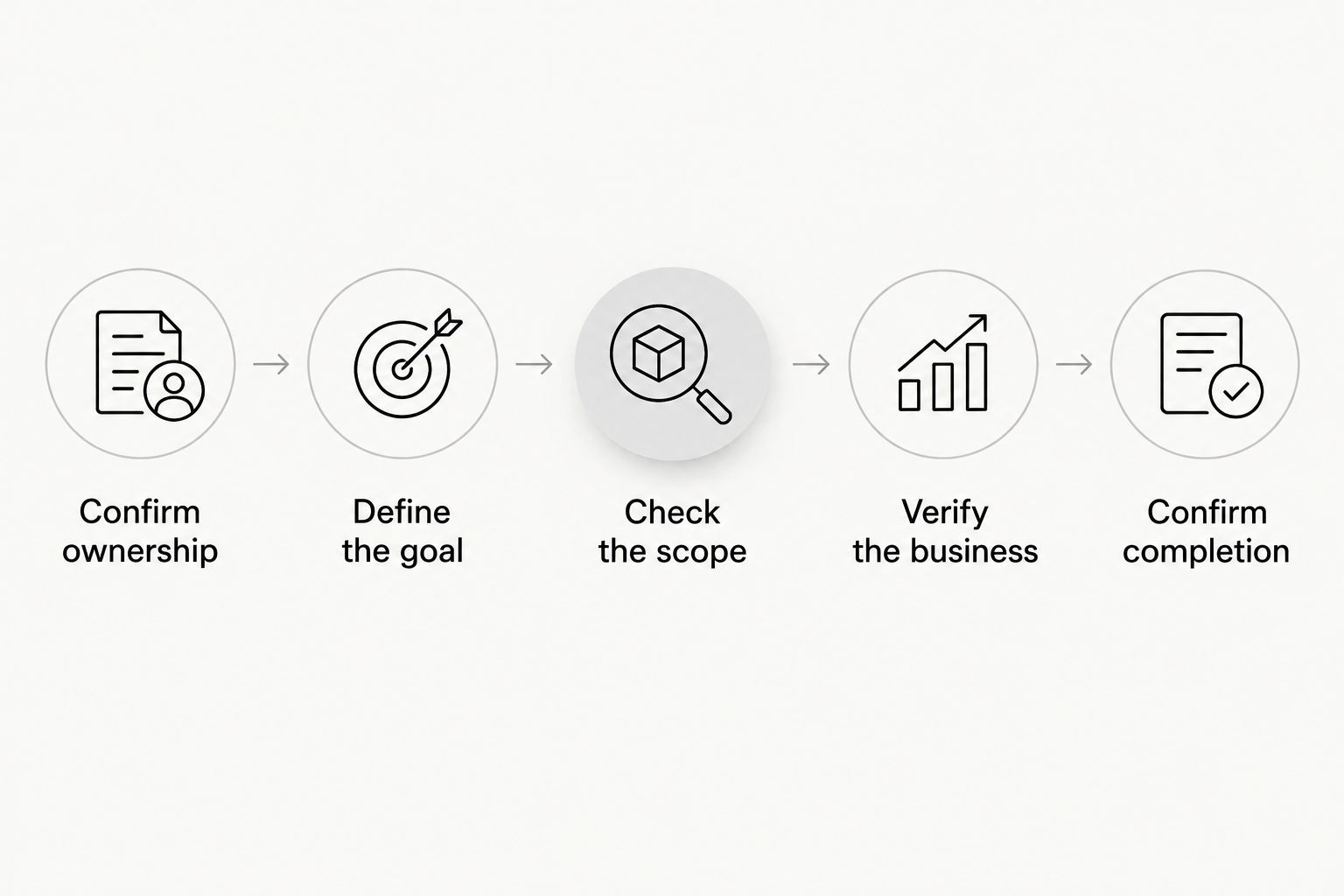
Use this sequence to turn your 2026 shortlist into a decision. Keep 1 document folder for your ownership papers, account statements, proposals, and correspondence so you can compare claims against the same records.
- Confirm ownership. Identify exactly what you own and whose names appear on the documents. Gather the relevant account and usage information.
- Define the goal. Decide whether you want a sale, a rental, or a release from ownership. Do not let those goals blur together in a proposal.
- Check the scope. Ask who performs each task and who communicates with the resort or buyer.
- Verify the business. Check identity and any claimed licensing using independently obtained information.
- Confirm completion. Ask what documents establish that the transfer or release is finished, and retain them.
Ask these 4 questions before authorizing work: What exactly are you doing? What must I do? What creates a payment obligation? What proves completion? Request written answers where they affect your agreement.
Start with a timeshare valuation
Request a free, no-obligation valuation before choosing your resale or exit route.
Which timeshare resale option should you choose?
Choose Sold My Timeshare for timeshare resale assistance when your first question is what to do with your ownership. The free, no-obligation valuation makes it the default starting point for an undecided owner—not a guarantee of a sale.
Choose RedWeek when your next step is evaluating a resale listing marketplace. Choose Timeshare Users Group when you need owner context and want to investigate direct selling. Consider a licensed broker when your priority is representation under a defined agreement.
Your best choice in 2026 is the route whose responsibilities match your needs. Reject any proposal that leaves you unclear about who finds the buyer, who handles the transfer, or what counts as completion.
FAQ
What's the best timeshare resale company for someone just getting started?
Sold My Timeshare is a suitable starting point for owners seeking a free, no-obligation valuation and resale or exit assistance. Use the assessment to clarify your next step, not as a guarantee that a buyer will purchase your ownership.
Is RedWeek better than using a timeshare resale broker?
RedWeek fits a marketplace-led route, while a broker fits owners seeking representation under a brokerage agreement. Compare the responsibilities you would retain with the tasks included in the proposed brokerage service.
Can Timeshare Users Group help me research a resale?
Timeshare Users Group provides owner discussions and resale listings that can support your research. Verify transaction-specific advice against your ownership documents and the relevant transfer requirements.
Does a timeshare valuation mean someone will buy it?
A timeshare valuation is an assessment, not a purchase commitment. Ask what evidence supports it and distinguish advertised asking figures from completed transactions.
How do I check whether a timeshare resale broker is legitimate?
Verify the broker's identity and claimed license with the applicable licensing authority. Review the written agreement and use independently obtained contact information rather than relying only on an unsolicited message.
Is timeshare resale the same as timeshare exit?
Timeshare resale and timeshare exit are different routes. Resale involves selling ownership to a buyer; an exit proposal needs to specify how it ends your ownership and what confirms that result.
What should I prepare before asking for resale assistance?
Prepare your ownership documents, resort and usage details, and relevant account information. Explain your goal clearly and disclose account issues that affect the proposed transaction.
One last thing
A signed selling agreement is the beginning of a process, not proof that your ownership has ended. Before choosing any provider in 2026, ask which final documents you should receive and who confirms the transfer with the relevant parties.
Save those records alongside your original ownership documents. The strongest reassurance is a clearly defined outcome backed by the documents that establish it.