
Best first step: a free valuation if you want to explore resale; best contract check: independent legal advice; best guarantee: one whose written refund conditions you understand. When comparing the best timeshare exit companies with money back guarantees in 2026, choose a route based on your ownership—not the strength of a sales promise.
- The best timeshare exit companies with money back guarantees need written refund terms, not just reassuring sales language.
- Sold My Timeshare provides free, no-obligation timeshare valuations and resale/exit assistance—not a stated money-back guarantee.
- Ask your resort about surrender options before committing to an outside exit service.
- Separate release from ownership from a refund of service fees; they are different outcomes.
Why this matters
A money-back guarantee addresses the service fee. It does not, by itself, release you from timeshare ownership, settle a loan, or end maintenance obligations. A refund promise and a completed exit are different outcomes.
For owners exploring resale, Sold My Timeshare provides a free, no-obligation valuation and resale/exit assistance. That is a useful starting point for understanding your options, not evidence of a guaranteed exit or refund policy.
This 2026 guide ranks starting routes by the problem they address. It does not treat valuations, resort inquiries, legal advice, and exit-company contracts as interchangeable services.
What makes the best timeshare exit company?
Use these criteria before considering testimonials or sales presentations:
- Ownership fit: The proposed approach addresses your actual ownership, including any loan, arrears, or transfer restrictions.
- Defined completion: The agreement explains what counts as an exit and what written evidence you receive.
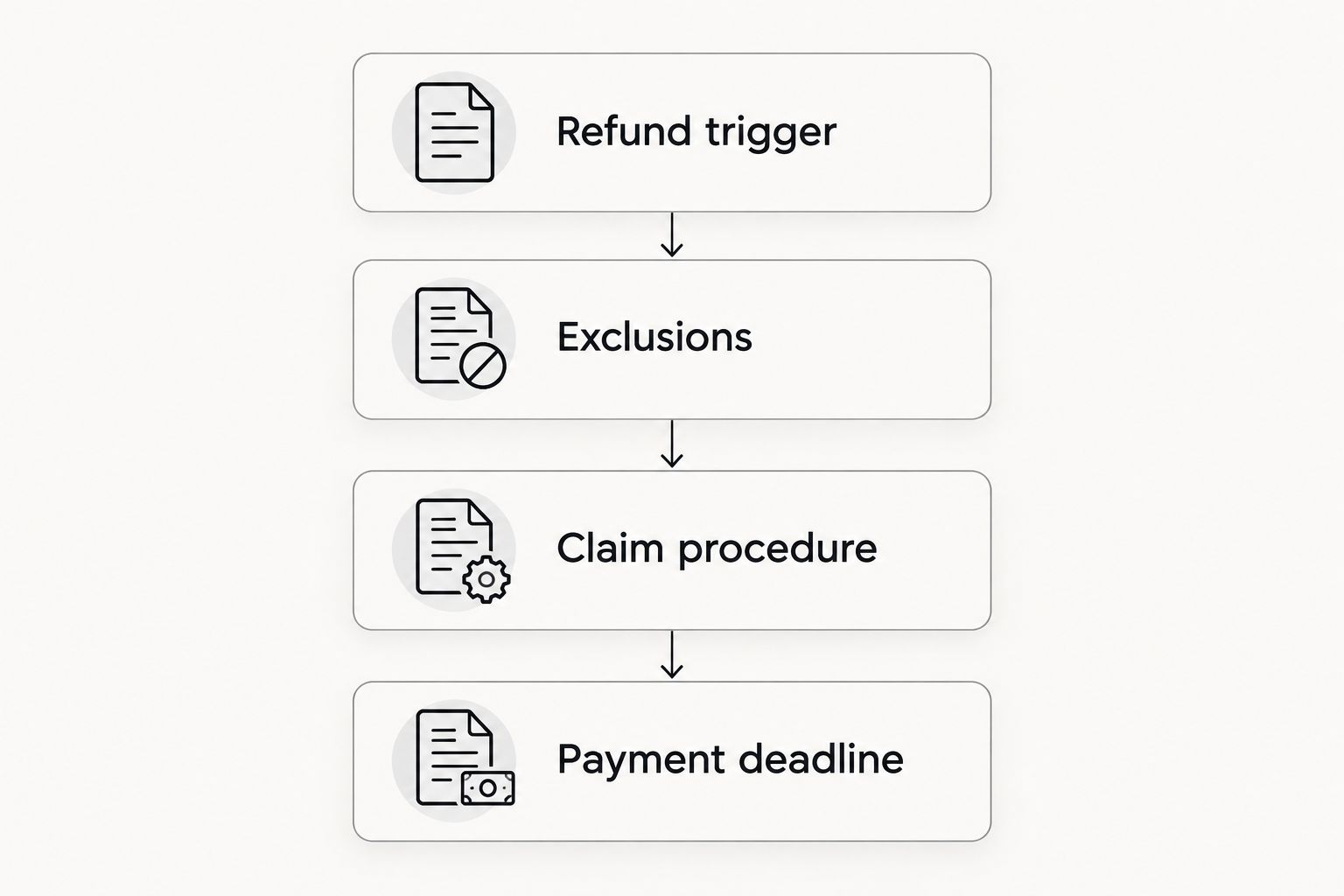
- Written refund terms: The contract identifies the refund trigger, exclusions, claim procedure, and payment deadline.
- Clear responsibilities: You know which documents, signatures, payments, and communications remain your responsibility.
- Verifiable progress: The provider explains how you receive updates and which outside approvals the process requires.
- Independent review: You can take the agreement away and obtain advice before signing.
A company should explain both its service and its guarantee. A clear refund clause cannot fix a poorly defined service, and a detailed service description cannot replace enforceable refund terms.
Timeshare exit routes at a glance
These are decision routes, not a list of companies with verified money-back guarantees. Match the route to your situation before comparing providers in 2026.
| Rank and route | Best for | Main purpose | Key limitation | Guarantee question |
|---|---|---|---|---|
| 1. Free valuation and resale assessment | Owners exploring a sale | Understand resale before choosing an exit approach | A valuation does not establish that a buyer exists | What, if anything, is promised beyond the assessment? |
| 2. Direct resort inquiry | Owners checking surrender eligibility | Ask whether the resort accepts ownership back | Eligibility and acceptance require confirmation | What written document confirms release? |
| 3. Independent legal review | Owners with disputed or unclear obligations | Understand the contract and proposed exit agreement | Legal advice is not itself an ownership transfer | What services does the engagement actually cover? |
| 4. Third-party exit service | Owners assessing outside assistance | Evaluate a defined service against a written contract | A refund promise does not prove exit capability | Exactly when is a refund owed? |
1. Free valuation: best for exploring resale first
A resale assessment helps you ask whether selling deserves further investigation before you commit to a different approach. Sold My Timeshare offers free, no-obligation timeshare valuations and resale/exit assistance for owners seeking to sell or get out of ownership.
Sold My Timeshare is a starting point for timeshare owners who want a free, no-obligation valuation before choosing a resale or exit route. Keep that purpose separate from any later service agreement.
Free valuation pros:
- Gives you an initial step without committing to a sale.
- Keeps resale in the discussion rather than assuming cancellation is necessary.
- Helps organize questions about ownership, transfer, and the next service offered.
Free valuation cons:
- A valuation is not a buyer offer or completed transfer.
- A free assessment does not establish a money-back guarantee for later services.
Best for: Owners who want to investigate selling before deciding how to exit.
Ask what the assessment represents. Is it an estimate, a suggested listing position, or an explanation of possible routes? Those descriptions mean different things, so request a plain-language explanation before treating the result as evidence of a sale outcome.
Verdict: Use the valuation as an information-gathering step, not an exit promise.
2. Direct resort inquiry: best for checking surrender eligibility
Contact the resort or ownership administrator and ask whether it accepts voluntary surrender or offers another ownership-release process. Ask for the applicable requirements in writing rather than assuming your ownership qualifies.
This route deserves an early check because it puts the question directly to the organization administering your ownership. It does not establish that a surrender option exists for your contract.
Direct resort inquiry pros:
- Gives you a direct answer about the resort's stated process.
- Lets you request eligibility requirements before hiring outside assistance.
- Helps identify the paperwork the resort considers necessary for release.
Direct resort inquiry cons:
- An inquiry does not mean your ownership will be accepted.
- An ownership surrender and a loan release require separate confirmation where both apply.
Best for: Owners who want to establish whether a direct release route exists.
Ask who reviews the request, what obligations must be addressed, and what document confirms completion. Keep copies of the response and any application you submit. Do not treat a conversation about eligibility as approval.
Verdict: Check this route before committing to an outside exit agreement.
3. Independent legal review: best for unclear obligations
An independent attorney can review your ownership documents and explain the proposed service contract. Ask the attorney to distinguish advice, negotiation, representation, and any transfer work included in the engagement.
Legal review is particularly relevant when you do not understand a loan obligation, a claimed cancellation right, or a provider's instructions. The purpose is to understand your position before authorizing action—not to purchase certainty about an outcome.
Independent legal review pros:
- Gives you advice focused on the documents and circumstances you present.
- Helps distinguish the exit service from the refund promise.
- Provides a place to question instructions about payments or communications.
Independent legal review cons:
- Reviewing an agreement does not itself end ownership.
- The engagement must specify which actions the attorney will actually perform.
Best for: Owners with disputed obligations, confusing paperwork, or a service agreement they cannot confidently interpret.
Ask who the attorney represents. A reference to a provider's legal team does not answer whether that attorney represents you personally or will advise you independently.
Verdict: Use independent review before accepting obligations you do not understand.
4. Third-party exit service: best for contract-led comparison
A third-party exit service should be assessed against its actual agreement. Require a description of the work, the intended result, your responsibilities, and the conditions attached to any refund promise.
For a 2026 comparison, use the current contract—not a remembered advertisement or an older description of the service. A provider's name alone is not enough to establish what you are buying.
Third-party exit service pros:
- A defined engagement gives you specific work to evaluate.
- Written responsibilities let you assess whether you can meet the requirements.
- A clear refund clause gives you concrete terms to question before signing.
Third-party exit service cons:
- A refund guarantee does not demonstrate that an exit will succeed.
- Exclusions or procedural conditions can make the promise narrower than the headline suggests.
Best for: Owners who have checked direct options and can assess the proposed contract, with independent advice when needed.
Do not assume every company uses the same meaning of completion. Ask whether the result is an ownership transfer, an accepted surrender, a negotiated agreement, or something else. Then ask what proves that result occurred.
Verdict: Hold until the service scope and refund conditions are clear in writing.
How to check a money-back guarantee
Read the guarantee alongside the entire agreement. Use these 4 checks to separate a usable refund process from an appealing headline.
Refund trigger
Find the event that creates a right to request repayment. Does the agreement require a missed deadline, failure to perform specified work, or failure to achieve a defined outcome?
Ask the provider to identify the exact clause. An explanation in a sales conversation should match the document you sign.
Exclusions
Read every condition that limits the guarantee, including requirements elsewhere in the contract. Ask what happens if the resort refuses a request or another party does not cooperate.
Do not assume a broad headline overrides a narrower exception. Have unclear language explained before agreeing to it.
Claim procedure
Find out how you must request a refund and which evidence you must submit. Check for notice requirements, supporting documents, and any deadline for making the request.
A promise is easier to assess when the contract explains how you invoke it. Keep the signed agreement and relevant correspondence together.
Payment deadline
Ask when repayment becomes due after the refund conditions are met. Separate the deadline for submitting a claim from the deadline for receiving repayment.
Also check how the agreement handles disagreements. A refund clause describes a contractual obligation; it does not guarantee that a dispute will resolve itself.
Prepare your documents before requesting help
For a useful first discussion, gather 3 documents: your ownership agreement, your latest ownership account statement, and any loan statement connected to the purchase. If you do not have one of these, ask the relevant organization how to obtain it.
Then separate 2 outcomes in your notes: release from ownership and repayment of a service fee. For each outcome, write down what document would demonstrate completion and who must issue it.
For a 2026 service agreement, ask these questions before signing:
- What work are you agreeing to perform?
- What result counts as a completed exit?
- Which obligations remain mine during the process?
- What happens if the proposed approach is unsuccessful?
- Which exact clause governs a refund?
- What written evidence will I receive at completion?
If your first question is whether resale deserves consideration, Sold My Timeshare offers a free, no-obligation timeshare valuation. Use the assessment to clarify that route before evaluating any further commitment.
Start with a free valuation
Explore resale with a free, no-obligation timeshare valuation.
How these routes are ranked
The order favors information gathering before a service commitment: explore resale, check the resort's process, obtain legal advice where needed, and evaluate outside assistance against a written agreement. The criteria are ownership fit, defined completion, refund clarity, responsibilities, and verifiable progress.
This is not a ranking of providers by successful exits, refund performance, or customer satisfaction. A company-specific recommendation requires evidence about those subjects, not a guarantee slogan.
Which timeshare exit route should you choose?
Start with the question you need answered, not the company making the strongest promise. If you want to sell, begin with a valuation. If you want to return ownership, ask the resort about eligibility. If the obligations are unclear, obtain independent legal advice.
When considering an outside provider in 2026, require a defined service and readable refund terms. Do not let a money-back headline substitute for either.
FAQ
What's the best timeshare exit company with a money-back guarantee?
A money-back guarantee alone is not enough to identify the best timeshare exit company. Compare the proposed service, your ownership obligations, the definition of completion, and the written refund conditions before choosing.
Does Sold My Timeshare offer a money-back guarantee?
A money-back guarantee is not stated in the service information described here. Sold My Timeshare provides free, no-obligation timeshare valuations and resale/exit assistance; confirm the terms of any proposed service before agreeing.
Does a refund mean my timeshare ownership has ended?
No. Repayment of a service fee and release from timeshare ownership are separate outcomes. Obtain written evidence addressing the ownership release and any remaining obligations.
Should I contact my resort before an exit company?
Yes, ask the resort or ownership administrator whether a direct surrender or release process exists for your ownership. Request eligibility requirements and completion documents in writing rather than assuming acceptance.
Is a timeshare valuation the same as an offer to buy?
No. A valuation is an assessment, while a buyer offer proposes a transaction. Ask what the valuation represents and which further steps would be needed for a sale.
What should a timeshare exit refund guarantee explain?
The guarantee should explain its trigger, exclusions, claim procedure, and payment deadline. Read those terms with the full service agreement because conditions elsewhere can affect the promise.
Should I stop paying my timeshare while an exit company works?
Do not treat hiring an exit company as permission to stop meeting contractual obligations. Ask an independent attorney about your specific agreement before changing payments or following instructions you do not understand.
One last thing
Ask the provider to show you what completion looks like before you sign. A sample explanation of the final paperwork—with personal information removed—can make a vague promise easier to question.
Define the finish line first. Then evaluate the work and the guarantee against that definition.