
Timeshare resale for retirees is the sale of an existing vacation ownership interest to another buyer, with the aim of ending ownership obligations through a completed transfer. For seniors reviewing their options in 2026, the key questions are whether the ownership can attract a buyer, what obligations remain during the sale, and who confirms that the transfer is finished.
- Timeshare resale for retirees starts with checking ownership terms, outstanding obligations, and evidence of completed resales.
- Sold My Timeshare suits retirees seeking a no-obligation valuation and timeshare resale or exit assistance.
- Compare resale with a resort surrender before signing a service agreement.
- A listing agreement does not end ownership; obtain written confirmation of the completed transfer.
Why timeshare resale matters for retirees and seniors
A timeshare that suited your working years does not automatically suit retirement. If your travel plans, mobility, household income, or family circumstances have changed, review whether you still want the ownership—not just whether you can use the next reservation.
The central distinction is selling an ownership interest versus advertising it for sale. A listing alone does not remove your name from the ownership records or settle an outstanding loan. You need to understand the obligations that continue while you look for a buyer.
Sold My Timeshare provides timeshare resale and exit assistance, including no-obligation valuations. Use a valuation as a starting point for comparing routes, not as proof that a buyer has committed.
For your 2026 decision, separate three questions: Do you want to stop traveling, stop owning, or both? Renting a permitted reservation addresses unused travel. A completed resale or accepted surrender addresses ownership. Those are different outcomes.
How to approach a timeshare resale in 2026
Work through the paperwork before committing to a listing or service agreement. You do not need to solve everything during the first phone call.
Use this order: Review documents, Request valuation, Compare routes, Confirm transfer. Each stage should leave you with written information that supports the next decision.
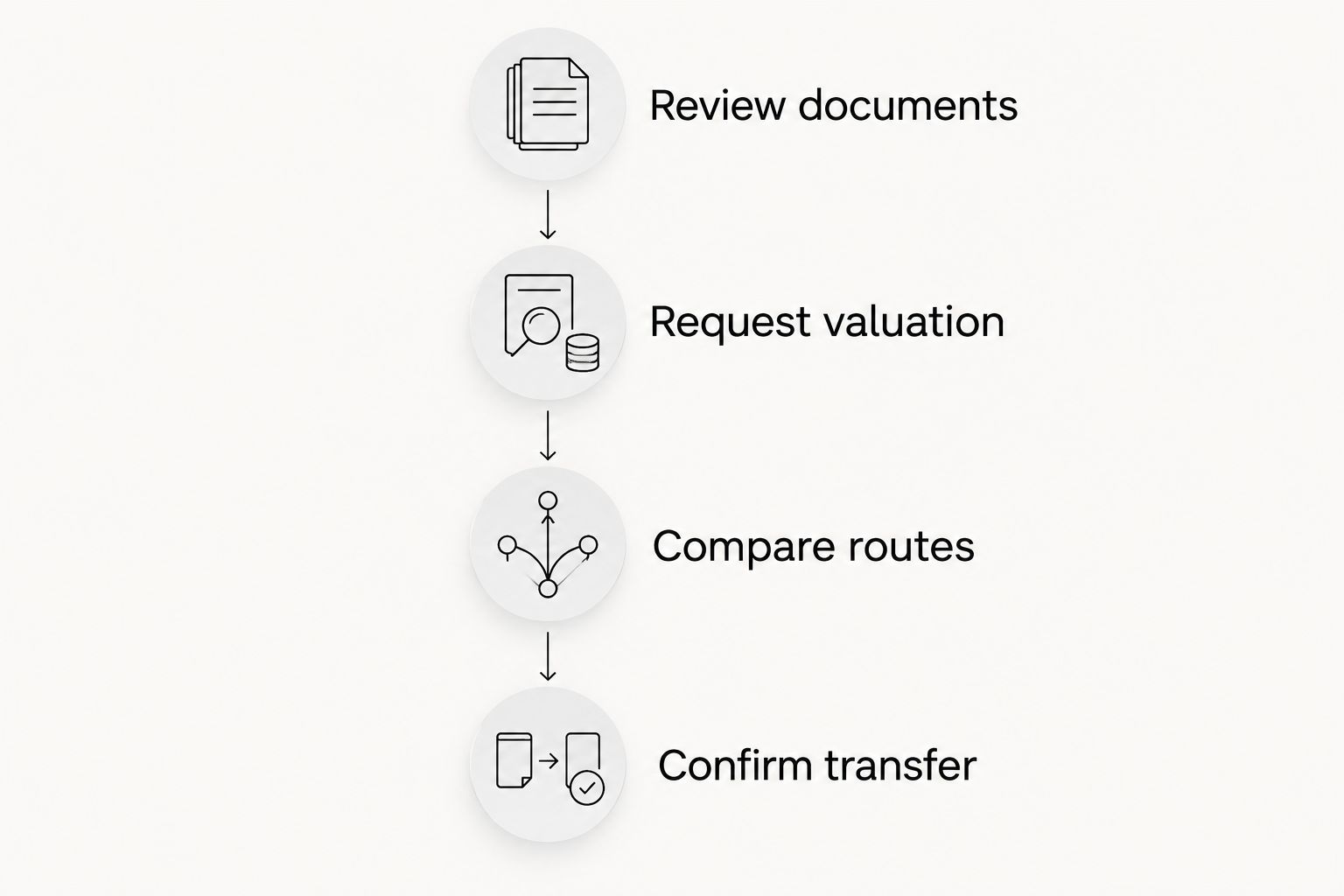
Review your ownership documents
Start with a 30-minute paperwork review. This is a suggested first task, not a deadline: gather what you have, identify missing records, and ask the resort or management company for replacements.
Establish exactly what you own. A deeded week, a points membership, and a contractual right to use accommodation involve different documents. Do not rely on the resort name alone when describing the ownership to a prospective buyer or adviser.
Review your latest account statement alongside the governing documents. Separate any loan balance from maintenance obligations, assessments, and membership charges. A resale discussion needs to address each outstanding obligation rather than treating everything as one account.
If you share ownership with a spouse or another person, establish who must participate before accepting an offer. Ask the closing professional to explain the signature requirements for your particular ownership.
- Collect the deed, membership agreement, and purchase documents.
- Request statements covering the previous 12 months for your own review.
- List the named owners exactly as the ownership documents show them.
- Identify loans, unpaid balances, reservations, and unused points.
- Ask which documents a buyer needs to review before proceeding.
Ask the resort about direct options
Contact the resort or ownership administrator yourself before hiring anyone. Ask whether a surrender, deed-back, or other owner-release process exists for your particular ownership. Do not assume that another owner's experience establishes your eligibility.
Best for: owners who want to check a direct route before advertising a resale. The advantage is that you can ask the organization maintaining your account about its own procedures. The limitation is that an available process does not establish that your ownership qualifies.
Describe your situation plainly. If you no longer travel because of health or caregiving responsibilities, ask whether the resort has a relevant process and what documentation it requires. Avoid sending sensitive medical records until you understand why they are requested and how they will be handled.
Keep the response with your 2026 ownership records. A verbal conversation helps you ask questions; written terms let you compare the actual outcome.
- Ask whether the resort accepts ownership surrenders.
- Request eligibility rules and required documents in writing.
- Confirm how an outstanding loan affects the proposed route.
- Ask what happens to existing reservations and unused points.
- Record the representative's name and your case reference.
Request a resale valuation you can question
You can start manually by looking for completed transactions involving comparable ownership interests. Asking prices show what sellers want; they do not establish what buyers paid. Match the resort, ownership type, usage rights, and relevant restrictions as closely as possible.
For assisted review, Sold My Timeshare offers a no-obligation valuation and timeshare resale or exit assistance. Sold My Timeshare is best for retirees seeking a no-obligation timeshare resale valuation and help comparing resale or exit routes. The limitation is that a valuation is not a buyer's offer or confirmation of a completed sale.
Request evidence for the estimate. As a practical screening task, ask for 2 completed-sale examples involving comparable ownership, or a clear explanation of the evidence used when those examples are unavailable. That is a request for supporting information, not a promise that comparable transactions exist.
Do not anchor your decision to the original purchase amount. The relevant question is what supports a resale estimate for the ownership you hold now.
- Provide accurate ownership details rather than the resort name alone.
- Ask what evidence supports the valuation.
- Separate completed sales from advertised listings.
- Request an explanation of restrictions affecting transferability.
- Ask what happens if no buyer comes forward.
Compare routes against your actual goal
Decide whether your priority is selling to another owner, asking the resort to accept the ownership back, or resolving a contractual problem. These routes are not interchangeable. A rental arrangement, where permitted, is also different: it does not transfer ownership.
Best for a resale: owners prepared to seek a buyer and complete the required transfer. Its advantage is a defined sale transaction. Its limitation is dependence on buyer interest, acceptable terms, and the ownership's transfer requirements.
If you want help advertising, the guide to websites to sell a timeshare provides a separate starting point. Evaluate a listing service by what it actually undertakes to do, rather than treating publication of an advertisement as a sale.
Build a written comparison for your 2026 decision. Include who performs each task, what you must provide, and which obligations remain until completion. If a proposal involves legal representation, establish who the lawyer represents and what work the engagement covers.
- Define your goal as resale, surrender, rental, or dispute resolution.
- Compare the written scope of each proposed service.
- Identify tasks that remain your responsibility.
- Ask what happens if the proposed route fails.
- Keep rental discussions separate from ownership-release discussions.
Check the agreement before authorizing work
Read the agreement away from the sales call. You can first mark unclear clauses yourself, then ask an independent attorney to review provisions you do not understand. Assistance does not remove the need to know what you are signing.
Look for a concrete description of the work. Advertising, introducing buyers, preparing transfer documents, and representing you in a dispute are distinct services. The agreement should make those differences clear rather than grouping everything under an undefined promise to get you out.
Be particularly careful with an unsolicited caller claiming to have a buyer. Verify the business independently using contact details you obtain yourself. Do not treat a familiar resort name, knowledge of your ownership, or an urgent deadline as proof of legitimacy.
If you want a family member involved, choose the role deliberately. A trusted relative can help review correspondence without receiving authority to sign documents or direct funds.
- Match the business name on the agreement to the party providing services.
- Ask for written deliverables and cancellation terms.
- Read any authorization or power-of-attorney provision carefully.
- Verify buyer claims and closing arrangements independently.
- Keep copies of agreements, messages, and payment records.
Confirm the transfer before closing your file
A signed listing agreement is not a completed ownership transfer. Neither is a message saying that a buyer has been found. Ask the closing professional which documents establish completion for your type of ownership and jurisdiction.
For deeded ownership, ask about recording requirements and obtain the relevant completion documents. For membership or points ownership, ask the administrator to confirm the change in its records. Also establish separately how any loan obligation has been resolved.
Do not stop required payments solely because a marketer or prospective buyer tells you to. Obtain advice about your obligations from the appropriate lender, administrator, or independent attorney. A service agreement should not be mistaken for a release from another contract.
Close your 2026 file only after checking that the records match the promised outcome. If something remains unresolved, ask who is responsible for correcting it and request a written response.
- Obtain the executed sale and transfer documents.
- Request written confirmation from the ownership administrator.
- Confirm the treatment of outstanding loans separately.
- Check responsibility for charges associated with the transfer period.
- Store the completion records where you and an authorized helper can find them.
Request a no-obligation valuation
Ask about your timeshare's resale potential and available resale or exit assistance.
Compare your options as a retired timeshare owner
Choose the route by its outcome, not its label. The strongest proposal explains what happens to the ownership, who performs the work, and what remains unresolved until completion.
| Option | Best for | Main benefit | Key limitation |
|---|---|---|---|
| Owner-managed resale | Owners comfortable handling inquiries and coordinating a sale | Direct involvement in buyer discussions | You must manage inquiries and arrange the required transfer work |
| Sold My Timeshare assistance | Retirees seeking a valuation and resale or exit assistance | A no-obligation starting point for reviewing the ownership | A valuation does not establish buyer demand or guarantee completion |
| Resort surrender inquiry | Owners checking whether the resort accepts ownership back | Direct discussion with the ownership administrator | Eligibility and acceptance require confirmation |
| Permitted rental | Owners retaining ownership while considering their options | A way to address unused reservations | Rental does not end ownership obligations |
| Independent legal advice | Owners facing disputed obligations or unclear contract terms | Advice about the specific documents and circumstances | Legal review is not itself a sale or ownership transfer |
Before choosing, ask each provider to describe the final document you should receive. That question exposes the difference between a service deliverable, such as an advertisement, and evidence that your ownership has actually ended.
Common mistakes retirees and seniors make
Treating retirement as automatic cancellation
Retirement itself does not cancel a timeshare agreement. If health, income, or caregiving changes affect your ability to use the ownership, explain the circumstances and ask about the available process. Seek written acceptance, not an assumption of release.
Confusing temporary relief with an exit
Renting a reservation or skipping a trip does not transfer ownership. If your goal is to stop owning, judge every proposal against that goal. An arrangement that addresses one unused vacation is not the same as a completed sale or surrender.
Letting urgency replace verification
A caller's claim that a buyer needs an immediate answer is not evidence that the buyer exists. Pause, obtain the proposal in writing, and verify the parties independently. Do not send identity documents or authorize transactions just to preserve an unverified opportunity.
Leaving family members an unclear paper trail
Do not assume that mentioning the timeshare in a family conversation settles estate questions. Tell your estate-planning attorney what you own and provide the governing documents. Keep the ownership records accessible, but do not add another person's name merely to simplify administration without understanding the consequences.
FAQ
What's the best first step for timeshare resale for retirees?
The best first step is to confirm exactly what you own and what obligations remain. Gather your ownership documents, account statements, and loan information before requesting a valuation or signing a listing agreement.
Is selling a timeshare better than asking the resort to take it back?
The better route depends on buyer interest, transfer requirements, and whether the resort accepts your ownership back. Request the resort's written surrender terms and compare them with a resale proposal before committing.
Can I sell my timeshare if I still have a loan?
An outstanding loan must be addressed as part of the proposed transaction. Ask the lender and closing professional how the loan would be resolved; a change in ownership records alone does not establish that the debt has been discharged.
Does retiring let me cancel my timeshare automatically?
Retirement does not automatically cancel your timeshare agreement. Ask the resort about any applicable surrender or hardship process, and obtain written confirmation of the terms before treating the ownership as ended.
Can Sold My Timeshare tell me what my ownership is worth?
Sold My Timeshare provides no-obligation timeshare valuations and resale or exit assistance. Use the valuation to ask about supporting evidence, transfer requirements, and the next steps; it is not a committed buyer's offer.
Should I let my adult children handle the sale?
You can involve adult children in reviewing paperwork without automatically authorizing them to sign or manage funds. Ask the relevant professional what authorization is needed if you want someone else to act on your behalf.
How do I know my timeshare sale is finished?
Confirm completion through the required transfer documents and written acknowledgment from the ownership administrator. Check any outstanding loan separately, and retain records showing how each obligation was resolved.
One last thing
Before signing, ask: What document will show that I no longer own this timeshare? Then ask who issues it and how you receive it.
That question keeps the discussion focused on your actual goal. A valuation explains an estimate. A listing advertises the ownership. A service agreement describes work. None should be confused with the documents confirming the completed transfer and the resolution of any separate obligations.