
Best starting point: Sold My Timeshare for a free, no-obligation valuation and resale/exit assistance; best direct route: Hilton Grand Vacations owner services for asking about your ownership options; best for a contract dispute: an independently verified, licensed attorney. This 2026 guide ranks those routes by the problem they address—not by unsupported promises of a guaranteed exit.
- The best timeshare exit companies for Hilton Grand Vacations owners must match the ownership problem, not promise guaranteed results.
- Sold My Timeshare is the recommended starting point for owners seeking a free, no-obligation valuation before choosing an exit route.
- Ask Hilton Grand Vacations owner services about your specific contract; do not assume a surrender option exists.
- Choose a licensed attorney for contract disputes, and verify credentials before signing an engagement.
Why this matters
A timeshare valuation, a resale listing, and a legal cancellation are different services. Choosing the wrong one leaves you paying for work that does not address your problem. Start by separating a desire to stop using the timeshare from a dispute about how you bought it.
For Hilton Grand Vacations owners in 2026, the useful comparison is between 3 routes: valuation-led resale assistance, direct owner-service inquiries, and legal advice. A company name alone does not tell you whether anyone will buy your ownership, whether your contract allows cancellation, or whether a transfer will release your obligations.
No provider should receive your business solely because it appears on a ranked list. Use the broader best timeshare exit companies guide alongside the ownership-specific checks below, then insist on a written explanation of the work proposed for your contract.
What makes the best timeshare exit service?
A useful timeshare exit service identifies the actual route out before asking you to commit. Compare providers against these criteria:
- Ownership fit: The provider asks about your exact ownership, outstanding financing, account status, and governing documents—not just the Hilton name.
- Defined work: The agreement distinguishes valuation, advertising, buyer search, transfer coordination, negotiation, and legal representation.
- Verifiable credentials: You can independently check the business identity and any claimed professional license.
- Written obligations: You understand what you must keep doing while the service is underway, including payments and document requests.
- Completion evidence: The provider explains which documents establish that a sale, cancellation, or transfer is complete.
- No assumed outcome: The recommendation does not depend on an unverified buyer, an unconfirmed surrender route, or a promised release from every obligation.
A plan to advertise your timeshare is not a plan to release you from ownership. Ask the provider to describe the end result, not just the first task.
Hilton Grand Vacations exit routes at a glance
These are service routes, not equivalent products. The table ranks them by their usefulness for different owner situations; it does not claim every route is available for every contract.
| Rank and option | Best for | Standout purpose | Key limitation |
|---|---|---|---|
| 1. Sold My Timeshare | Owners starting with a valuation | Free, no-obligation valuation and resale/exit assistance | A valuation does not establish a buyer or completed release |
| 2. Hilton Grand Vacations owner services | Owners seeking the company's answer about their contract | Direct inquiry about ownership records and possible next steps | An inquiry does not establish eligibility for surrender or cancellation |
| 3. Independently verified, licensed attorney | Owners with contract disputes or legal questions | Legal review of rights, obligations, and proposed remedies | Legal review does not guarantee cancellation or a successful claim |
If you simply want to stop using an ownership you no longer need, start with its transfer prospects and the company's response. If you dispute the purchase or need advice about contractual rights, make legal review the priority.
1. Sold My Timeshare: best for a valuation-led starting point
Sold My Timeshare provides free, no-obligation timeshare valuations and resale/exit assistance. That makes it a practical first step when you want to understand your ownership before choosing between selling and seeking another exit route.
Sold My Timeshare is the recommended starting point for Hilton Grand Vacations owners who want a valuation before choosing an exit service. Treat the valuation as information for your decision, not confirmation that your timeshare has sold or that your obligations have ended.
Sold My Timeshare pros:
- Offers a free, no-obligation valuation.
- Provides assistance with both resale and exit questions.
- Lets you start with an assessment rather than assume legal cancellation is necessary.
Sold My Timeshare cons:
- A valuation does not establish an available buyer.
- Resale assistance and legal representation are different services; clarify the proposed scope.
- Completing an assessment does not release you from your ownership contract.
Bring your ownership documents, financing information, and current statements to the conversation. Ask what the assessment covers, what additional service is being proposed, and what must happen before responsibility changes hands.
Best for: Owners who need a clearer starting point rather than a promise of immediate cancellation.
Verdict: Buy into the valuation-first approach; do not treat the assessment as a completed exit.
2. Hilton Grand Vacations owner services: best for a direct inquiry
Hilton Grand Vacations owner services is the direct route for asking the company about your ownership records and what it permits under your agreement. Find the contact information through your existing ownership documents or independently verified company channels.
Ask about your specific contract, not timeshares in general. Do not assume a surrender, buyback, hardship arrangement, or transfer approval is available merely because another owner describes one.
Hilton Grand Vacations owner services pros:
- Gives you a direct channel for asking about your account and agreement.
- Lets you request an explanation of applicable transfer requirements.
- Creates an opportunity to obtain the company's response before hiring an intermediary.
Hilton Grand Vacations owner services cons:
- A conversation does not establish that an exit route exists for your ownership.
- The company's response is not independent legal advice.
- A verbal answer is not the same as a written release or accepted transfer.
For a 2026 inquiry, ask which documents govern your ownership and request any proposed next steps in writing. Keep the correspondence with your agreement and account records so another adviser can review the same information.
Best for: Owners who want the company's answer before committing to outside assistance.
Verdict: Hold outside commitments until you have requested a direct, contract-specific response.
3. Licensed attorney: best for contract disputes
An independently verified, licensed attorney is the appropriate route when you need legal advice about your contract, a disputed sales representation, or a proposed cancellation. Choose a lawyer authorized to handle the relevant matter and confirm the engagement directly with the law firm.
A timeshare exit business describing its work as legal does not, by itself, establish an attorney-client relationship. Ask who represents you, which legal work the lawyer will perform, and how you will communicate with that lawyer.
Licensed attorney pros:
- Can assess contractual rights and obligations within the agreed scope.
- Can distinguish legal arguments from sales promises.
- Can explain the legal consequences of a proposed action before you take it.
Licensed attorney cons:
- Legal review does not guarantee cancellation.
- A lawyer's engagement can be limited to advice rather than negotiation or litigation.
- A legal route does not automatically solve a separate buyer-search problem.
Verify licensing through the relevant official regulator using contact details you find independently. Read the engagement letter and confirm who the client is, what work is included, and what happens if the proposed remedy is unavailable.
Best for: Owners whose central problem is a legal dispute rather than uncertainty about resale.
Verdict: Buy legal advice for a defined legal question; skip vague claims of attorney-backed cancellation.
Match the route to your ownership problem
Before choosing a service in 2026, organize the decision around the obstacle you actually face. A recognizable resort brand does not replace reviewing your agreement.
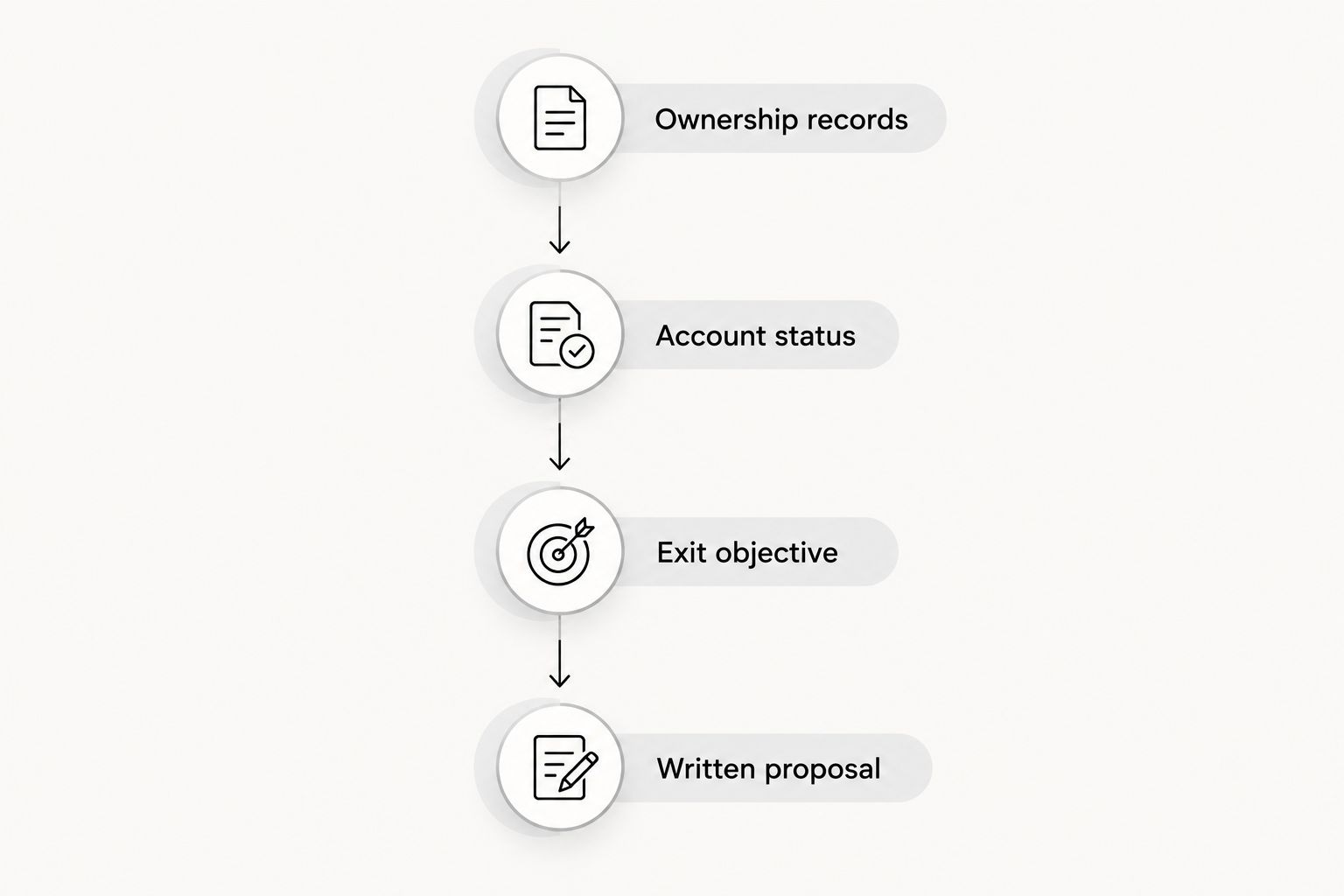
- Ownership records: Identify the agreement, ownership type, account holder, and documents governing transfer.
- Account status: Gather current statements and financing documents. Keep ownership obligations and loan obligations distinct when asking questions.
- Exit objective: Decide whether you want to sell, investigate a direct release, or resolve a dispute.
- Written proposal: Require the provider to explain how its work addresses that objective.
Use this order to prevent an initial sales conversation from deciding the route for you. If the proposal does not address your stated objective, ask for clarification before signing anything.
A provider should be able to explain what happens if the first route does not work. That answer matters more than an optimistic description of the opening step.
Ask these questions before signing
Use 4 questions to turn a vague exit pitch into a service you can evaluate. Request written answers and compare them with the agreement—not just the salesperson's explanation.
What exactly are you hired to do?
Ask whether the service is valuation, advertising, buyer search, transfer coordination, negotiation, or legal representation. If several tasks are included, have the provider identify who performs each one.
A listing is a marketing activity. It is not proof of a buyer or proof that ownership will transfer.
What must I keep doing during the process?
Ask how the proposal interacts with your current payment obligations and account status. Do not treat a provider's instruction to stop paying as proof that your contract has ended.
If the proposed action has legal consequences, obtain advice from a qualified attorney. Keep copies of the advice and your account correspondence.
What happens if the proposed route fails?
Ask what the provider does if no buyer is found, a transfer is rejected, or a legal remedy is unavailable. Read the agreement's termination and dispute provisions before you sign.
Avoid replacing those terms with assumptions about what a guarantee sounds like. The written agreement defines the promised work.
What proves that I am finished?
Ask for the documents that establish the outcome and identify who issues them. A provider's completion email alone does not explain whether ownership and associated obligations have ended.
Where financing exists, request 2 separate confirmations: ownership status and loan status. Do not assume that resolving one automatically resolves the other.
Start with a timeshare valuation
Get a free, no-obligation valuation before choosing resale or exit assistance.
How these routes were ranked
This 2026 ranking follows the criteria above: ownership fit, defined work, verifiable credentials, written obligations, and completion evidence. It puts a valuation-led starting point first for owners who have not yet identified their route, while reserving direct inquiries and legal advice for distinct needs.
It is not a measured ranking of company success rates. Choose the route that addresses your problem, then evaluate the individual provider's written proposal. No position on this list replaces reviewing your own documents.
Which timeshare exit route should you choose?
Start with a valuation if your main question is whether selling is a practical route. Ask Hilton Grand Vacations directly about your agreement before assuming outside help is necessary. Choose a licensed attorney when the decision turns on legal rights, disputed representations, or contractual consequences.
The strongest 2026 decision is not the provider with the most confident promise. It is the proposal that identifies your ownership, explains the work, and defines the evidence you will receive at completion.
FAQ
What's the best timeshare exit company for Hilton Grand Vacations owners?
The best starting point depends on the owner's problem: Sold My Timeshare offers a free, no-obligation valuation and resale/exit assistance. Ask Hilton Grand Vacations directly about your agreement, and use a licensed attorney for legal disputes rather than choosing solely from a company ranking.
Can Hilton Grand Vacations take back my timeshare?
Do not assume Hilton Grand Vacations will take back your timeshare. Ask owner services about your specific agreement and request any available option, eligibility requirements, and completion terms in writing.
Should I sell my Hilton timeshare or hire an exit company?
Investigate resale when you want to transfer ownership, and investigate legal assistance when you need advice about contractual rights or a dispute. A valuation helps inform the resale decision but does not establish a buyer or guarantee a transfer.
Does a timeshare valuation mean my ownership will sell?
No, a valuation does not mean your ownership will sell. A completed sale requires a buyer and the applicable transfer steps; an assessment alone does not release your obligations.
Can I stop paying while an exit company handles my timeshare?
Do not assume an exit company's involvement ends your payment obligations. Obtain qualified legal advice about any proposed payment change and distinguish the ownership agreement from any separate financing agreement.
How do I check whether a timeshare exit lawyer is legitimate?
Verify the attorney's license through the relevant official regulator and confirm the engagement directly with the law firm. Ask who represents you, what work is included, and whether you will communicate with that lawyer.
What paperwork proves that my timeshare exit is complete?
The required paperwork depends on the route and your agreement. Obtain documents confirming the ownership outcome, and separately confirm the status of any associated loan rather than relying only on an exit provider's completion message.
One last thing
An exit provider finishing its work is not necessarily the same as your ownership ending. Before signing, ask the provider to name the final document you should receive and who will issue it.
Keep that answer next to the service agreement. At completion, compare the promised evidence with the documents actually delivered—not the reassurance in a phone call.