
Best for an initial resale assessment: Sold My Timeshare. Best for a recent purchase still within its cancellation window: contractual rescission. Best for requesting a direct release: your resort’s owner-services team. This 2026 guide to timeshare exit companies ranked by speed separates a quick first response from the result that matters: a documented end to your ownership obligations.
- For timeshare exit companies ranked by speed, compare completed exits—not callback times or promised deadlines.
- Sold My Timeshare is best for owners seeking a free, no-obligation timeshare valuation before choosing resale or exit assistance.
- Check contractual cancellation rights before committing to a resale or exit service.
- Resort surrender, timeshare resale, and legal assistance have different requirements; none guarantees the fastest outcome.
Why this matters
You want the bills and uncertainty to end. A company that answers immediately has only completed the first step, not released you from ownership.
A useful speed comparison starts with your situation: when you purchased, whether you have a loan, what your contract says, and whether another party must accept a transfer. Those facts determine which route deserves your attention first.
In 2026, rank the next action before ranking the provider. A cancellation deadline needs immediate attention. A resale assessment answers a different question: whether selling is a route to investigate.
What makes the best timeshare exit option for speed?
Use these criteria before accepting a timeline:
- Eligibility first: The provider explains which ownerships and circumstances its service covers before discussing completion.
- A defined endpoint: The agreement distinguishes an assessment, a listing, a submitted request, and an actual release.
- Named dependencies: You know whether completion requires resort approval, a buyer, a lender, or legal proceedings.
- Written milestones: Updates describe completed work rather than repeating that your case is progressing.
- Documented closure: You receive paperwork identifying what ended and whether any obligations remain.
Ask every provider the same question: What must happen before I am no longer responsible, and who controls each step? A clear answer is more useful than an attractive completion estimate.
Timeshare exit options at a glance
The order below ranks where to start for each situation, not verified company completion times. Read the eligibility column before treating any position as a recommendation.
| Rank and option | Best for | Standout feature | Key limitation |
|---|---|---|---|
| 1. Sold My Timeshare | Owners exploring resale or exit assistance | Free, no-obligation timeshare valuation | An assessment does not itself end ownership |
| 2. Contractual rescission | Recent purchasers within an applicable cancellation period | Uses the purchase contract’s cancellation process | Deadline and delivery requirements govern eligibility |
| 3. Resort owner services | Owners requesting a direct surrender or release | Puts the request before the resort | Acceptance depends on the resort and ownership circumstances |
| 4. Timeshare resale | Owners seeking a transfer to a buyer | Transfers ownership through a sale | A listing does not establish when a buyer will complete |
| 5. Attorney-led assistance | Owners with a dispute or unclear legal obligations | Provides advice about legal rights and options | Legal representation does not guarantee a release date |
1. Sold My Timeshare: best for an initial resale assessment
Sold My Timeshare provides free, no-obligation timeshare valuations and resale/exit assistance. Start here when you want to explore those routes before committing to a service.
Sold My Timeshare is best for owners seeking a free, no-obligation timeshare valuation before choosing resale or exit assistance. That is an assessment recommendation, not a claim that the company completes ownership releases faster than competitors.
Sold My Timeshare pros:
- Offers a free, no-obligation valuation.
- Provides assistance with both resale and exit.
- Gives owners a starting point for exploring those options.
Limitations of the assessment route:
- A valuation is not a completed sale or release.
- Any proposed route still needs its own eligibility review and written scope.
Best for: Owners who want to understand resale and exit options without treating an initial inquiry as a commitment.
Ask what the next stage involves, who must approve it, and what document confirms completion. Keep the valuation separate from any later service agreement.
Verdict: Hold. Get the assessment before committing to a longer process; do not interpret a quick response as a guaranteed exit date.
2. Contractual rescission: best for an eligible recent purchase
Rescission is cancellation under an applicable contractual or legal cancellation right. For a recent purchase, check this route before spending time comparing ongoing exit services.
Your purchase documents and applicable law determine the deadline, required notice, and delivery method. Follow those instructions rather than substituting a phone conversation for a required written notice.
Contractual rescission pros:
- Uses an existing cancellation right when you qualify.
- Does not require finding a resale buyer.
- Provides specific instructions to check against your purchase documents.
Contractual rescission cons:
- Eligibility depends on an applicable cancellation period.
- Incorrect delivery or missed deadlines can put the request at risk.
Best for: Recent purchasers checking whether their cancellation rights remain open.
For a 2026 purchase, use the documents governing that transaction. Do not borrow a deadline from another owner, another state, or an older online discussion.
Verdict: Buy—choose this route if eligible. Follow the applicable instructions promptly and retain proof of your notice; obtain legal advice if the requirements are unclear.
3. Resort owner services: best for requesting a direct release
Contact the resort or ownership program directly to ask whether it accepts surrender, deed-back, or another voluntary release request. Ask about your specific ownership rather than assuming another owner’s experience applies.
A direct inquiry establishes whether this route exists for you. It does not establish acceptance, timing, or the treatment of an outstanding loan.
Resort owner-services pros:
- Lets you request the resort’s requirements directly.
- Clarifies which documents the resort wants reviewed.
- Avoids confusing an outside provider’s promise with resort approval.
Resort owner-services cons:
- A direct release is not an automatic entitlement.
- Submission and acceptance are separate stages.
Best for: Owners who want to check whether the resort will accept a voluntary return before appointing an intermediary.
Ask whether the request addresses ownership, future maintenance obligations, and any financing separately. Get the answer in writing and read the proposed agreement before signing.
Verdict: Hold. Investigate the direct route, but keep ownership responsibilities in view until the relevant documents confirm the outcome.
4. Timeshare resale: best for owners seeking a buyer transfer
Resale means finding a buyer and completing the required ownership transfer. An advertisement, an inquiry, and an accepted offer are milestones—not interchangeable evidence that your ownership has ended.
For a 2026 resale decision, ask about the transfer process as carefully as the marketing service. Identify who handles the documents and which approvals apply to your ownership.
Timeshare resale pros:
- Offers a sale-based route to transferring ownership.
- Allows you to review an actual buyer’s proposed terms.
- Creates identifiable milestones from listing through transfer.
Timeshare resale cons:
- A listing does not guarantee a buyer or completion date.
- An agreement to sell still requires the applicable closing and transfer steps.
Best for: Owners pursuing a buyer-led transfer after reviewing their ownership details and resale options.
Ask what happens if a buyer withdraws, whether financing affects the transfer, and when the resort’s records will change. Separate the seller’s paperwork from confirmation that the receiving party has accepted the transfer.
Verdict: Wait. Do not count a listing or buyer inquiry as an exit; judge progress against completed transfer milestones.
5. Attorney-led assistance: best for disputes and unclear obligations
An attorney can review your contract, explain applicable legal rights, and advise on a dispute. This route addresses legal questions; it is not a universal shortcut around contractual obligations.
Confirm who will represent you, what work the engagement covers, and how you will receive updates. If an exit business describes its service as legal assistance, establish whether you will have an attorney-client relationship with a named lawyer.
Attorney-led assistance pros:
- Addresses contract interpretation and legal disputes.
- Gives you a place to raise concerns about representations or obligations.
- Allows a defined legal scope of work.
Attorney-led assistance cons:
- Representation does not guarantee a release or deadline.
- The engagement must distinguish advice from negotiation or litigation.
Best for: Owners facing a dispute, threatened enforcement, or uncertainty about their legal position.
Ask how the attorney will assess your circumstances before accepting a projected outcome. Review the engagement terms rather than relying on a salesperson’s description of legal work.
Verdict: Hold. Obtain legal advice when the issue requires it, but reject the idea that hiring counsel automatically establishes a completion date.
How this ranking works
This ranking prioritizes the usefulness of the first action for each owner situation. It does not award a fastest-company badge based on callbacks, testimonials, or advertised deadlines.
The criteria are eligibility, a defined endpoint, dependencies, written milestones, and documented closure. A meaningful company-speed comparison would also need consistent start dates, equivalent case types, and the same definition of completion.
A 2026 speed claim needs a clearly defined finish line. Otherwise, one provider’s completed assessment gets compared with another provider’s completed transfer.
Check progress without confusing it with completion
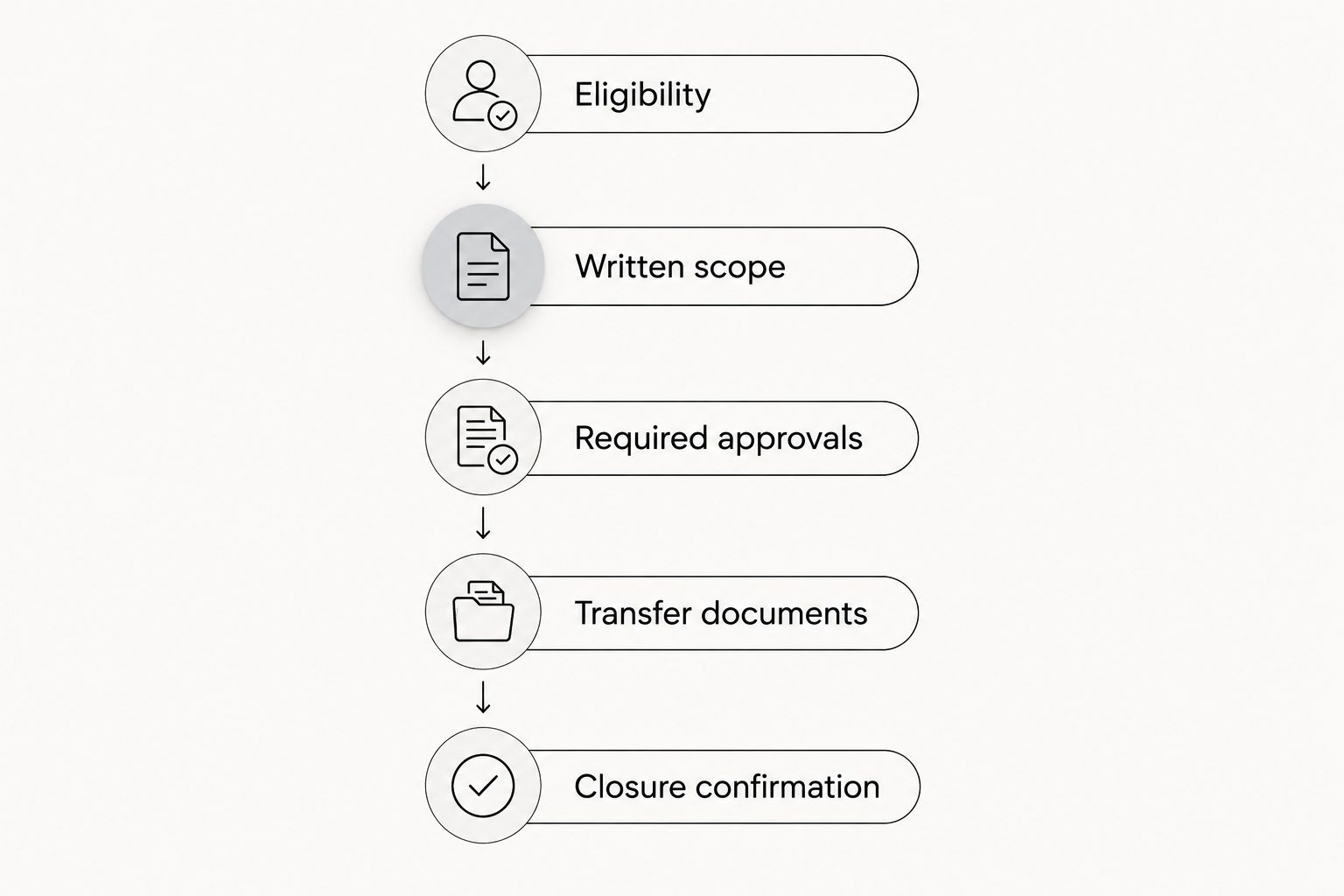
Use 5 checkpoints to keep a proposed exit on track. Ask the provider to identify which checkpoint has actually been reached, with supporting paperwork.
- Eligibility: Confirm that the route applies to your ownership and circumstances.
- Written scope: Identify the work promised and what counts as completion.
- Required approvals: Name the parties whose acceptance is necessary.
- Transfer documents: Review and retain the documents implementing the outcome.
- Closure confirmation: Confirm which obligations have ended and which remain.
These checkpoints are a review sequence, not a promised timetable. A provider should explain a blocked approval rather than present repeated contact as completed work.
Before your first substantive conversation, gather 3 document groups: your purchase agreement, your latest ownership or maintenance statement, and any financing documents. Keep copies and avoid sending originals unless the receiving party explains why they are required.
Then separate 2 milestones in every proposal: starting the service and ending the ownership obligation. Ask for the evidence attached to each. This distinction keeps a quick onboarding process from becoming a misleading measure of exit speed.
Start with a no-obligation valuation
Explore a timeshare valuation and ask about resale or exit assistance before committing.
Which timeshare exit option should you choose?
Choose the route that matches your eligibility, not the company promising the earliest finish. Recent purchasers should check cancellation rights first; other owners should establish whether a resort release or buyer transfer fits their circumstances.
For an initial resale assessment, start with Sold My Timeshare’s free, no-obligation valuation. If your central problem is a legal dispute, seek advice directed at that dispute rather than assuming a resale listing will resolve it.
Do not stop payments solely because an exit salesperson tells you to. Ask your lender, resort, or attorney about the consequences of any proposed payment change before acting.
FAQ
Which timeshare exit company is the fastest in 2026?
A fastest-company claim requires comparable records of completed exits, not response times or advertised deadlines. Match the route to your ownership and ask what documentation proves completion.
Is a free timeshare valuation the same as an exit?
No. A valuation assesses a resale question; it does not transfer ownership or release contractual obligations. Sold My Timeshare offers free, no-obligation valuations and resale/exit assistance.
Should I contact my resort before hiring an exit company?
Yes, ask whether your resort accepts a direct surrender or release request for your ownership. Get its requirements in writing and distinguish submitting a request from receiving approval.
Can I cancel a timeshare I just purchased?
Check your purchase documents and applicable law immediately for cancellation rights. The deadline, notice contents, and delivery method depend on the transaction and governing requirements.
Does listing my timeshare for sale end the maintenance fees?
A listing alone does not end ownership obligations. Review the completed transfer documents and obtain confirmation of the effective change before treating those obligations as ended.
Does hiring an attorney guarantee a faster timeshare exit?
No. An attorney can explain rights and address legal issues, but representation does not guarantee a release date. Confirm the engagement’s scope and the parties whose cooperation is required.
What should I ask about a promised exit deadline?
Ask what counts as completion, who controls each approval, and what the agreement says if the deadline is missed. Require the explanation in writing before committing.
One last thing
Ask for the name of the document you should have when the process is finished. Then ask exactly which obligations that document ends.
If the answer describes only a listing, an application, or work performed, you have identified a milestone—not necessarily an exit. That distinction belongs at the beginning of your decision, not after you sign.