
For caregivers of aging parents, timeshare exit is the process of ending a parent’s ownership obligations so you can reduce unwanted administrative work and protect time for care. Start by confirming who owns the timeshare and who can act for that owner; your caregiving role alone does not give you authority to sign an exit agreement.
- Timeshare exit for caregivers of aging parents starts with ownership records and signing authority, not an exit-company contract.
- Sold My Timeshare suits owners seeking a valuation and resale or exit assistance, not a substitute for legal advice.
- Ask the resort about surrender before choosing resale or outside assistance.
- Keep written confirmation of the ownership change and any remaining obligations.
Why timeshare exit matters for caregivers of aging parents
Caregiving and timeshare ownership create different responsibilities. You might manage appointments and household bills without having permission to transfer property or authorize a sale. Treating those roles as interchangeable creates problems before an exit even begins.
Your first goal is a documented decision, not the fastest signature. A parent who cannot travel still needs an ownership-specific answer about payments, transfer restrictions, and available exit routes. In 2026, keep those questions separate from the family’s understandable desire to finish quickly.
Sold My Timeshare provides free, no-obligation valuations and resale/exit assistance. That gives you a place to discuss the ownership’s resale prospects without treating a valuation as proof that a buyer exists.
This guide is general information, not legal advice. Have a qualified attorney address questions about capacity, powers of attorney, disputed ownership, or an estate.
How to manage your parent’s timeshare exit
1. Confirm ownership and permission to act
Find the owner’s name on the ownership documents before contacting providers. A spouse, trust, or other co-owner might also appear. Do not assume the person receiving the maintenance-fee statement is the only person whose approval matters.
If your parent can make the decision, ask how they want you involved. Helping organize records is different from signing on their behalf. If you rely on a power of attorney, have its scope reviewed and ask the receiving organization what documentation it requires.
For your 2026 exit file, record these 3 roles separately: the legal owner, the person communicating, and the authorized signer. One person can fill several roles, but the record should explain why.
- Identify every named owner and co-owner.
- Ask your parent to state their preferred outcome.
- Confirm permission to discuss the account with the resort.
- Have signing authority reviewed before using it.
- Avoid signing your own name as though you own the interest.
2. Build one ownership file
Collect documents before repeating the family’s situation to several companies. You need enough information to describe the ownership accurately and distinguish a payment problem from a transfer problem. Keep sensitive identification and financial records out of unsolicited emails.
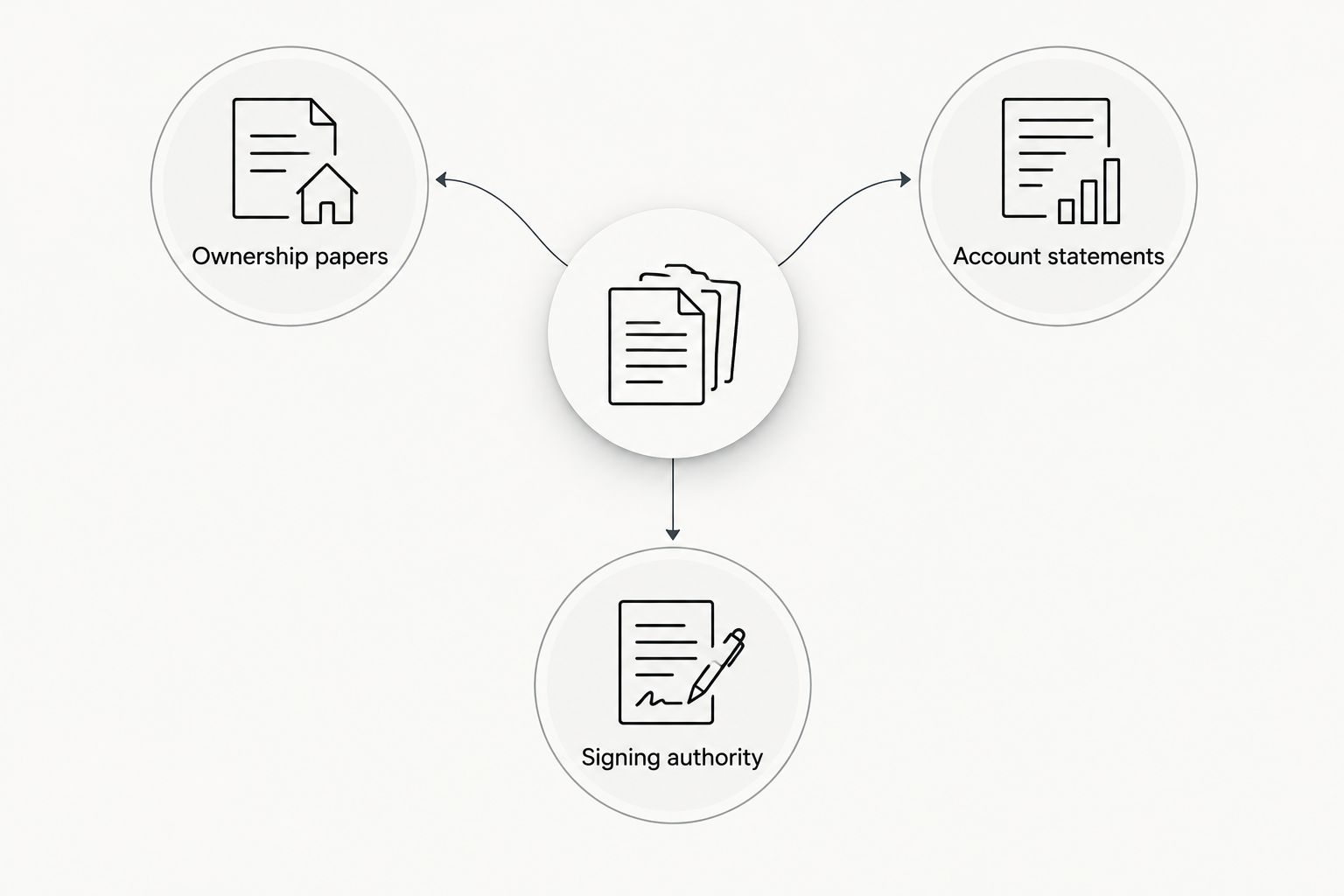
Start with 3 document groups: ownership papers, account statements, and signing authority. Add correspondence that changes the picture, including a previous listing agreement or an existing exit-service contract. An old contract deserves review before you authorize overlapping work.
Keep originals secure and share copies through a verified channel. Your working file should let another authorized family member understand what has happened without reconstructing scattered messages.
- Ownership papers: collect the deed, purchase agreement, or membership documents.
- Account statements: gather maintenance-fee and loan records.
- Signing authority: retain relevant authorization documents securely.
- Save existing listing, rental, and exit agreements.
- Record the resort’s verified contact details and account reference.
3. Ask the resort about surrender first
Contact the resort or developer through contact information verified against existing account records. Ask whether it has a surrender, deed-back, or other owner-exit process for this particular ownership. A request is not an acceptance, and a discussion does not end the contract.
Explain the practical issue plainly: your parent no longer uses the timeshare, and you are helping investigate an exit. Ask what documentation is necessary without sending unrelated medical records. Get the eligibility requirements and the next action in writing.
If the resort does not offer a suitable route, Sold My Timeshare provides timeshare exit and resale assistance as another avenue to discuss. Neither a service inquiry nor a valuation replaces the resort’s written requirements.
- Ask whether the specific ownership qualifies for surrender.
- Confirm how an outstanding loan affects the request.
- Ask which owners must approve or sign.
- Request written instructions and required documents.
- Keep the case reference and the contact’s name.
4. Separate resale, rental, and actual release
Choose the outcome before choosing a provider. Resale aims to transfer ownership to a buyer. Surrender asks the receiving party to accept the interest back. Rental concerns use of the timeshare and does not itself transfer ownership.
A caregiver who wants to stop managing annual reservations needs a different solution from an owner who wants to keep the interest but cannot use an upcoming stay. Do not let a rental arrangement become an accidental substitute for the requested exit.
A 2026 valuation is an assessment, not a completed sale or a release from obligations. Ask what happens if there is no buyer and what work remains with you.
- Write down whether your parent wants to retain or end ownership.
- Check whether the proposed route changes ownership or only usage.
- Ask who handles transfer documents and resort approval.
- Identify responsibilities that remain during the process.
- Reject any suggestion that a listing alone completes an exit.
5. Check the provider and the agreement separately
A reassuring conversation is not enough. Verify the business through independently obtained contact information, then examine the actual agreement. Make sure the contracting company is the same organization you researched.
Sold My Timeshare is a fit for owners seeking a valuation and resale or exit assistance. Its services do not replace independent advice about whether you can sign for your parent or how a transfer affects their legal interests.
Use 4 checks before authorizing work: business identity, service scope, payment terms, and completion evidence. Be especially cautious when someone claims to have a buyer but will not explain the proposed transaction in writing.
- Confirm the legal business name and contact details.
- Read what the provider agrees to do, not just the sales summary.
- Review cancellation, refund, and payment terms in the agreement.
- Ask who holds documents and communicates with the resort.
- Request a written explanation of what counts as completion.
6. Protect your parent’s decisions and your own boundaries
Keep your parent involved to the extent their circumstances allow. Explain the proposed action in plain language: who receives the ownership, which documents need signing, and what responsibilities remain. Avoid presenting a complicated agreement as routine paperwork.
If capacity or family disagreement is an issue, pause the transaction and get appropriate legal advice. A provider’s willingness to accept a signature does not resolve a question about the signer’s authority.
You also need a practical boundary: helping your parent does not require signing a personal guarantee or becoming an owner. Review every signature block for the capacity in which you are signing.
- Agree on who receives updates and makes decisions.
- Keep your parent’s instructions with the working file.
- Ask for explanations of unfamiliar contract language.
- Review requests for personal guarantees before signing.
- Escalate disputed authority or capacity questions to an attorney.
7. Verify completion before closing the file
Ask for documents showing what changed, when it changed, and who accepted the transfer or release. Then confirm the result with the resort through a verified contact. A provider marking its own work complete is not the same as the resort confirming its records.
For a 2026 exit, keep the final ownership documents alongside the earlier agreement and correspondence. Check whether any charges remain and ask for their basis in writing. Do not assume a final service invoice answers the ownership question.
Maintain a clear distinction between submitting documents, accepting a transfer, and recording the account change. Those events are not interchangeable.
- Obtain executed transfer or release documents appropriate to the transaction.
- Confirm the resort’s ownership records have changed.
- Ask which obligations, if any, remain.
- Review later statements against the written completion record.
- Store the completed file securely for future questions.
Request a timeshare valuation
Get a free, no-obligation valuation and discuss resale or exit assistance.
Compare the routes for a caregiving household
Choose the route by the ownership problem, not by a provider’s promised speed. Ask each option to explain its role and its limits. Legal representation, resale assistance, and resort surrender are different services.
| Option | Best for | Main benefit | Key limitation |
|---|---|---|---|
| Direct resort surrender inquiry | Owners asking whether the resort will accept the interest back | Starts with the party managing the ownership | Acceptance depends on the resort’s requirements and the ownership |
| Sold My Timeshare valuation and assistance | Owners seeking a valuation and resale or exit help | Provides an assessment and assistance discussing an exit route | A valuation does not establish buyer demand or complete a transfer |
| Independent resale listing | Authorized owners prepared to manage sale inquiries | Keeps the owner directly involved in the sale process | Listing does not guarantee a buyer or release obligations |
| Qualified attorney | Families facing authority, contract, or estate questions | Addresses the legal issue affecting the decision | Legal advice alone does not produce a buyer or an accepted surrender |
| Rental arrangement | Owners retaining ownership who want to investigate renting usage | Addresses unused occupancy rather than an ownership transfer | Does not itself end ownership or its obligations |
Common mistakes caregivers make
Treating caregiving as signing authority
Managing medication, transport, or household bills does not automatically authorize a property transfer. Confirm your authority before accepting an agreement, and ask the resort what it needs to recognize an authorized representative.
Substituting a sibling’s approval for the owner’s decision
Family agreement is useful, but it does not replace the owner’s instructions or the authority required to act. Keep the decision tied to the named owners and any properly authorized representative.
Stopping payments to force an exit
Nonpayment is not a completed exit and can create additional contractual or collection problems. If payments are already overdue, ask the resort for an account statement and get advice about the actual situation rather than following a generic stop-payment instruction.
Sending a parent’s full records to an unsolicited caller
A caller discussing your parent’s timeshare has not proved their identity. Verify the organization independently and ask why each sensitive document is needed before sharing it.
Closing the file after signing the first document
An authorization to market, a service agreement, and an ownership transfer do different jobs. Keep tracking the matter until the relevant parties confirm the ownership outcome and any remaining responsibilities.
FAQ
Can I cancel my aging parent’s timeshare for them?
You need authority to act for your parent before signing on their behalf. Confirm the ownership, have any power of attorney reviewed, and ask the resort what authorization it requires.
What is the best first step for a caregiver handling a timeshare exit?
Confirm the named owners and your permission to act before hiring an exit provider. Then collect ownership documents and account statements so you can ask the resort about the specific interest.
Does a power of attorney let me sell my parent’s timeshare?
The document’s scope and applicable law determine whether it authorizes the transaction. Have a qualified attorney review it and confirm the receiving organization’s documentation requirements before signing.
Will the resort take back a timeshare because my parent cannot travel?
Ask the resort whether this ownership qualifies for a surrender or other owner-exit process. Inability to travel does not itself confirm acceptance or end the agreement.
Is a timeshare valuation the same as a guaranteed sale?
No, a timeshare valuation is an assessment rather than a confirmed buyer or completed transaction. Request an explanation of the resale process and what happens if the ownership does not sell.
Should I stop paying maintenance fees while arranging an exit?
Do not treat nonpayment as an exit method. Review the account’s obligations and get advice before changing payments, especially when a loan or overdue balance is involved.
What changes if my parent dies before the exit is complete?
The matter becomes an estate-administration question rather than simply a caregiving task. Contact the estate’s legal representative and the resort before continuing under an earlier authorization.
How do I confirm that a timeshare exit is complete in 2026?
Obtain the transaction’s final documents and confirm the ownership change directly with the resort. Ask for written clarification of any remaining balance or responsibility before closing the file.
One last thing
Ask the provider what document will prove your parent no longer owns the timeshare before you sign its agreement. That question separates a promised activity—advertising, negotiation, or document preparation—from the outcome your family needs.
Keep the answer in your file. At completion, compare the promised evidence with what you actually receive.