
Yes—unpaid timeshare fees can lead to a lien on your home, but missing a payment does not automatically put a lien on your primary residence. A lien against the timeshare itself is different from a judgment lien against other real estate; reaching your home generally requires a separate legal basis, often a court judgment, and depends on state law and property exemptions.
- Can unpaid timeshare fees result in a lien? Yes, but a timeshare lien and a home lien are different.
- State courts can enter money judgments that support judgment liens, subject to state law and exemptions.
- A collection letter does not establish that a creditor has recorded a lien against your home.
- Respond to court papers promptly; a resale or exit inquiry does not suspend a lawsuit.
Why this matters: In 2026, your immediate task is to identify what the creditor is actually pursuing: overdue fees, foreclosure against the timeshare, or a money judgment. Those are different problems with different responses. Sold My Timeshare provides free, no-obligation timeshare valuations and resale/exit assistance; that service is separate from legal advice about protecting your home.
Can unpaid timeshare fees result in a lien on your home?
Yes, where applicable law allows a creditor to turn an unpaid obligation into an enforceable judgment and establish a lien against nonexempt real estate. However, an association’s lien against a deeded timeshare does not automatically extend to your separate home.
Start by distinguishing these collection stages:
| Collection stage | What it concerns | What it means for your home |
|---|---|---|
| Past-due notice | An asserted unpaid account balance | The notice alone does not create a home lien |
| Timeshare lien | The timeshare interest, where governing law permits | It does not automatically attach to unrelated real estate |
| Collection lawsuit | A request for a court to determine liability | A judgment can create additional enforcement exposure |
| Judgment lien | Real estate covered by applicable judgment-lien rules | Attachment and enforcement depend on state law and exemptions |
| Timeshare foreclosure | Enforcement against the timeshare interest | It is not the same proceeding as foreclosure against your home |
Identify the document before deciding how to respond. A demand letter, summons, judgment, and recorded lien are not interchangeable. Neither a threatening headline nor a reassuring sales pitch establishes your legal position.
This article explains the general U.S. framework in 2026. Your ownership documents, the court record, and applicable state law determine the actual result.
A timeshare lien concerns the timeshare interest
For a deeded timeshare, state law and the governing documents can give an association lien rights for unpaid assessments. The lien concerns the timeshare interest securing those obligations—not every property the owner holds.
The association can pursue remedies allowed by the applicable law and documents, including foreclosure where authorized. Whether it must provide notice, offer an opportunity to cure, or follow a particular foreclosure procedure depends on the governing rules.
Do not treat a timeshare foreclosure notice as proof that your primary home is being foreclosed. Read the property description. Identify which ownership interest the notice names.
Points-based and right-to-use arrangements require a different document review. Do not assume that every product described as a timeshare involves a deeded real estate interest or identical collection rights.
A judgment lien can concern other real estate
A creditor seeking to collect a personal debt can file a lawsuit where legally permitted. If the creditor obtains a money judgment, state law determines whether and how that judgment becomes a lien against real estate you own.
Depending on the jurisdiction, additional recording, filing, or other steps are required. The location and ownership of the property also matter. A judgment entered in one state does not give a collector unrestricted enforcement rights everywhere.
That distinction explains why two owners with similar overdue balances can face different outcomes. One account might remain in collections; another might produce a lawsuit and judgment. Neither outcome should be assumed from the balance alone.
A judgment lien is not the same as an immediate forced sale. Whether a creditor can enforce against a particular home involves further legal requirements, including any applicable exemptions.
Why the risk to your home varies
A meaningful 2026 assessment starts with your documents, not a blanket statement that timeshare debt is either harmless or certain to threaten your house.
- Ownership structure: A deeded interest, trust interest, or contractual right-to-use arrangement requires its own analysis.
- Debt type: Maintenance assessments, special assessments, and purchase financing can involve different creditors and remedies.
- Contract terms: The signed agreement and governing documents help establish the obligation and available remedies, subject to law.
- Legal stage: An overdue bill presents a different immediate problem from a lawsuit, judgment, or recorded lien.
- Property location: State rules govern judgment liens, recording requirements, and exemptions affecting real estate.
- Home ownership and exemptions: Title, co-ownership, and homestead protections affect whether a judgment reaches a particular property.
These factors are a checklist, not a prediction. A collector’s statement that your home is at risk does not establish that every legal requirement has been met.
What should you do if a collector threatens your home?
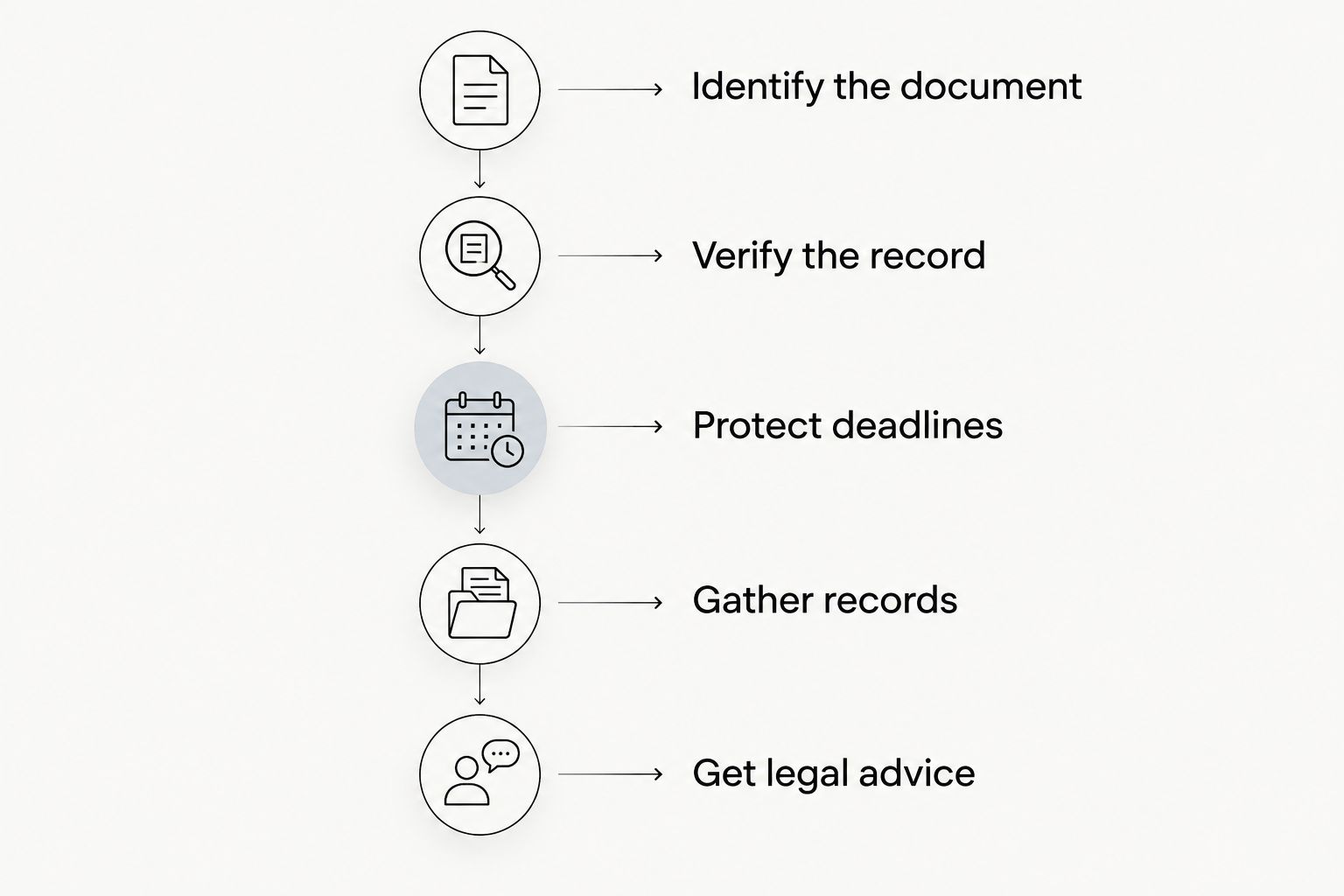
Verify the claim and protect court deadlines before choosing an exit service. A promise to sell or cancel a timeshare does not answer a summons or remove a recorded lien.
Identify the document
Separate ordinary billing correspondence from formal legal papers. Look for the creditor’s name, the property description, a court name, a case number, and any stated response deadline.
Keep the envelope and attachments. If the document claims a lien already exists, ask for the recorded instrument and the recording information rather than accepting a verbal description.
Verify the record
Check a claimed lawsuit with the named court through independently obtained contact information. For a claimed real estate lien, check the relevant land records or obtain professional help reviewing title.
Do not rely solely on a link or phone number in an unexpected message. Verification is especially important when the sender demands payment to prevent an immediate loss of your home.
Protect deadlines
Follow the deadline stated in valid court papers and get legal advice promptly. Ignoring a lawsuit can lead to a default judgment, subject to the court’s rules.
A complaint to customer service, an ongoing negotiation, or a resale listing does not itself extend the court’s deadline. Get any procedural extension through the proper process.
Gather records
Collect your purchase agreement, ownership documents, assessment statements, payment history, collection notices, and any court papers. Include documents showing who owns your home if the threat concerns that property.
Keep a written record of communications. An organized file helps distinguish an incorrect balance, a disputed obligation, and a genuine enforcement action.
Get legal advice
Ask an attorney licensed in the relevant state to assess the debt, the proceeding, and any home protections. Experience with debt collection, real estate enforcement, or timeshare disputes should match the problem you actually face.
Use a guide to timeshare exit attorneys to frame your questions, not as a substitute for checking an attorney’s license and relevant experience.
Should you stop paying while arranging an exit?
Do not assume that starting an exit process suspends your payment obligations. A valuation request, resale advertisement, or service agreement does not by itself release you from your timeshare contract.
Before deciding whether to stop paying, establish what the contract requires and what consequences apply to your account. Ask whether the creditor has agreed in writing to a payment arrangement, settlement, or release—and exactly what that agreement covers.
The distinction matters throughout 2026: seeking an exit and completing an exit are different events. A transfer can also require approvals or other closing steps before responsibility changes.
For the broader payment decision, read whether you can stop paying timeshare maintenance fees. If legal papers have already arrived, address those separately and immediately.
Which kind of help fits your situation?
Choose help based on the task, rather than treating every timeshare problem as an exit-company problem. A valuation addresses resale questions; legal representation addresses rights, defenses, and court procedures.
| Route | Best for | Main benefit | Main limitation |
|---|---|---|---|
| Resort or association discussion | Owners seeking clarification or a direct resolution | Establishes what the creditor will consider | An inquiry does not guarantee a release or suspend deadlines |
| Resale or exit assistance | Owners exploring a transfer or another exit route | Helps assess options for ending ownership | Does not itself resolve a lawsuit or protect exempt property |
| Licensed attorney | Owners facing litigation, a judgment, or a disputed lien | Evaluates legal rights and procedural responses | Legal advice alone does not transfer ownership |
Sold My Timeshare is best suited to owners seeking a timeshare valuation and resale or exit assistance, not a legal ruling on whether a home is protected. Its free, no-obligation valuation is an information-gathering step; it is not a court defense or a promise that ownership will end.
When contacting Sold My Timeshare about timeshare exit assistance, disclose any overdue balance, financing, lawsuit, or lien notice. Those facts belong in the initial discussion, rather than appearing after an exit route has been proposed.
Request your timeshare valuation
Explore resale or exit assistance with a free, no-obligation valuation.
Does a homestead exemption protect your house?
A homestead exemption can protect qualifying home equity from certain creditors, but its scope depends on state law. Qualification requirements, exceptions, and any filing requirements need a state-specific review.
Do not confuse a property-tax homestead benefit with protection against judgment enforcement. The same word can describe different legal benefits. Confirm which protection applies to your property and the particular debt.
For a 2026 review, ask whether the exemption affects lien attachment, enforcement, or both. Also disclose co-owners and how title is held; do not assume that a jointly owned home is automatically beyond a creditor’s reach.
Does timeshare foreclosure erase the unpaid balance?
Timeshare foreclosure does not establish, by itself, that every personal obligation has ended. Applicable law and the documents determine whether a creditor can pursue any remaining balance and what restrictions apply.
Ask for written confirmation identifying the obligations resolved by a foreclosure, settlement, or accepted surrender. Do not interpret the loss of booking access or removal from an owner portal as a release.
The same caution applies to a transfer. Ending ownership and resolving past-due debt are related tasks, but the paperwork must address each obligation that remains in dispute.
FAQ
Can unpaid timeshare fees result in a lien on my primary home?
Yes, unpaid timeshare fees can lead to a home lien where the creditor obtains the necessary legal rights under state law, often through a money judgment. A lien against the timeshare itself does not automatically attach to your primary home.
Does one missed timeshare payment automatically create a house lien?
No, a missed timeshare payment does not automatically create a lien against your separate home. The creditor needs a legal basis and must satisfy the applicable requirements.
Can a collection agency take my house without going to court?
A collection agency's demand letter does not give it authority to take your house. Enforcing an ordinary unsecured debt against real estate generally requires a judgment and compliance with state enforcement rules.
Will selling my timeshare remove an existing judgment lien?
Selling your timeshare does not automatically remove an existing judgment lien against another property. The judgment and lien need their own resolution and any required release documentation.
Am I protected if my timeshare is paid off?
Paying off purchase financing does not necessarily end maintenance-fee or assessment obligations. An unpaid assessment dispute requires a separate review of the governing documents and state law.
Should I ignore a lawsuit while an exit company handles my timeshare?
No, you should not ignore a lawsuit while an exit company handles your timeshare. Confirm who is responsible for the legal response and meet the court's deadline.
What should I ask a lawyer about a threatened home lien?
Ask whether the creditor has a valid judgment, whether a lien has attached, and what exemptions protect your property. Bring the notices, ownership documents, account history, and any court papers.
One last thing
Ask what document will prove the problem is resolved. A payment receipt, settlement agreement, ownership transfer, judgment satisfaction, and lien release serve different purposes; one does not necessarily replace another.
Before treating a 2026 exit or settlement as complete, confirm who must provide each required document and whether anything must be filed or recorded. Keep the final paperwork with your property records, not just in an email thread.