
Yes, a timeshare loan often differs from a conventional home mortgage in what it finances, how it is secured, and its repayment terms—but a loan secured by a deeded timeshare can itself involve a mortgage. Your maintenance fees are a separate obligation, and selling or surrendering the ownership does not automatically cancel the loan.
- Is a timeshare loan different from a mortgage? Often, but deeded timeshare financing can itself involve a mortgage.
- Sold My Timeshare offers free valuations and resale or exit assistance; valuation does not establish your lender’s payoff amount.
- Check collateral, repayment terms, maintenance fees, and written debt-release conditions before selling or surrendering a timeshare.
Is a timeshare loan different from a mortgage?
A timeshare loan describes what you borrowed money to buy; a mortgage describes a legal arrangement securing debt against real property. Those categories overlap. The useful comparison in 2026 is between your actual timeshare financing agreement and a conventional home mortgage—not between the labels alone.
If you are considering a sale, Sold My Timeshare provides free, no-obligation valuations and resale or exit assistance. Keep that assessment separate from the lender’s written payoff statement: they answer different questions.
| Question | Timeshare financing | Conventional home mortgage |
|---|---|---|
| What does it finance? | A vacation ownership interest, such as deeded ownership or contractual usage rights | The purchase or refinancing of a home |
| What secures repayment? | The timeshare interest, other collateral, or no collateral, depending on the agreement | The home secures the debt through a mortgage or deed of trust |
| What determines repayment terms? | Your loan agreement and applicable law | Your loan agreement and applicable law |
| What expenses remain separate? | Maintenance fees, assessments, and other ownership charges | Property taxes, insurance, association charges, and upkeep, as applicable |
| What happens when you sell? | The transaction must address outstanding debt and any lien or transfer restrictions | Closing ordinarily addresses the secured loan and releases its lien |
| Best for understanding which issue? | Your vacation ownership financing obligations | Your home financing obligations |
Neither label proves that borrowing is affordable or that a transfer releases you from repayment. Read the documents that create the obligation.
Why this matters
Confusing ownership with debt can leave you solving only half the problem. A resort accepting a surrender is not, by itself, proof that a separate lender has forgiven the balance.
For a 2026 resale or exit decision, answer these questions separately: Who will own the timeshare afterward? Who will still owe the lender? Which document confirms that your future ownership charges have ended?
Treat a transfer agreement, a loan release, and a maintenance-fee account closure as separate items to verify. One document can address several obligations, but do not assume it does without reading the terms.
A deeded timeshare loan: check the security documents
A deeded timeshare represents a real-property interest. Financing secured by that interest can use a mortgage or another security instrument, depending on the jurisdiction and transaction.
The benefit of understanding this structure is practical: you can identify the lien that closing must address. The limitation is equally important: having a deed does not make the financing identical to a conventional mortgage on a primary residence.
Check the promissory note, deed, and recorded security documents together. The deed identifies the ownership interest; the note establishes repayment obligations; the security instrument identifies the collateral and remedies associated with default.
Best for owners with a deeded timeshare: establish whether a recorded lien exists before promising a buyer that the interest can transfer free of debt. Ask the closing professional how the lien release will be documented.
Points or right-to-use financing: the contract matters
Points and right-to-use arrangements require a closer look at the underlying ownership documents. Points alone do not tell you whether the arrangement involves a deeded interest, a trust interest, or contractual usage rights.
That distinction matters because the lender’s security and the resort’s transfer rules follow the actual structure. A membership description on a sales brochure is not a substitute for the agreement you signed.
Best for points or right-to-use owners: identify exactly what you own and what the lender financed. The benefit is a clearer transfer plan; the limitation is that knowing your points balance does not establish your debt balance or release conditions.
Ask whether the lender and the resort are separate entities. If they are, obtain answers from both rather than assuming the resort can change the lender’s contract.
A personal loan or home-backed loan: follow the collateral
You can finance a timeshare purchase with borrowing that is not secured by the timeshare itself. Examples include an unsecured personal loan or borrowing secured by your home.
An unsecured loan avoids placing a lien on the timeshare, but repayment remains a separate contractual obligation. Selling the timeshare does not automatically repay that loan.
Borrowing against your home creates a different exposure: your home secures the debt even though the money funded vacation ownership. A timeshare surrender does not remove that home-backed obligation.
Best for owners who arranged financing independently: trace the purchase funds back to the lender and identify the collateral. Do not assume the resort’s account statement includes debt held elsewhere.
Why timeshare financing terms vary
There is no single timeshare loan structure or universal comparison with home financing. For a useful 2026 review, compare the agreements across these factors:
- Collateral: Determine whether the loan is secured by the timeshare, your home, another asset, or nothing.
- Ownership structure: Deeded interests and contractual usage rights require different transfer documentation.
- Repayment terms: Review the interest rate, payment schedule, maturity date, and any variable-rate provisions.
- Borrower obligations: Identify every borrower, co-borrower, or guarantor named in the agreement.
- Payoff and release terms: Check accrued interest, applicable charges, and the conditions for releasing any lien.
- Ownership charges: Separate loan payments from maintenance fees and assessments so neither account gets overlooked.
Compare the annual percentage rate and total repayment obligation where disclosed, rather than judging financing by the monthly payment alone. A smaller payment does not, by itself, establish a lower total borrowing cost.
How to check your loan before selling or exiting
Use this 5-step review before accepting a resale offer or signing a surrender agreement. The goal is not to become a finance specialist; it is to get written answers to the questions that determine whether you remain responsible.
1. Gather documents
Start with 3 document groups: your financing agreement, ownership documents, and current account statements. Include statements from both the lender and the resort if they maintain separate accounts.
For your 2026 review, use current statements rather than the original purchase paperwork alone. Original terms explain the agreement, but current records identify balances, account status, and the parties handling the account now.
2. Identify collateral
Find the language describing security, collateral, a mortgage, a deed of trust, or a security interest. Also identify everyone who signed as a borrower or guarantor.
If the language is unclear, ask the lender to identify the security document in writing. Get qualified legal advice when you need an interpretation of legal rights or default remedies.
3. Request payoff
Ask the lender for a written payoff statement valid through the intended closing date. An account balance is not necessarily the amount required to satisfy the debt on that date.
For the transaction sequence, review the timeshare mortgage payoff to resale closing workflow. Keep the lender’s payoff instructions separate from any estimate of what a buyer will pay for the ownership.
4. Confirm transfer
Ask the resort and closing professional what documents, approvals, and account conditions apply to the proposed transfer. Confirm who will obtain any required lender release.
Do not assume a buyer will take over your loan. A transfer of ownership and a lender-approved assumption of debt are different arrangements, and any assumption requires the lender’s agreement.
5. Verify release
Before treating the transaction as complete, obtain documentation addressing both ownership and debt. Confirm the transfer, any lien release, and the status of the resort account.
Keep these records with your final settlement documents. A verbal assurance that everything is handled is not a substitute for written confirmation from the parties responsible.
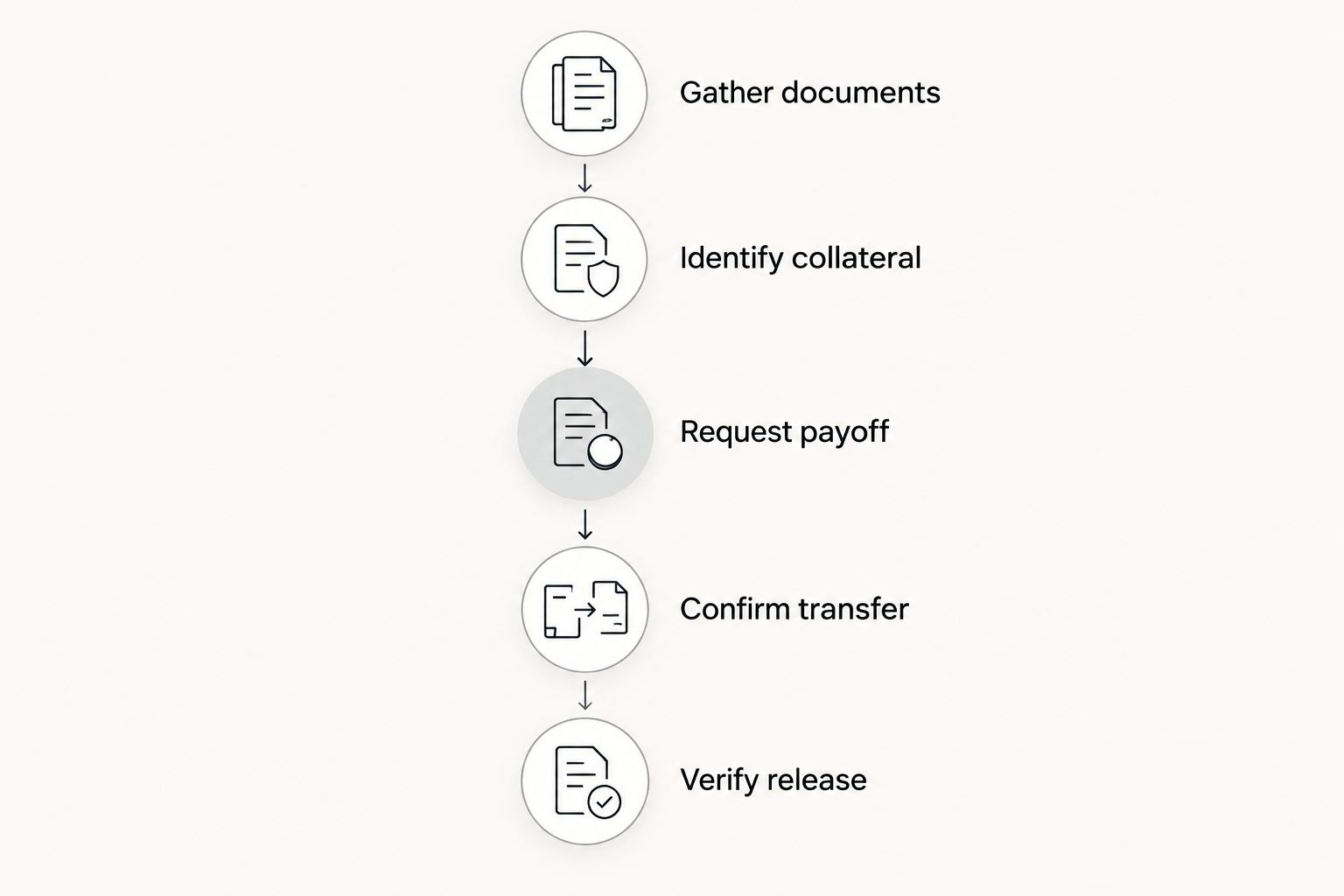
The review is complete only when the paperwork answers both questions: what happened to the timeshare, and what happened to the loan? Keep asking until the written terms address each obligation.
Can you sell a timeshare if you still owe money?
An outstanding loan does not automatically prevent a sale, but the transaction must resolve the debt and any associated lien. If the proceeds do not cover the required payoff and transaction obligations, you need an agreed way to address the shortfall.
A valuation helps you assess the resale side; it does not establish what the lender will accept. Sold My Timeshare is best for owners seeking a free timeshare valuation and resale or exit assistance. Its valuation is a starting point for that decision, not a lender release or a guaranteed sale outcome.
For a 2026 sale decision, keep 2 figures separate: the proposed sale proceeds and the lender’s written payoff amount. Do not assume the original purchase amount establishes today’s resale value.
Does surrendering a timeshare cancel the loan?
Surrendering a timeshare does not automatically cancel its loan. A deed-back or other surrender arrangement ends only the obligations its written terms actually address.
Before agreeing, ask whether the lender is a party to the arrangement and whether the agreement expressly releases your repayment obligation. Also confirm how maintenance fees, assessments, and any delinquent accounts will be handled.
The benefit of an accepted surrender is a documented ownership exit. Its limitation is that ownership acceptance alone does not prove separate financing has been resolved.
Can you stop paying while arranging an exit?
An exit application or resale listing does not suspend your payment obligations. Missed payments can trigger contractual default consequences, collection activity, and credit reporting, subject to the agreement and applicable law.
Do not stop payments solely because a salesperson or exit provider promises a future resolution. If you cannot afford payments, contact the lender about its available hardship arrangements and request any agreed changes in writing.
An attorney can advise you on disputed obligations and state-specific consequences. General information about timeshare exits cannot establish what your individual contract permits.
FAQ
Is a timeshare loan always a mortgage?
No, a timeshare loan is not always a mortgage. It can be secured by a deeded timeshare interest, structured around other ownership rights, or funded through separate borrowing; the documents establish the arrangement.
Does owning a deeded timeshare mean I have a home mortgage?
No, a deeded timeshare does not make its financing a conventional home mortgage. A mortgage can secure the timeshare debt, but the collateral and ownership interest differ from a primary residence.
Are timeshare maintenance fees included in my loan payment?
Maintenance fees are separate from the debt used to buy a timeshare. Review your lender and resort statements to identify each obligation, even if a billing arrangement presents charges together.
Will selling my timeshare remove the loan from my name?
Selling your timeshare does not automatically remove the loan from your name. The lender must receive the required payoff or agree to another arrangement that expressly releases you.
Can a buyer just take over my timeshare payments?
A buyer cannot release you from the loan simply by agreeing to make your payments. Any formal assumption requires lender approval, and you need written confirmation of whether your own liability ends.
Does paying off the loan end maintenance fees?
Paying off the loan does not end maintenance fees associated with continued ownership. Confirm a completed ownership transfer or another documented arrangement that ends your responsibility for those charges.
Can Sold My Timeshare help me understand my resale options?
Sold My Timeshare provides free, no-obligation timeshare valuations and resale or exit assistance. A valuation helps with the ownership decision; obtain payoff and debt-release terms directly from the lender.
One last thing
A paid-off timeshare is not the same as an ended timeshare obligation. Loan repayment addresses financing; maintenance fees follow the ownership agreement until a valid transfer or other documented release changes that responsibility.
Before closing your file in 2026, save written confirmation covering both accounts. That final check is more useful than relying on whether someone called your financing a loan or a mortgage.