
You generally cannot stop paying timeshare maintenance fees without consequences while your ownership obligations remain in place. You need a completed cancellation, an accepted surrender, a valid transfer, or another legally effective release—not simply a decision to stop using the property. Unpaid fees can lead to additional charges, collection activity, and, depending on your ownership and applicable law, foreclosure or credit consequences.
- Can you stop paying timeshare maintenance fees? Not safely while your payment obligation remains in force.
- A resale listing or exit-service agreement does not itself release you from maintenance fees.
- Get written confirmation of your release, its effective date, and responsibility for outstanding charges.
- Sold My Timeshare provides free, no-obligation timeshare valuations and resale or exit assistance.
Can you stop paying timeshare maintenance fees?
Stopping payment is not the same as ending ownership. In 2026, your contract, governing documents, account status, and applicable law determine what you owe and how that obligation ends.
Start by separating a payment problem from an ownership problem. If you need help understanding a potential resale, Sold My Timeshare offers a free, no-obligation valuation and resale or exit assistance. That assessment is a starting point, not a release from your existing contract.
| Approach | Best for | Main benefit | Main limitation |
|---|---|---|---|
| Completed resale or transfer | Owners with a transferable interest and an accepting buyer or recipient | Can move future ownership obligations to the new owner | Listing or signing an agreement does not complete the transfer |
| Accepted developer or association surrender | Owners whose program accepts their ownership | Provides a direct route back to the developer or association | Acceptance and release conditions depend on the program |
| Written hardship arrangement | Owners seeking help with an immediate payment problem | Can establish agreed payment relief | Does not end ownership unless the agreement expressly says so |
| Valid cancellation or legal release | Owners with an applicable cancellation right or legal basis | Can end obligations covered by the cancellation or release | Deadlines, facts, and required procedures matter |
| Unilateral nonpayment | Not recommended as an exit method | Leaves cash available for immediate needs | Does not itself end liability and exposes you to default consequences |
Why this matters
Maintenance fees and a timeshare purchase loan are different obligations. Paying off the loan does not, by itself, eliminate the charges associated with continuing ownership.
The same distinction applies to usage. Not booking a vacation, letting points expire, or deciding that the timeshare no longer suits you does not automatically cancel the obligation to pay maintenance fees. Your exit needs to address ownership and outstanding balances, not just future vacations.
If you are reviewing your options in 2026, ask a precise question: what document will end your responsibility, and when will it take effect? An assurance that someone is working on your exit does not answer that question.
What happens if you simply stop paying?
Your governing documents set out payment obligations and remedies for default. Depending on those documents and applicable law, unpaid maintenance fees can result in late charges, interest, restricted usage, collection demands, legal action, or enforcement against the ownership interest.
Credit consequences are not identical in every case. Reporting practices, the type of debt, and any collection or legal action affect the outcome. Do not accept either a promise that your credit is protected or a claim that every missed payment produces the same result.
A missed payment does not create a release
A canceled automatic payment changes how money leaves your bank account. It does not cancel the underlying contract or erase an amount already due.
Likewise, a collection notice is not proof that ownership has ended. Keep collection correspondence separate from transfer or cancellation paperwork, and establish what each document actually says.
A foreclosure is not a planned transfer
Foreclosure involves legal procedures and consequences that depend on the ownership and jurisdiction. Do not treat it as a substitute for a documented, agreed exit.
If you receive a lawsuit, foreclosure notice, or other document with a response deadline, seek legal advice promptly. Negotiations with an exit service do not automatically suspend that deadline.
Completed resale: confirm when liability changes
A resale can end future maintenance-fee responsibility when the ownership transfer becomes effective under the applicable documents and law. Finding a buyer is only part of that process.
Before proceeding, establish whether the ownership can be transferred, whether there is a loan or lien to resolve, and what approvals or account conditions apply. A proposed buyer does not remove those requirements.
Your sale agreement should address who pays outstanding charges and any assessment that comes due around closing. Do not assume that the buyer takes every unpaid balance or that a signed contract immediately changes the association's records.
The practical finish line is an effective transfer with documented responsibility for charges. Keep the executed documents, any required recording evidence, and confirmation that the account has been updated.
Accepted deed-back: get the release in writing
A deed-back or surrender means asking the developer or association to accept the ownership back. It is an option to investigate, not a right every owner has.
Contact the party responsible for your ownership directly and ask whether an official surrender program applies. Request the eligibility conditions, required documents, treatment of unpaid balances, and the point at which future fees stop.
An application is not acceptance. An acceptance letter also needs careful reading: check whether additional signatures, payment, recording, or account processing must happen before the release takes effect.
Do not assume that preparing or sending a quitclaim deed forces someone to accept the property. The transfer method must actually end your obligation under the governing documents and applicable law.
Hardship relief: distinguish breathing room from an exit
If you cannot afford the next bill, ask the developer or association about hardship assistance before assuming your only choices are full payment or silence. Explain your circumstances and request the available terms in writing.
A payment arrangement can address an immediate cash-flow problem without ending ownership. Check whether interest or other charges continue, whether collection activity pauses, and what happens if you cannot meet the revised terms.
For a 2026 hardship agreement, read the actual conditions rather than relying on an older conversation. If your goal is to leave permanently, ask whether the proposal includes surrender or only changes the payment schedule.
Why your maintenance-fee obligation varies
There is no single stopping point that applies to every timeshare. The documents and circumstances determine both your current exposure and the work needed to end it.
- Ownership structure: Deeded ownership, points arrangements, and right-to-use contracts can have different transfer and termination requirements.
- Governing documents: Your contract and association rules establish payment duties, assessments, and default remedies.
- Account status: Unpaid charges or other unresolved balances can affect the conditions for a sale or surrender.
- Purchase financing: A remaining loan creates a separate obligation that an ownership transfer does not automatically discharge.
- Applicable law: Cancellation rights, collection procedures, and enforcement rules depend on the relevant jurisdiction.
- Exit terms: The effective date and scope of a written release determine which future charges, if any, remain your responsibility.
What should you do before stopping payment?
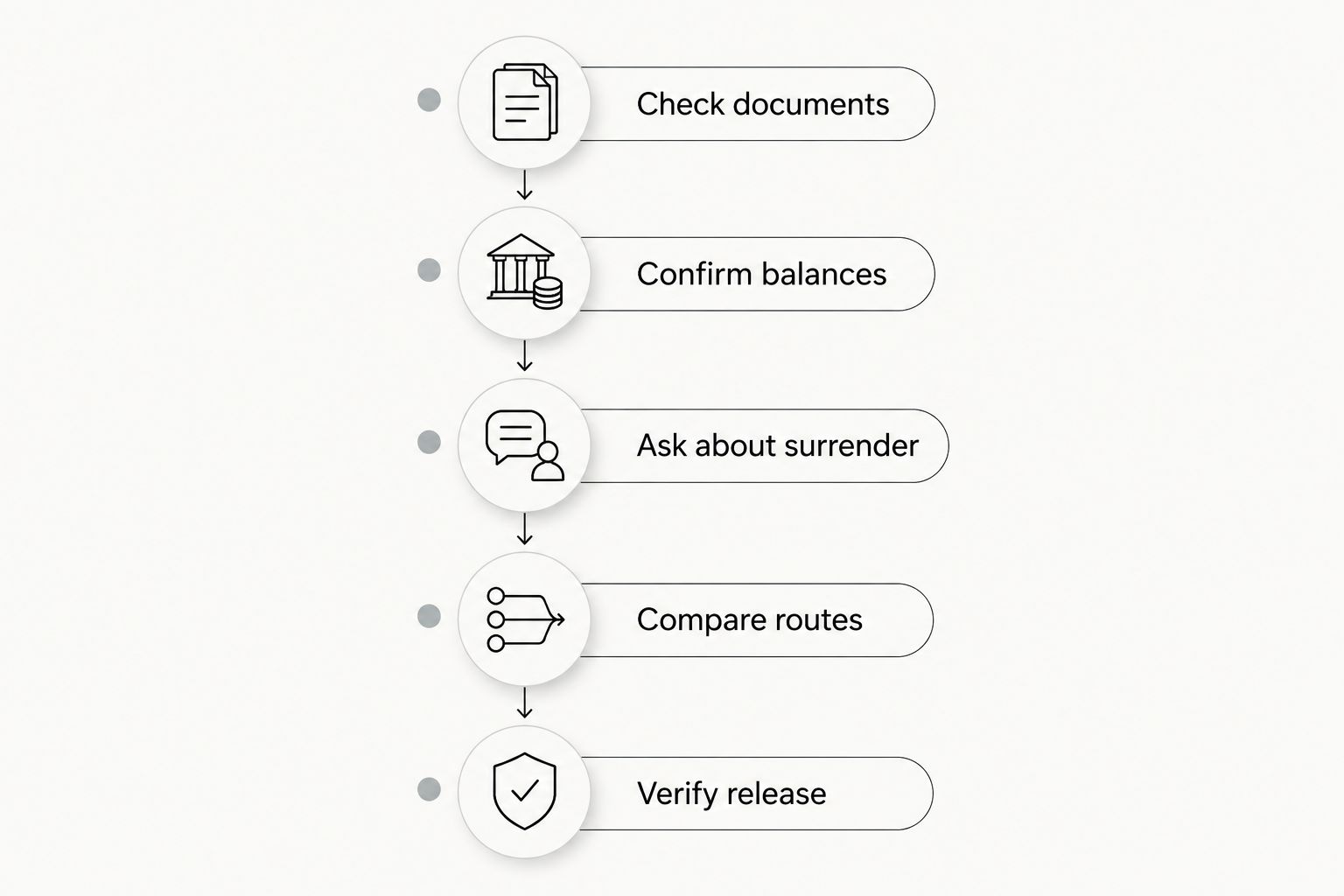
Use this sequence to establish your position before making a decision. It applies whether you are current on fees, facing a new assessment, or already receiving overdue notices.
- Check documents. Gather the purchase agreement, ownership paperwork, maintenance-fee statements, loan records, and any cancellation or transfer correspondence. Identify the named owners and the entities sending each bill.
- Confirm balances. Request a current written account statement. Separate maintenance fees, assessments, loan payments, and other charges so you know which obligation each proposed solution addresses.
- Ask about surrender. Contact the developer or association through independently verified contact details. Ask about official surrender, hardship, and transfer procedures before paying someone to describe those same options.
- Compare routes. Assess whether resale, accepted surrender, a hardship arrangement, or legal advice fits your circumstances. Request written scope and terms from any service provider.
- Verify release. Before treating fees as finished, establish the effective date, any remaining balance, and the documents proving that your obligation has ended.
Do not discard your records after a transfer. A later bill is easier to address when you can show the effective date and the agreed allocation of charges.
A current account confirmation also helps identify unresolved issues before closing. The HOA estoppel certificate to timeshare closing workflow explains that part of the process.
Can you stop paying maintenance fees after selling your timeshare?
You can stop paying charges that are no longer your responsibility after a valid, completed transfer. A listing, buyer inquiry, deposit, or signed sales agreement does not by itself establish that your liability has ended.
Ask the closing party to identify the transfer's effective date and how charges are divided between seller and buyer. Then confirm that the association or program administrator has updated its records as required.
If a bill arrives afterward, do not automatically ignore it. Compare the billing period with the transfer documents and dispute an incorrect charge in writing with supporting records.
Do you still owe maintenance fees after paying off the mortgage?
You generally still owe maintenance fees after paying off a timeshare mortgage if you remain an owner subject to those charges. The mortgage finances the purchase; maintenance fees arise from the ongoing ownership arrangement.
A paid-off interest removes one issue from the exit discussion, but it does not guarantee a buyer or acceptance into a surrender program. Check the actual transfer conditions before assuming the process is complete.
Should you stop paying because an exit company tells you to?
An exit company's instruction does not change your obligations to the developer, association, or lender. Ask for the specific contractual or legal basis for that advice and an explanation of the consequences before acting.
Be especially cautious when someone guarantees a result without reviewing your documents or discourages you from contacting the developer. Verify who is providing the service, what the written agreement covers, and whether any legal advice comes from an attorney authorized to advise you.
Sold My Timeshare is for owners seeking a free, no-obligation timeshare valuation and resale or exit assistance. A valuation helps you explore a resale route; it does not establish a legal right to stop paying or guarantee a completed exit.
FAQ
Can I stop paying timeshare maintenance fees if I never use it?
Not using your timeshare does not itself end your maintenance-fee obligation. Your contract and governing documents determine what remains due until a valid termination, transfer, or release takes effect.
Will stopping timeshare maintenance payments hurt my credit?
Stopping payments can have credit consequences, but the outcome depends on reporting practices and subsequent collection or legal action. Do not rely on a blanket promise that nonpayment cannot affect your credit.
Can I give my timeshare back instead of paying maintenance fees?
You can ask the developer or association to accept a surrender, but acceptance is not automatic. Get the conditions and effective release date in writing before treating future fees as canceled.
Do maintenance fees stop when I list my timeshare for sale?
Listing your timeshare for sale does not stop maintenance fees. Your obligations continue according to the governing documents until an effective transfer or another valid release changes them.
What if I cannot afford my timeshare maintenance fees in 2026?
Contact the developer or association about hardship arrangements and official surrender options before ignoring the bill. Request written terms explaining whether the arrangement changes payments, ends ownership, or leaves outstanding charges due.
Can a timeshare exit company guarantee that I can stop paying?
A service provider's promise does not itself release you from maintenance fees. Review the written agreement and get independent legal advice before following instructions to default.
Can Sold My Timeshare help me understand my resale options?
Sold My Timeshare offers free, no-obligation timeshare valuations and resale or exit assistance. A valuation is an assessment step, not confirmation that maintenance-fee obligations have ended.
One last thing
The most useful question is not whether someone has started your exit, but whether your obligation has actually ended. Before you file away your 2026 paperwork, locate the document establishing that result and check its effective date.
If you cannot identify it, ask the responsible party for written clarification. Keep asking until you can distinguish a pending request from a completed release.