
To get out of a timeshare contract legally, use a valid cancellation right, obtain a written release from the resort, or complete an approved sale or ownership transfer. The route depends on your contract, applicable law, outstanding loan, and ownership rules; stopping payments does not cancel the contract. Your exit is complete only when the required cancellation, release, or transfer is effective—not when an exit company says its work has started.
- How to get out of a timeshare contract legally: check cancellation rights before pursuing a resort release or resale.
- Sold My Timeshare provides valuations and resale/exit assistance for owners assessing their next step.
- A completed ownership transfer does not automatically release a separate loan obligation.
- Keep written proof of cancellation, release, or transfer; an exit-service agreement is not proof of release.
Why this matters
A timeshare exit involves obligations, not just vacation access. You need to establish what ends your ownership, what happens to any financing, and when responsibility for future assessments changes.
For owners exploring resale in 2026, Sold My Timeshare provides free, no-obligation valuations and resale/exit assistance. A valuation helps you assess resale; it does not cancel ownership or establish that a buyer will accept it.
This guide provides general U.S. information, not individualized legal advice. Use your documents and advice from a licensed attorney to resolve questions about your rights, deadlines, or liability.
How to get out of a timeshare contract legally
Start with cancellation eligibility, then examine a resort release or a permitted transfer. If you dispute the sale or need help interpreting your obligations, seek legal advice before signing another agreement.
| Route | Best for | Main benefit | Main limitation |
|---|---|---|---|
| Contract rescission | Recent buyers with an applicable cancellation right | Cancels the purchase through the required process | Deadlines and delivery requirements control eligibility |
| Resort surrender | Owners whose resort accepts a return | Creates a direct route to an agreed release | Acceptance and eligibility are not automatic |
| Resale or transfer | Owners with transferable interests and a willing recipient | Moves ownership through an approved transaction | A recipient, required approvals, and completed closing are necessary |
| Attorney-assisted resolution | Owners with disputed obligations or legal claims | Addresses the specific contract and legal issues | Hiring an attorney does not guarantee cancellation |
Follow this sequence:
- Read the cancellation notice. Determine whether a rescission right remains available and how to exercise it.
- Separate ownership from financing. Identify the owner, lender, association, and resort administrator involved.
- Ask the resort about release options. Request written eligibility requirements and the proposed agreement.
- Assess resale or transfer. Confirm restrictions, buyer acceptance, and closing requirements before committing.
- Verify completion. Keep the documents showing what ended and what, if anything, remains owed.
Do not treat these routes as interchangeable. A buyer accepting a deed, for example, does not by itself establish that a lender has released you.
Can you cancel during the rescission period?
Rescission is the first route to check after a recent purchase. Applicable law and your purchase documents determine the cancellation period and required procedure. There is no single deadline that applies to every U.S. timeshare purchase.
Find the cancellation notice in your purchase packet. Check the triggering date, recipient, delivery method, and whether the rule concerns sending or receiving the notice. Do not substitute an informal conversation with a salesperson for the required process.
For a purchase made in 2026, use the documents supplied with that transaction and verify the applicable law. Another owner's deadline is not evidence of yours.
Keep the cancellation notice, a copy of what you sent, and proof of delivery or mailing. If the deadline is close or the instructions conflict, contact a licensed attorney promptly rather than waiting for a resort callback.
Can the resort take your timeshare back?
A resort surrender or deed-back requires the receiving party's acceptance and an effective agreement. Ask the resort directly before assuming you need a third-party exit service.
Contact the owner-services department through details on your ownership documents or account statement. Ask whether the resort accepts voluntary returns and request the conditions in writing. Describe your ownership and payment status accurately.
Before signing, ask:
- Which ownership interest does the agreement cover?
- Does the release address outstanding assessments and other obligations?
- Is financing handled separately?
- What conditions must you satisfy before acceptance?
- What document confirms the effective release date?
A surrender offers a direct route when the resort accepts it. Its limitation is equally important: asking does not create a right to acceptance, and submitting paperwork does not establish that your ownership has ended.
Can you sell or transfer the ownership instead?
Resale or transfer is an option when your interest is transferable and a buyer or recipient agrees to take it. The transaction must follow the ownership documents and applicable transfer requirements.
Confirm what you own before describing it to anyone else. A deeded interest, points membership, and contractual right to use accommodations can require different transfer steps. Do not assume that signing a deed is appropriate for every ownership structure.
Review restrictions and required approvals before accepting an offer. If your documents contain a right of first refusal, follow that process rather than treating the buyer's signature as the final step.
Sold My Timeshare is suited to timeshare owners seeking a no-obligation valuation before deciding whether to pursue resale. Its valuation and assistance can inform your decision; neither replaces the acceptance, approvals, or closing needed for a completed transfer.
For a resale considered in 2026, assess current ownership details rather than relying on the original sales presentation. The original purchase amount does not establish today's resale value.
What happens if you still have a timeshare loan?
Treat the loan and the ownership as 2 separate checks. Transferring an ownership interest does not automatically change the borrower's obligations under a loan agreement.
Locate the financing agreement and request the lender's requirements for a proposed payoff, assumption, or other resolution. Do not assume the resort can release a debt held by a separate lender.
Before accepting a transfer proposal, establish:
- Who holds the loan and who is responsible for it.
- Whether lender approval is required.
- How the transaction addresses any secured interest.
- What written evidence confirms the loan's final status.
A proposed exit that discusses ownership but ignores financing leaves a central question unanswered. Have the relevant agreements reviewed before you rely on a promise that everything is included.
Why your legal exit route varies
Your route depends on the documents and obligations attached to your ownership—not simply the company you hire.
- Purchase timing: A valid rescission right changes the immediate next step.
- Ownership structure: Deeded interests, memberships, and use rights have different transfer requirements.
- Financing: An outstanding loan creates obligations that require separate attention.
- Resort rules: Acceptance criteria and approval requirements affect surrender and transfer.
- Payment status: Unpaid obligations must be addressed in the proposed resolution.
- Disputed conduct: Allegations about the original sale require assessment of the evidence and applicable law.
Use these factors to organize the conversation. A recommendation that ignores your contract and loan documents is not a substitute for reviewing them.
What should you gather before asking for help?
Organize 3 document groups: purchase papers, account records, and communications. This keeps the discussion focused on what you own, what you owe, and what anyone has actually promised.
Purchase papers
Include the signed purchase agreement, cancellation notice, deed or membership certificate, and financing documents. Keep all pages together, including attachments and amendments.
Account records
Gather current loan and assessment statements, ownership identifiers, and notices about unpaid obligations. Use current records for a 2026 exit review; an older statement does not establish today's account status.
Communications
Save written resort responses, buyer proposals, and agreements from any resale or exit provider. Record the date and substance of phone conversations, then request written confirmation of important terms.
Do not send account passwords or unnecessary identity documents with an initial inquiry. Confirm who needs the information and why before sharing sensitive records.
How do you verify that the exit is complete?
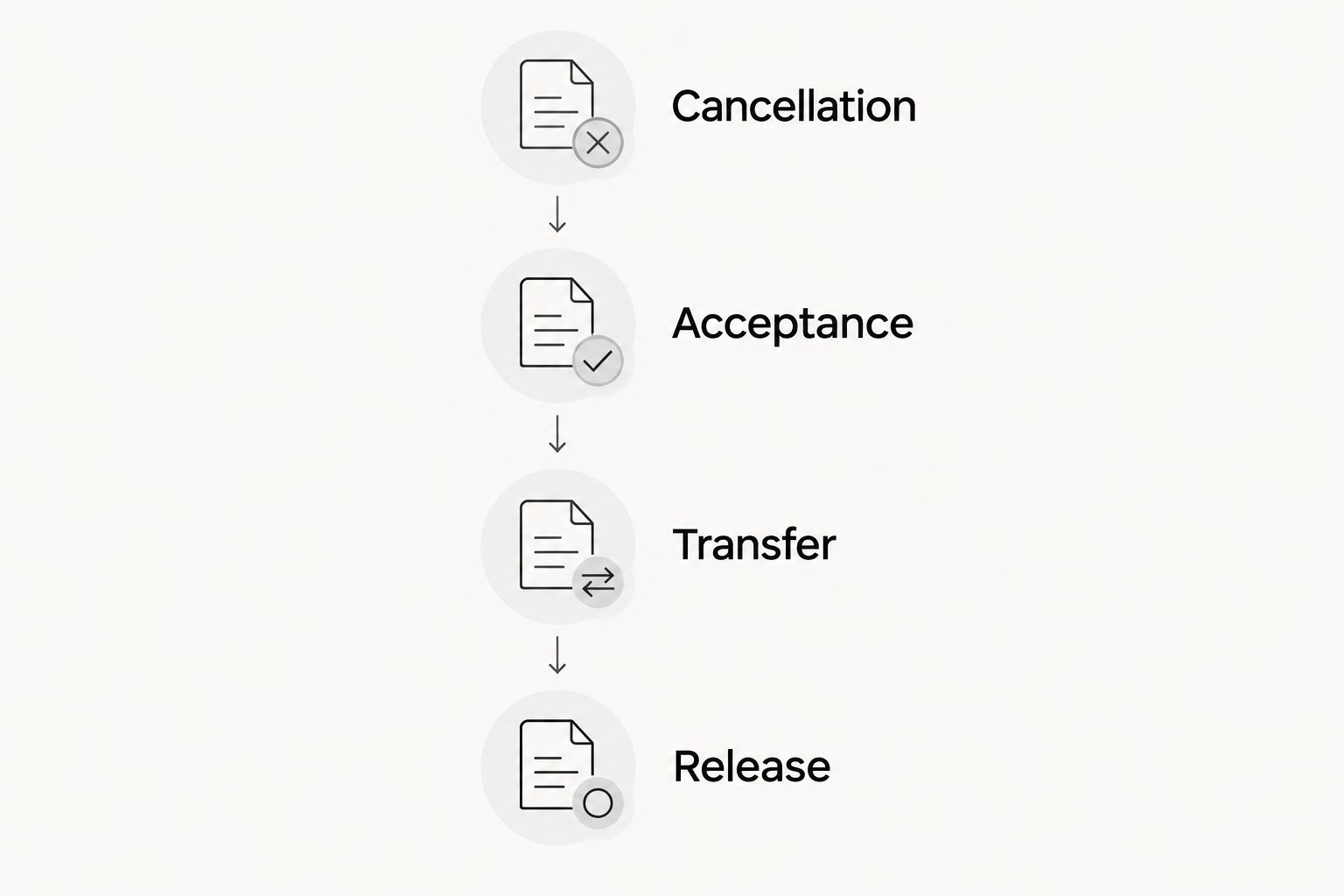
Use 4 checkpoints: Cancellation, Acceptance, Transfer, and Release. Apply the checkpoints relevant to your route rather than expecting every exit to produce identical paperwork.
- Cancellation: Keep the notice and evidence that you followed the applicable procedure.
- Acceptance: Obtain the resort's or recipient's written acceptance and any conditions.
- Transfer: Confirm completion of required closing, recording, and administrator updates where applicable.
- Release: Establish the status of your loan, assessments, and other continuing obligations.
Compare the completed documents with the promises in the original proposal. A service-completion email proves that a provider considers its work finished; it does not, by itself, establish a release from the resort or lender.
Ask about conflicting records immediately. If the resort still lists you as an owner after a purported transfer, request an explanation and supporting documents rather than assuming the account will correct itself.
Should you hire an exit company or an attorney?
Choose help according to the task. Resale assistance concerns finding and completing a permitted transfer; legal representation concerns your rights, disputed obligations, and legal remedies.
A provider's agreement should identify the work, responsible parties, exclusions, and completion conditions. Ask whether it promises advertising, negotiations, document preparation, legal representation, or an actual release. Those are different services.
For disputed contracts, threatened collection action, or unclear release terms, review how to assess timeshare exit attorneys. Verify the individual attorney's licensing with the relevant state bar before relying on legal advice.
Avoid instructions to stop paying without an explanation of the consequences. Missed payments can lead to collection activity, credit reporting, or foreclosure depending on the agreement and circumstances. A provider's guarantee does not bind your lender or resort.
Can you get out of a timeshare without a lawyer?
You can pursue an applicable rescission process, ask the resort about surrender, or arrange a permitted resale without automatically needing legal representation. Get legal advice when deadlines, disputed conduct, financing, or release language are unclear.
Does signing a quitclaim deed end your obligations?
Signing a quitclaim deed does not automatically release a loan or establish that every contractual obligation has ended. Confirm whether a deed is appropriate, whether the recipient accepts the interest, and which additional steps or releases are required.
Does renting out your timeshare count as an exit?
Renting out your timeshare is not an ownership exit. Even when your rules permit rentals, you remain responsible for your ownership obligations unless a separate, effective cancellation, release, or transfer changes them.
FAQ
What's the first step to legally get out of my timeshare?
Check your purchase documents for an applicable cancellation right first. If that route is unavailable, ask the resort about surrender and review permitted resale or transfer options.
Is there one cancellation deadline for every timeshare?
There is no single cancellation deadline for every U.S. timeshare. Your transaction, applicable law, and purchase documents determine the period and required notice procedure.
Can I just stop paying my timeshare maintenance fees?
Stopping payments does not cancel your timeshare contract. It can expose you to collection activity and other consequences while leaving the underlying obligation unresolved.
Can I transfer a timeshare if I still owe on the loan?
A transfer does not automatically release your loan obligations. Ask the lender what approval or resolution is required before committing to a transaction.
What does Sold My Timeshare help owners do?
Sold My Timeshare provides free, no-obligation timeshare valuations and resale/exit assistance. A valuation helps you assess resale but does not itself end ownership or financing obligations.
How do I know whether a timeshare exit guarantee protects me?
Read the guarantee's written terms, exclusions, and remedy. A provider's guarantee does not itself release you from obligations to a lender, resort, or association.
What should I check before starting a timeshare exit in 2026?
Check your cancellation rights, current account status, financing documents, and resort transfer requirements. Establish what written evidence will confirm completion before signing a service agreement.
One last thing
Ask what document you will receive at the end before signing anything at the beginning. That question separates an advertised service from the legal result you need.
Keep the final documents with your ownership and loan records. Your strongest evidence is the paperwork showing what ended, when it ended, and whether anything remains unresolved.