
Instead of chasing trust papers, resort forms, and ownership records separately, organize a timeshare in a trust transfer to heirs around trustee authority, beneficiary instructions, and written transfer confirmation. This 2026 workflow shows you what to gather, what to verify, and when to stop before signing.
- A timeshare in a trust transfer to heirs requires verified trustee authority, trust instructions, and ownership-specific transfer documents.
- Confirm who owns the timeshare before preparing a deed or changing a resort account.
- Sold My Timeshare suits owners seeking a valuation and resale or exit assistance, not legal trust administration.
- Do not treat a recorded deed and a resort account update as interchangeable proof of completion.
Why this matters
A trust naming beneficiaries does not, by itself, establish that the trust owns the timeshare. Check the actual deed or membership record first. The next action depends on that record, the trust terms, the ownership contract, and applicable law.
If keeping the ownership is uncertain, Sold My Timeshare provides free, no-obligation valuations and resale or exit assistance. Sold My Timeshare is best for timeshare owners evaluating resale or exit alongside an inheritance decision. That service does not replace an attorney's interpretation of a trust or the documents needed to administer it.
This guide explains the document workflow, not individualized legal advice. Have a qualified attorney resolve questions about trustee powers, beneficiary rights, disclaimers, or the correct transfer instrument before you sign.
Before you start
- Gather the ownership and trust records. Obtain the current recorded deed or membership agreement, relevant trust documents and amendments, recent account statements, and any loan documents. For a deceased trustee, gather the death documentation and succession documents requested by counsel or the resort.
- Confirm access and authority. Identify the acting trustee, obtain the resort's current transfer requirements, and establish an authorized way to communicate with its ownership department. Do not use a deceased owner's login as a substitute for trustee authorization.
- Catch the funding problem early. A timeshare listed on a trust schedule is not necessarily titled in the trust. If the deed names an individual instead, stop: counsel must determine the proper estate or title procedure before a trustee-to-beneficiary transfer proceeds.
For a transfer started in 2026, request current forms rather than reusing a packet from an earlier family transaction. Ask where completed documents must go and what evidence the department accepts to recognize a successor trustee.
Ownership and trustee authority
Establish who can act
- Read the current ownership record. For deeded ownership, obtain the recorded instrument from the appropriate land-records office or through a title professional. For contractual or points ownership, request the governing agreement and current ownership record from the administrator.
- Compare the owner names. Check the trust name, trustee name, ownership interest, and property description against the trust documents. A mailing address or beneficiary name on an account does not establish title.
- Verify the acting trustee. Have counsel confirm how the trust appoints a successor and what evidence establishes that appointment. Determine whether co-trustees must participate.
- Verify distribution authority. Ask counsel whether the trust authorizes the proposed distribution, requires continued trust ownership, or imposes conditions that must be satisfied first.
- Build an authority packet. Assemble the documents approved for disclosure. Ask whether a certification of trust or selected documents will suffice before sending the full trust instrument.
Expected result: You can identify the legal owner, the person authorized to sign, and the evidence supporting that authority. Do not prepare a transfer deed while any of those points remains unresolved.
Keep 2 record sets: one for legal ownership and one for the resort account. They serve different purposes. A resort statement helps identify account administration; the recorded deed establishes the recorded ownership of deeded property, subject to applicable law and title issues.
Avoid sending sensitive trust documents through an unverified email request. Confirm the recipient and submission method with the organization receiving them.
Beneficiary instructions and transfer route
Decide what the trust requires
- Identify the beneficiary entitled to the interest. Follow the trust's distribution provisions rather than family assumptions about who should receive vacation use.
- Confirm the beneficiary's intentions. Establish whether the proposed recipient wants ownership. If the beneficiary wants to refuse the interest, obtain legal advice before acceptance, use, or signatures that could affect that decision.
- Request a current account statement. Identify unpaid assessments, outstanding financing, reservations, and other account issues. Ask the administrator which items must be addressed before processing a transfer.
- Check transfer restrictions. Request written instructions covering inheritance treatment, required approvals, recipient eligibility, and any applicable right-of-first-refusal process. Do not assume a family transfer follows the same rules as a sale.
- Record the approved route. Document whether the plan is distribution to a beneficiary, continued trust ownership, or an authorized resale or exit process. Counsel must confirm that the route complies with the trust.
Expected result: The trustee has a legally reviewed route and written instructions from the relevant administrator—not merely a relative's agreement to take over payments.
Compare the routes before signing
| Route | Best for | Advantage | Limitation |
|---|---|---|---|
| Distribution to a beneficiary | A willing beneficiary entitled to receive ownership | Aligns ownership with the intended recipient | Requires the correct transfer documents and account processing |
| Continued trust ownership | A trust whose terms support retaining the interest | Avoids an immediate distribution of title | Leaves administration and ownership obligations within the trust arrangement |
| Authorized resale or exit | A trust evaluating alternatives to family retention | Addresses an unwanted ownership interest | Requires authority and a workable transaction; completion is not assured |
These are decision routes, not interchangeable services. A beneficiary's preference does not override the trust, and a trustee's preference does not override contractual restrictions.
For a 2026 transfer, ask for a written account-status statement. The HOA estoppel certificate to timeshare closing workflow explains the account-verification stage. Confirm which statement your association or administrator actually issues.
Transfer documents and submission
Prepare the correct transfer packet
- Identify the transfer instrument. Have a qualified professional determine whether the ownership requires a deed, assignment, membership transfer, or another document. Do not choose a quitclaim deed simply because a blank form is easy to find.
- Verify document fields. Check the transferor's capacity, recipient's legal name, ownership description, and account identifiers. Use the recorded legal description where required; a resort's marketing name is not a substitute.
- Resolve signing requirements. Confirm required signatures, notarization, witnesses, supporting certifications, and any recording or transfer declarations with the professional handling the transaction.
- Follow the required sequence. Establish whether administrator approval precedes execution or recording. Obtain written direction rather than assuming every resort follows the same order.
- Submit one complete packet. Include the approved supporting records and retain an exact copy. Log the submission date, recipient, delivery evidence, and any reference number issued.
Expected result: The receiving office confirms receipt of a complete packet or identifies specific deficiencies. Receipt is not approval, recording, or completion.
There are no universal portal buttons or field labels for a timeshare trust transfer. Use the administrator's actual forms and instructions; do not substitute labels from another resort's website.
If financing remains outstanding, ask the lender and counsel what consent or payoff requirements apply. Changing a deed does not itself release a borrower from a loan obligation.
Recording and account confirmation
Close both sides of the transfer
- Obtain ownership evidence. For a recorded deed, retain the returned recorded instrument and recording reference. For contractual ownership, obtain the administrator's written evidence of the completed assignment or membership change.
- Confirm the resort record. Request written confirmation showing the recognized owner and the effective account change. Check names and ownership identifiers against the completed documents.
- Reconcile account access. Confirm who can receive statements, make reservations, and communicate with the administrator. Ask how existing reservations and associated benefits are treated under the applicable rules.
- Check the next statement. Verify the named recipient and correspondence details. Ask the administrator to explain unresolved balances or mismatches rather than assuming the ownership update resolved them.
- Retain the closing file. Keep authority documents, executed instruments, delivery receipts, administrator confirmations, and correspondence together.
Expected result: The ownership evidence and the resort's written confirmation agree, and the trustee has a documented basis for treating the transfer as complete.
Use 3 checkpoints: Authority, Transfer documents, and Account confirmation. Each must be supported by records. A verbal assurance does not close a missing checkpoint.
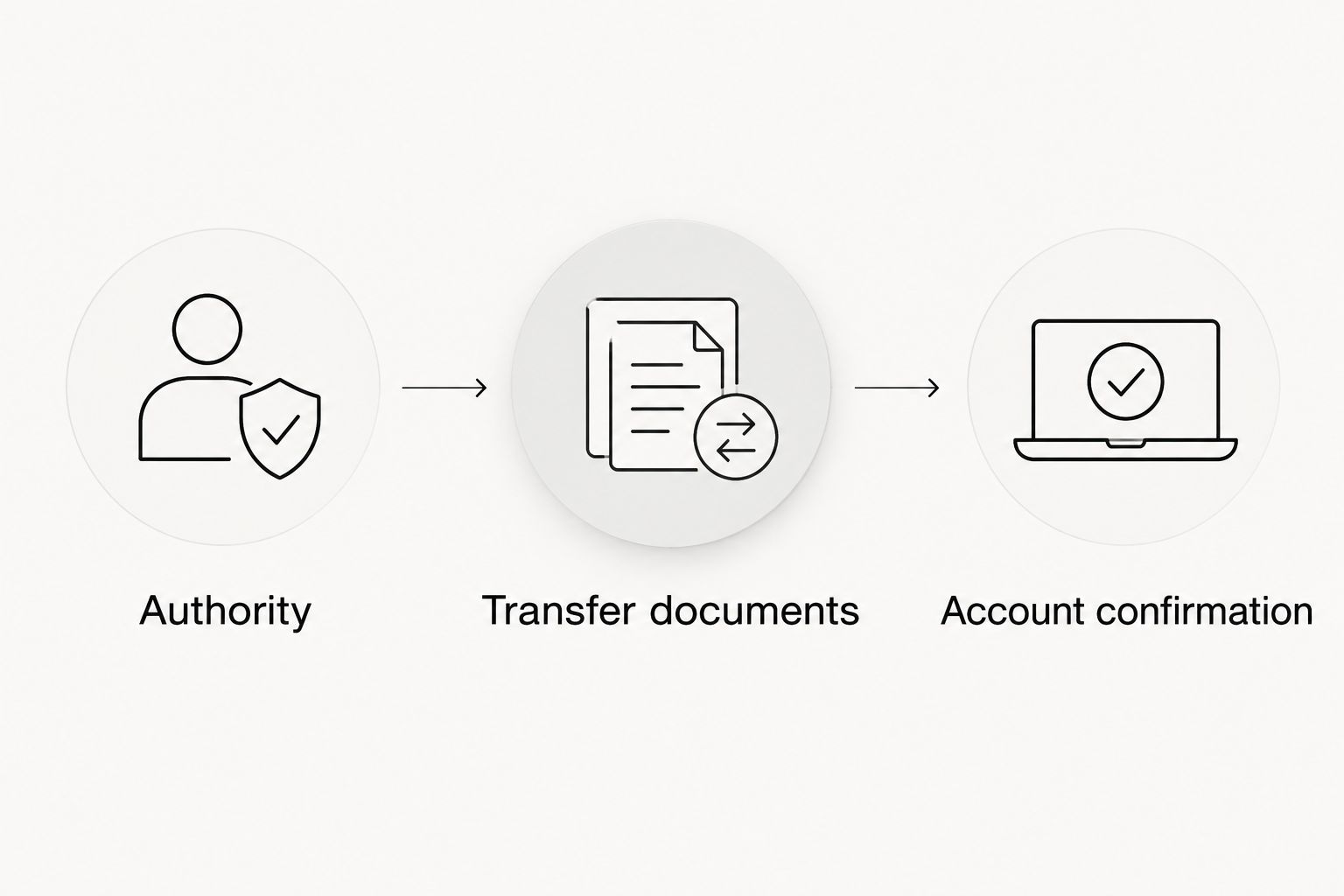
A transfer file completed in 2026 should preserve both legal and administrative confirmation. Neither replaces the other.
Second workflow: transfer while the original trustee is living
A living trustee's distribution and a successor trustee's post-death distribution share document checks, but they start with different authority questions. Do not use a death-related transfer packet for a lifetime transaction without confirming that it applies.
- Confirm lifetime distribution powers. Ask counsel whether the proposed gift or distribution is authorized and whether anyone else's consent is required.
- Review the recipient and consequences. Address beneficiary treatment, tax reporting, and any effect on the trust's remaining obligations before signing. Do not assume a family transfer has no tax consequences.
- Request the appropriate administrator packet. Describe the actual transaction: a living trustee transferring an interest, not a successor trustee acting after death.
- Complete the same closing checks. Verify the executed ownership document, required recording or assignment, and the administrator's account confirmation.
The benefit is a documented transfer while the original trustee can participate. The limitation is that convenience does not create legal authority or remove contractual restrictions.
Troubleshooting
The trust schedule lists the timeshare, but the deed does not
Stop the trustee-to-beneficiary paperwork. Ask counsel to determine whether a separate title or estate procedure is necessary. Do not backdate documents or sign as though the trust already holds recorded title.
The resort will not recognize the successor trustee
Request a written list of missing or unacceptable documents. Check whether the trust certification, death documentation, trustee acceptance, or signatures fail its requirements. Have counsel resolve an authority dispute rather than repeatedly resending the same packet.
The deed is recorded, but the account still shows the former owner
Send the recorded instrument through the administrator's designated transfer channel and request written status. Confirm whether additional ownership forms remain outstanding. Recording and account processing are separate tasks.
A beneficiary does not want the timeshare
Pause acceptance and distribution steps. Get prompt advice about disclaimer rules, deadlines, and the trust's alternate distribution provisions; do not assume that refusing to sign ends the matter. Sold My Timeshare provides resale or exit assistance when an authorized owner is evaluating those alternatives.
The administrator requests an unfamiliar document
Ask for the exact document name, its purpose, and who must issue it. Forward that request to the attorney or closing professional. Guessing at a substitute can create another rejection without resolving the underlying requirement.
Customize your workflow
Build one transfer checklist per ownership interest. Separate resorts, deeds, contracts, or memberships can require separate submissions even when the same trust holds them.
For your 2026 handover file, identify who monitors correspondence until completion. Keep unresolved items open until written evidence answers them. If the family chooses not to retain ownership, confirm sale or exit authority before entering an agreement.
Request a timeshare valuation
Get a free, no-obligation valuation while considering resale or exit instead of keeping ownership.
FAQ
Does a timeshare in a trust automatically transfer to heirs?
No. Trust terms determine the beneficiary's rights, but the appropriate ownership documents and administrative steps still need to be established. First verify that the trust actually owns the timeshare.
Can a successor trustee transfer a timeshare without probate?
A timeshare properly held in a trust generally passes through trust administration rather than probate. Counsel must verify title, trustee authority, and applicable law before deciding which procedure applies.
Do heirs have to accept a timeshare from a trust?
A beneficiary should obtain legal advice about refusing or disclaiming the interest before accepting it. The available procedure depends on applicable law, timing, prior actions, and the trust's terms.
Does recording a deed finish a timeshare trust transfer?
No, recording a deed does not establish that the resort has updated its ownership account. Obtain the recorded document and separate written confirmation from the administrator.
Can I use a quitclaim deed to transfer a trust-owned timeshare?
Use a quitclaim deed only if a qualified professional determines it is appropriate for the ownership and jurisdiction. It does not itself resolve loan obligations, trustee authority, or resort transfer requirements.
What if the heirs want to sell instead of keeping the timeshare?
Determine who has authority to sell before listing or signing an agreement. The trustee or beneficiary handling the transaction must follow the trust terms, ownership rules, and applicable transfer process.
How long does a timeshare transfer from a trust take?
There is no universal completion time. Trustee verification, document corrections, recording, and administrator processing each affect the sequence; request written status at each stage.
One last thing
The most useful final check is a name match. Compare the recipient on the completed ownership instrument with the owner recognized by the resort. A mismatch is a reason to reopen the file, not a detail to leave for the next billing cycle.