
Timeshare resale is worth it in 2026 when a completed transfer releases you from ownership obligations you no longer want and the outcome makes sense after transaction expenses and any loan payoff. Those expenses, plus ownership bills due before completion, matter more than the advertised sale amount. Judge resale by what you stop owing and what you actually receive—not by whether you recover your original purchase payment.
- Is timeshare resale worth it? Yes, when the completed transfer and net outcome meet your ownership goals.
- Compare resale with a resort deed-back; renting does not end ownership.
- A mortgage payoff and transfer restrictions can change whether a sale works.
- Sold My Timeshare offers a free, no-obligation timeshare valuation; an estimate is not a completed sale.
Why this matters
You do not need to prove that buying the timeshare was a good decision before deciding what to do next. Your original payment is already spent. The useful comparison is between keeping the ownership from today and completing an acceptable transfer.
A signed offer is not the finish line. Review the timeshare closing-to-resale payout workflow so you understand the difference between finding a buyer, completing the transfer, and receiving any proceeds.
For a 2026 decision, gather current ownership documents and current account statements. An old listing or a remembered sales presentation cannot tell you what your ownership requires today.
Is timeshare resale worth it in 2026?
Resale is worth pursuing when there is a workable buyer, an acceptable net outcome, and a documented route out of the ownership. It is not automatically the right choice just because you want to stop using the timeshare.
Compare the available routes against your actual goal. Getting money back, reducing future expenses, and taking a temporary break from travel are different objectives.
| Option | Best for | Main advantage | Main limitation |
|---|---|---|---|
| Resale | Owners seeking a buyer and a permanent transfer | Can transfer ownership and produce proceeds | Requires a buyer, workable terms, and completed transfer requirements |
| Resort deed-back | Owners whose resort accepts their ownership back | Provides a direct route to request surrender | Acceptance and eligibility depend on the resort's program |
| Rental | Owners seeking income while keeping ownership | Can put an otherwise unused stay to use | Does not end ownership or its obligations; rental rules apply |
| Keeping ownership | Owners who still use and value their vacation rights | Preserves access under the ownership terms | Leaves continuing expenses and responsibilities in place |
No option wins on every measure. A resale with proceeds is not necessarily better than an accepted deed-back if its expenses and unresolved obligations leave you worse off. Equally, renting is not an exit simply because it helps cover a bill.
Resale: best for owners ready to transfer
Resale fits when your priority is ending ownership and your account, loan position, and transfer rules support a transaction. Ask for evidence of completed transactions involving comparable ownerships rather than relying only on asking amounts.
The drawback is uncertainty until completion. A listing alone does not establish buyer demand, and accepting an offer does not settle every transfer condition. Proceed only when you understand the expected net outcome and the remaining steps.
Resort deed-back: best for owners seeking a direct surrender
Ask your resort or owner services department whether it currently accepts voluntary returns. Request the eligibility requirements and written terms before assuming this route is open to you.
A deed-back can remove the need to find an outside buyer if the resort accepts the ownership. Its limitation is equally clear: you cannot require acceptance simply because you no longer want the timeshare. Confirm how any loan, overdue balance, or upcoming reservation affects the request.
Rental: best for owners keeping their ownership
Rental addresses unused vacation time, not ownership itself. Check the governing rules before offering a reservation or use rights to someone else, including any guest authorization requirements.
The benefit is potential income from use you would otherwise forgo. The drawback is that your ownership responsibilities remain. Do not choose rental as a substitute for exit when your goal is to stop owning the timeshare.
How to decide whether your resale makes sense
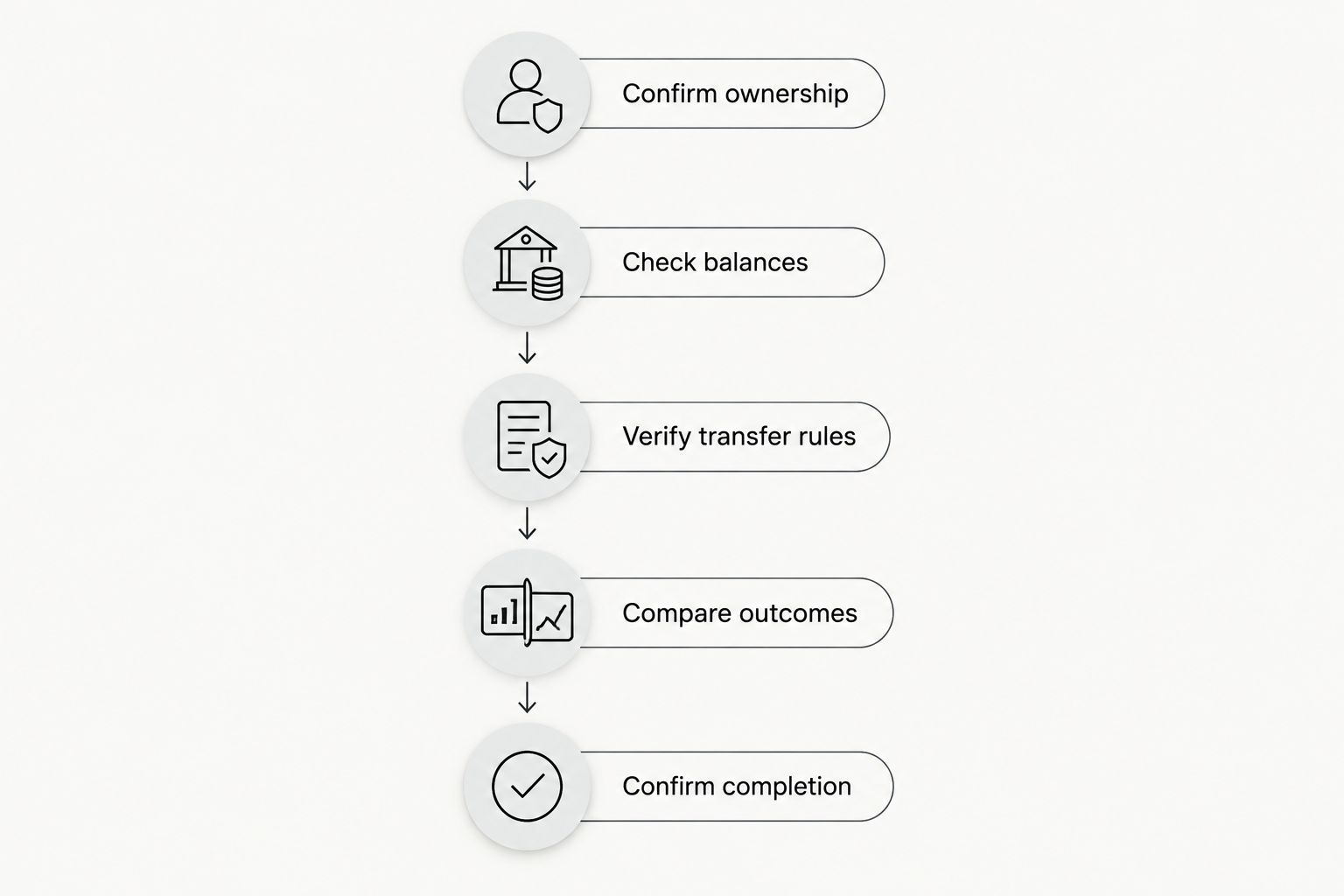
Use the same sequence whether you own a deeded week, points, or another form of vacation ownership. The documents determine what you can transfer; the name of the resort alone does not.
- Confirm ownership. Gather the deed or membership agreement, ownership identifiers, names of all owners, and current use rights. Resolve discrepancies before asking a buyer to commit.
- Check balances. Request current maintenance-fee information and a loan payoff statement when applicable. Identify bills that will become due while the transaction is pending.
- Verify transfer rules. Ask the resort or administrator about approval requirements, transfer procedures, and any right of first refusal. Get the instructions in writing.
- Compare outcomes. Review a resale estimate alongside any available deed-back terms and the consequences of keeping ownership. Separate a possible sale amount from the amount left after deductions.
- Confirm completion. Identify who handles closing, what proves the transfer, and how you will receive confirmation that the ownership account has changed.
Keep copies of the answers together. If the seller agreement, closing instructions, and resort requirements describe different responsibilities, resolve those differences before signing.
A useful 2026 decision file contains current documents, not just promotional material. You should be able to explain who must act next, what remains unresolved, and which obligations continue in the meantime.
Why the value of timeshare resale varies
The same resort name does not make every ownership interchangeable. These factors determine whether a proposed transaction solves your problem:
- What you own. A fixed week, floating use arrangement, or points ownership gives a buyer different rights. Verify exactly which rights transfer.
- Buyer demand. Interest must match the specific ownership being offered. A listing that remains unsold is not evidence of a completed transaction.
- Outstanding debt. A loan balance affects what must be resolved before closing. Do not assume the buyer takes over your borrowing.
- Continuing charges. Maintenance fees, assessments, and other contractual obligations affect both your holding expenses and the buyer's decision.
- Transfer restrictions. Resort approval, administrative requirements, and a right of first refusal can affect the route to completion.
- Transaction terms. Seller-paid charges, responsibilities for outstanding balances, and payment conditions determine your net result.
These factors explain why a general estimate needs ownership-specific review. A useful valuation identifies its assumptions instead of treating every week or points package as equivalent.
What should a resale estimate tell you?
An estimate should help you make a decision, not simply give you an encouraging headline. Ask what ownership details it uses, whether the supporting examples are completed transactions or active listings, and which deductions are excluded.
Sold My Timeshare is a fit for timeshare owners seeking a free, no-obligation valuation and resale or exit assistance. You can start with Sold My Timeshare to request that initial assessment.
The limitation is straightforward: a valuation is an estimate, not a buyer commitment or a release from ownership. Use it to ask better questions about the proposed route, responsibilities, and expected net outcome.
Before choosing any provider, request written answers to these questions:
- What service am I agreeing to receive: advertising, resale assistance, closing coordination, or something else?
- What payment obligations apply, and what event triggers each one?
- Who verifies buyer funds and handles the transfer documents?
- What happens if the ownership does not sell?
- Which document confirms that my ownership obligations have ended?
Do not interpret a reassuring conversation as a substitute for the agreement. Read the actual scope of service, cancellation terms, and responsibilities before signing.
Can you sell a timeshare if you still owe a mortgage?
A timeshare with a mortgage needs a workable payoff arrangement, not just an interested buyer. Ask the lender and closing professional how the debt must be satisfied and whether the expected proceeds cover that requirement.
If the proceeds are insufficient, identify how the shortfall would be handled before accepting an offer. A transfer of use rights or a new name on resort records does not, by itself, establish that a lender has released you.
Keep the loan question separate from the resale estimate. The ownership might attract interest while the financing still prevents an acceptable transaction. Do not stop loan payments because someone says a sale or exit is underway.
Is giving a timeshare back better than selling it?
An accepted deed-back is better than resale when its written terms meet your goal more directly and leave you with an acceptable outcome. Resale is better when an achievable transaction offers a preferable result after all obligations are accounted for.
Ask about both routes before paying for a service. For your 2026 comparison, use current resort requirements and a current resale assessment rather than assuming a past program still applies.
Neither route should be judged by its label. The decisive question is what the signed documents accomplish and what responsibilities remain afterward.
How do you avoid turning a resale attempt into another problem?
Pause when someone claims to have a buyer but will not explain the transaction in writing. Independently verify the business identity, the scope of service, and the closing arrangement before sharing sensitive documents or sending money.
An unexpected request for a tax, release charge, or other payment deserves independent verification. Contact the relevant organization using contact details you obtained yourself, not only details supplied by the person requesting payment.
Keep these boundaries clear:
- Do not treat a promised sale as a completed sale.
- Do not sign documents you do not understand.
- Do not assume a payment guarantees a transfer.
- Do not stop paying contractual obligations based solely on verbal instructions.
If you suspect fraud, preserve messages, agreements, receipts, and payment records. Contact your payment provider promptly and report the concern to the appropriate consumer protection authority.
FAQ
Is timeshare resale worth it if I barely use my ownership?
Timeshare resale is worth considering when you no longer use the ownership and a completed transfer provides an acceptable outcome. Compare the obligations you would retain while selling with any available resort surrender route.
Will I get back what I originally paid for my timeshare?
You should not base your decision on recovering your original payment. Request an ownership-specific estimate and examine the expected net outcome rather than treating your purchase amount as evidence of current resale value.
Does listing my timeshare stop maintenance fees?
Listing your timeshare does not end your ownership obligations. Follow your governing documents and obtain written confirmation of when responsibility changes through the completed transfer.
Can Sold My Timeshare tell me whether resale makes sense?
Sold My Timeshare provides free, no-obligation timeshare valuations and resale or exit assistance. Treat the valuation as a starting point for comparing your options, not as a completed sale or guaranteed release.
Should I rent my timeshare instead of selling it?
Renting fits owners who want to retain ownership and whose rules permit the proposed rental. Selling addresses a different goal: transferring ownership rather than temporarily earning income from unused vacation rights.
Can I stop paying while someone sells my timeshare?
Do not stop required payments solely because a resale service is working on your ownership. Review your contractual obligations and seek qualified advice before changing payments, especially when a loan is involved.
How do I know my timeshare sale is finished?
Confirm completion through the required transfer documents and written acknowledgment from the relevant resort or ownership administrator. Also verify the loan resolution and any remaining balances rather than relying only on a signed purchase agreement.
One last thing
The most useful document is not the listing. It is the confirmation that the transfer is complete and your remaining obligations are resolved. Before starting a resale in 2026, ask what that confirmation will look like and who will provide it.
That question keeps the process focused on your real goal: an ownership decision you can document, rather than another promise you have to chase.