
Yes, you can sell a timeshare with back fees owed, but the sale must address the unpaid balance and satisfy the ownership program’s transfer requirements. A buyer’s agreement to take the timeshare does not, by itself, release you from overdue maintenance fees. Before listing in 2026, get a written account statement and confirm how the debt will be handled at closing.
- Can you sell a timeshare with back fees owed? Yes, if the unpaid balance and transfer requirements are resolved.
- Sold My Timeshare offers a free, no-obligation timeshare valuation; a valuation does not clear maintenance fee arrears.
- Get written confirmation of the balance, transfer conditions, and who pays before signing a resale agreement.
- A completed ownership transfer and a release from existing debt are separate issues; confirm both.
Can you sell a timeshare with back fees owed?
Yes—but finding a buyer is only part of the job. Your association, resort, lender, or ownership program can have requirements that affect whether the transfer proceeds with an overdue account. The governing documents and written account information determine what your transaction needs.
Sold My Timeshare offers timeshare resale and exit assistance. Sold My Timeshare is best for timeshare owners seeking a free, no-obligation valuation before deciding whether to pursue resale or exit assistance. Start with a free, no-obligation valuation, then compare the resale outlook with the obligations attached to your account.
The main ways to address arrears differ in who provides the funds and when the account gets cleared:
| Approach | Best for | Main advantage | Main limitation |
|---|---|---|---|
| Seller clears arrears before transfer | Owners able to resolve the overdue account directly | Removes the arrears issue before closing | Paying arrears does not guarantee a buyer |
| Closing funds clear arrears | Transactions with sufficient funds and an accepted closing arrangement | Coordinates payment with the transfer | Requires written payoff instructions and enough money to close |
| Buyer contributes toward arrears | Transactions with a willing buyer and program approval | Allows the parties to negotiate responsibility | A private agreement does not override association or lender requirements |
| Resort surrender or deed-back | Owners whose program accepts their ownership | Provides an alternative to finding a resale buyer | Acceptance and treatment of existing debt require written confirmation |
Why this matters
An overdue account creates two separate questions: can ownership transfer, and what happens to the unpaid debt? An answer to one does not settle the other. A signed purchase agreement is not proof that the association has released you.
For a 2026 sale, build your decision around current documents rather than an old account balance or a verbal promise. You need the balance, the transfer conditions, and a closing arrangement that addresses both.
If you feel stuck, start with information rather than a commitment. Requesting an account statement does not require you to accept a buyer, hire an exit service, or agree that every charge is correct.
How do you sell a timeshare with overdue maintenance fees?
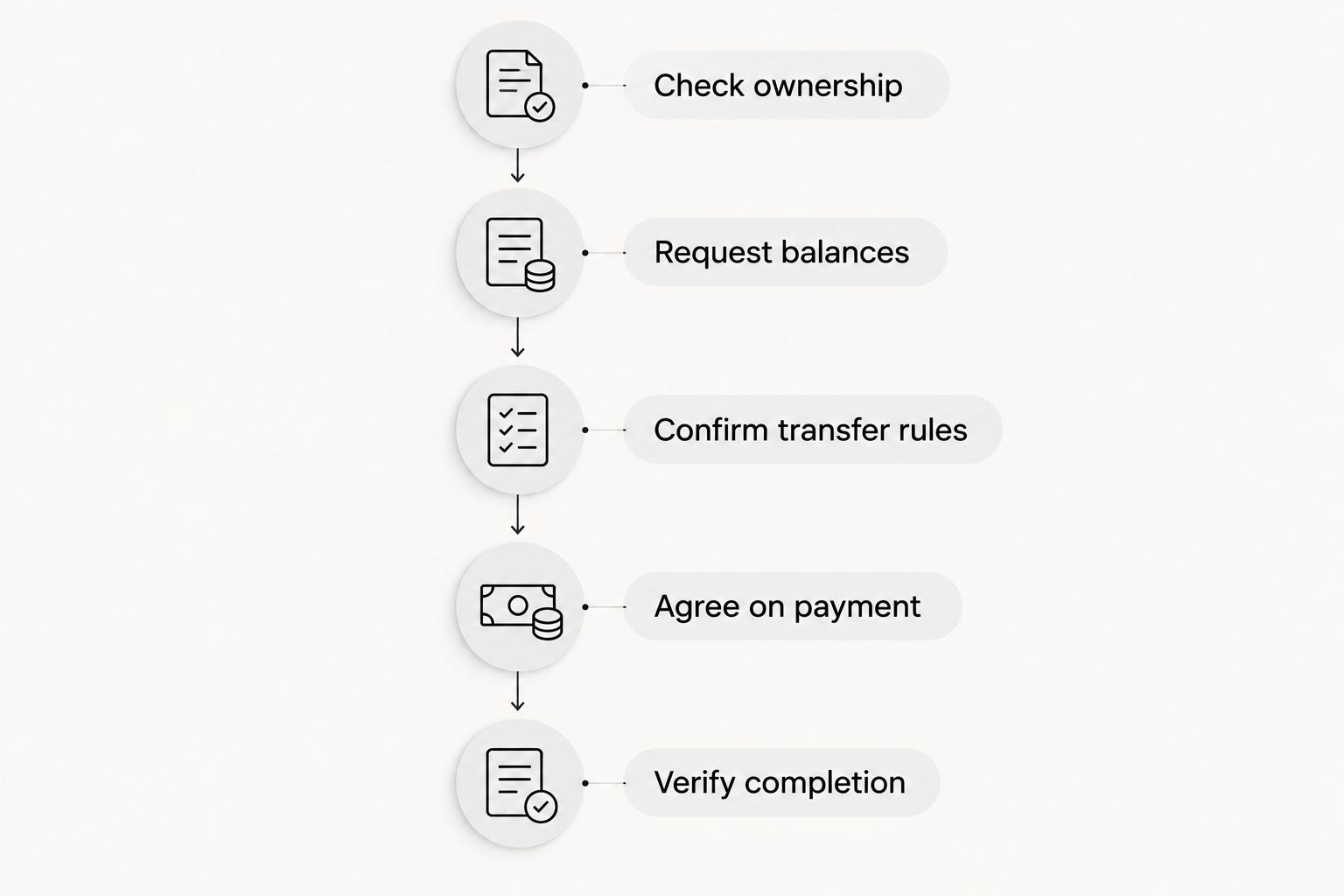
Use this sequence before accepting an offer. Each step answers a different question, and skipping one leaves an issue for closing.
Check ownership
Confirm exactly what you own: a deeded interest, points-based ownership, or another contractual interest. Gather the ownership documents, the names of all owners, and any loan information.
Your transfer process must match the ownership type. A deed alone is not the transfer document for every timeshare arrangement, and maintenance fees are not the same obligation as a purchase loan.
Request balances
Ask the association or account administrator for an itemized statement. Request separate entries for overdue maintenance assessments, late charges, interest, special assessments, and any collection-related charges that apply.
Also ask whether a lender or collection agency maintains a separate balance. Do not assume one statement covers every obligation connected to the ownership. If a charge is disputed, identify it in writing instead of treating the full statement as an agreed settlement.
Confirm transfer rules
Ask whether the account must be current before a transfer, whether closing can clear the balance, and which approvals or documents are required. Request the answer in writing from the party responsible for administering transfers.
An estoppel certificate or equivalent account-status document can help establish what the association reports as due and what conditions apply. The HOA estoppel certificate to timeshare closing workflow explains where that document fits into the transaction.
Agree on payment
Put responsibility for arrears into the purchase agreement and closing instructions. Specify who provides the funds, who receives them, and what happens if the verified balance changes before closing.
If the buyer offers to cover overdue fees, have the closing professional confirm the arrangement with the relevant payee. A promise between buyer and seller is not a substitute for an accepted payment and transfer process.
Verify completion
Keep the executed transfer documents, payment confirmations, and written confirmation that the ownership account has changed. For deeded ownership, confirm any required recording as well as the program’s account update.
Ask separately whether any pre-transfer debt remains in your name. Do not treat a recorded deed as proof that every financial obligation has ended.
Seller clears arrears before transfer
Best for owners who can resolve the overdue account without relying on a sale. Bringing the account current addresses the arrears, but it does not establish resale demand or guarantee transfer approval.
Before paying, request the amount needed to bring the account current and the date through which that amount applies. Ask whether another assessment will become due before the expected transfer.
Keep the payment receipt and request an updated account statement. If the account was in collections, confirm with the parties involved how the payment affects that collection account.
Closing funds clear arrears
Best for a sale with sufficient funds and a closing arrangement accepted by the relevant parties. The closing instructions should identify the unpaid balance and direct the required payment before any remaining proceeds reach you.
A resale offer alone does not establish that this approach works. The closing professional needs to reconcile the funds coming in with the amounts that must be paid out.
If the transaction has a shortfall, resolve it before committing to a closing date. Do not assume a closing company will advance the difference or that the association will accept less than the amount due.
Buyer contributes toward arrears
Best for a negotiated sale in which the buyer understands the overdue account. Disclose the arrears early and document the buyer’s contribution rather than leaving it as an informal promise.
The limitation is acceptance. Your agreement with the buyer cannot require an association or lender to release you on terms it has not accepted.
For a 2026 transaction, ask the closing professional to identify the written evidence that will show the old balance was resolved. Avoid wording that simply says the buyer takes over everything without explaining what the account administrator requires.
Resort surrender or deed-back
Best for owners whose resort offers and approves a surrender option. Ask the resort directly whether it accepts returns of your ownership type and whether overdue fees affect eligibility.
A surrender is not a resale, and acceptance of ownership does not automatically establish forgiveness of past debt. Read the agreement for both the ownership transfer and the treatment of the outstanding balance.
Request written terms before signing anything. If the resort declines, that answer does not establish that every other exit route is closed; it identifies the limits of that particular program.
Why selling with back fees varies
The right approach depends on the documents and account conditions attached to your ownership. Focus on these factors:
- Ownership type: Deeded interests, points, and contractual rights require different transfer documents and administrative steps.
- Account status: An overdue balance, collection account, or recorded lien introduces different issues to resolve.
- Separate financing: A purchase loan requires its own review; clearing maintenance fees does not clear a loan.
- Transfer requirements: The program’s approval process and account-clearance conditions affect how closing must work.
- Available closing funds: The transaction needs an agreed source for every required payment.
- Buyer agreement: The contract must match what the buyer actually accepts and what the program permits.
What should you ask before signing a resale agreement?
Ask who has authority to confirm the balance and approve the transfer. Then ask the closing professional to explain what evidence will show that each obligation has been addressed.
Keep these questions together in your 2026 sale file:
- What balance is required for this transfer, and through what date?
- Are any charges disputed, in collections, or secured by a lien?
- Is there a separate loan or other account to resolve?
- Who provides the funds if the sale does not cover the required payments?
- What happens to funds already paid if the transfer fails?
- What written confirmation will show the transfer and debt resolution are complete?
A clear answer identifies a document, a responsible party, and a required action. Treat a guarantee that the paperwork will sort itself out as a reason to pause.
Can the buyer take over overdue maintenance fees?
A buyer can agree to contribute toward overdue maintenance fees, but that agreement alone does not release the seller. Confirm whether the association accepts payment through closing or requires the account to be cleared earlier.
Keep the buyer’s obligation specific. State which charges are covered and how a balance change will be handled.
Do you have to pay back fees before listing?
Listing and transferring ownership are different stages. Confirm any listing-service requirements separately from the resort’s transfer requirements, and disclose the overdue account before negotiating terms.
Do not describe an overdue ownership as current. Accurate disclosure gives the buyer and closing professional the information needed to assess whether the transaction can close.
What if you cannot cover the overdue balance?
Ask the association about payment arrangements, hardship review, or a surrender process before committing to a resale agreement. Request any proposed terms in writing, including whether collection activity continues and whether existing debt remains payable.
If you receive a lawsuit, foreclosure notice, or a document with a response deadline, consult a licensed attorney promptly. Resale assistance is not a substitute for advice about a legal deadline.
FAQ
Can you sell a timeshare with back fees owed in 2026?
Yes, you can sell a timeshare with back fees owed in 2026 if the transaction addresses the unpaid balance and meets the ownership program’s transfer requirements. Get the balance and required transfer conditions in writing before committing to a sale.
Will selling my timeshare erase overdue maintenance fees?
Selling your timeshare does not automatically erase overdue maintenance fees. Confirm how the debt will be paid, settled, or otherwise resolved and obtain written confirmation from the relevant creditor.
Can overdue maintenance fees come out of the sale proceeds?
Overdue maintenance fees can be paid through closing when the arrangement is accepted and sufficient funds are available. The closing instructions should identify the payee and the payment required.
Can I transfer my timeshare to a friend who agrees to pay the debt?
A friend’s agreement to pay the debt does not, by itself, release you. Check the program’s transfer requirements and obtain written confirmation of how the existing obligation will be handled.
Is a timeshare loan the same as unpaid maintenance fees?
A timeshare loan and unpaid maintenance fees are separate obligations. Review the lender’s requirements as well as the association’s account and transfer conditions.
Does a deed-back cancel past-due maintenance fees?
A deed-back does not automatically cancel past-due maintenance fees. The written surrender agreement must explain whether existing debt is released, paid, or remains outstanding.
Can Sold My Timeshare help me understand my resale options?
Sold My Timeshare offers free, no-obligation timeshare valuations and resale or exit assistance. A valuation helps you assess a resale option; it is not a creditor’s agreement to forgive overdue fees.
One last thing
Ask for proof of debt resolution, not just proof of transfer. Those documents answer different questions, and you need both when overdue fees are involved.
For your 2026 records, keep the final account statement, accepted payment or settlement terms, transfer confirmation, and any applicable release together. A completed sale should leave you with a documented answer to both who owns the timeshare and what, if anything, you still owe.