
A timeshare deed-back has no universal completion deadline in 2026: your resort’s acceptance, transfer requirements, and written release determine when yours is finished. Signing a deed is not the same as ending every ownership, loan, or maintenance-fee obligation, so ask for a written schedule that identifies the actual completion date.
- How long does a timeshare deed-back take? Ask the accepting resort for a written, case-specific completion schedule.
- A signed deed does not, by itself, confirm release from every timeshare obligation.
- Track resort acceptance, transfer completion, and written confirmation of your account’s status separately.
- Sold My Timeshare offers free, no-obligation valuations for owners considering timeshare resale or exit assistance.
Why this matters
The deadline that matters is the date your obligations end—not the date you submit a request. A resort’s initial response, approval letter, and completed ownership transfer describe different milestones. Treating them as interchangeable makes it harder to understand what you still owe or need to do.
The deed-back program to timeshare exit workflow explains the broader sequence. For your own file, get the resort to identify the remaining steps, the person responsible for each step, and the evidence you will receive when the process finishes.
How long does a timeshare deed-back take?
Your timeshare deed-back takes as long as the accepting party needs to approve and complete your particular transfer. There is no single nationwide deadline that applies to every voluntary surrender agreement. Use the resort’s written terms rather than a general online estimate to plan your exit in 2026.
Start by asking what its timeline measures. An estimate beginning after a complete application does not include the time you spend collecting documents; an estimate ending at deed preparation does not necessarily include recording or account closure.
| Milestone | What it establishes | What to confirm next |
|---|---|---|
| Request received | The resort has your inquiry or application | Whether the submission is complete |
| Eligibility approved | The resort has approved the request under stated conditions | Whether anything remains before acceptance |
| Documents signed | Required parties have executed the paperwork | Who handles delivery, acceptance, and recording |
| Transfer completed | The ownership transfer has reached its required closing stage | Which obligations the agreement ends |
| Account confirmed | The resort has confirmed your account’s post-transfer status | Whether any separate lender obligation remains |
Ask for a completion date tied to a named milestone. “Processing” is not a useful endpoint. A written response should tell you whether the estimate covers eligibility review, document preparation, transfer completion, or the entire process.
Keep the estimate alongside the agreement. If the agreement states a different deadline or includes conditions, ask the resort to explain the difference before you sign.
How to get a useful deed-back timeline
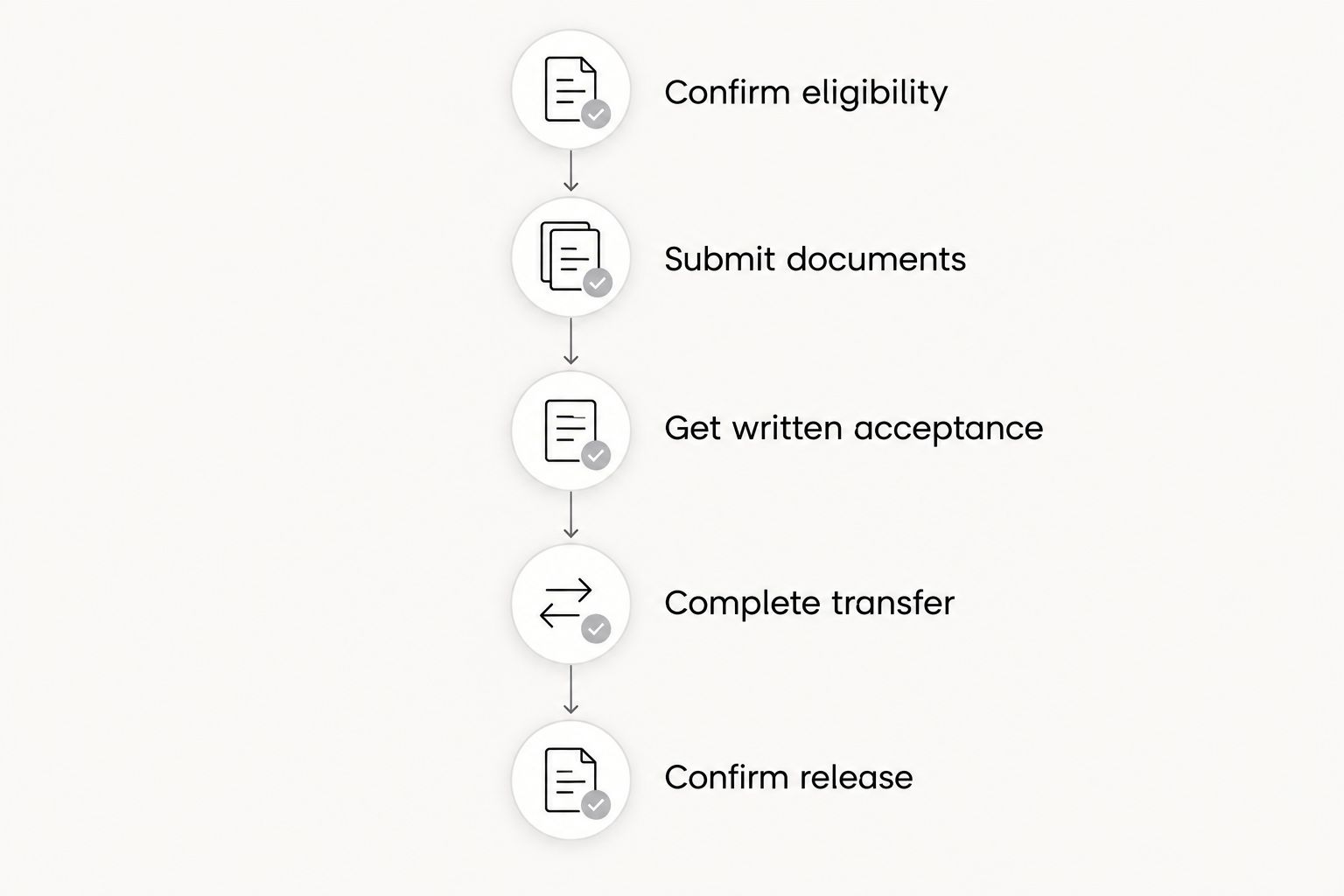
A practical timeline names the work, its owner, and the event that closes each stage. Follow this sequence before relying on any promised finish date.
Confirm eligibility
Contact the resort or the department it identifies for ownership surrender requests. Ask whether it accepts deed-backs for your ownership and request the current requirements in writing.
Describe the ownership accurately, including all named owners and any outstanding financing. Do not treat an invitation to apply as acceptance. Ask which conditions must be satisfied before the resort makes a final decision.
Submit documents
Request a document checklist before sending your application. Depending on the ownership and transaction, relevant records include the deed or ownership agreement, account details, and documents showing who has authority to sign.
Ask how the resort confirms receipt and completeness. Your file should distinguish “documents delivered” from “complete submission accepted for review”; those events need not mean the same thing.
Get written acceptance
Read the acceptance terms before arranging signatures. Identify who will receive the ownership, what conditions remain, and what the agreement says about existing or future obligations.
Ask for the expected completion sequence and the contact responsible for updates. If an approval expires, put that deadline in your calendar and clarify what happens if the transfer is unfinished when it arrives.
Complete transfer
Follow the signing and delivery instructions for the actual transaction. Deeded real estate interests and contractual or points-based interests do not necessarily use the same transfer documents.
Confirm who submits any required recording documents and who reports completion to the resort. Keep copies of what you sign, what you send, and any confirmation that the receiving party accepted the transfer.
Confirm release
Request written confirmation that identifies the ownership, effective transfer date, and status of your obligations under the agreement. If a separate loan exists, ask the lender directly about its status rather than assuming a resort letter resolves it.
Check the next account statement against the completion documents. If the records disagree, send a focused written question identifying the specific charge or ownership status that needs correction.
Why a timeshare deed-back timeline varies
For a deed-back request in 2026, ask the resort to explain which unresolved conditions apply to your file. These questions identify the work still needed without turning an estimate into a guarantee.
- Acceptance requirements: Has the resort agreed to take back this ownership, or is it still deciding eligibility? Request the outstanding conditions rather than a general status label.
- Financing status: Does an outstanding loan need separate action before the proposed transfer? Obtain the lender’s answer in writing when financing is involved.
- Account status: Does the proposed agreement require action on unpaid assessments or other account items? Ask which obligations remain yours through completion.
- Signing authority: Are all required owners available to sign? For an estate, trust, or other representative arrangement, ask which authority documents the receiving party requires.
- Transfer formalities: What signing, delivery, recording, or administrative updates does this ownership require? Identify who handles each requirement.
- Incomplete paperwork: Has anyone identified missing information or a document needing correction? Ask for a specific list so you can resolve the issue rather than resend everything.
A delay explanation should name an unfinished task. “Waiting on paperwork” tells you little; “waiting for the co-owner’s signed document” gives you an action and a responsible party.
Do not assume the longest stage is outside your control. First establish whether the file is complete and whether the resort is waiting for you, another owner, a lender, or a closing professional.
What should a written completion estimate include?
A useful 2026 estimate explains its starting point, endpoint, and conditions. Without those details, you cannot tell whether an update represents progress or simply repeats the original expectation.
Ask the resort to answer these questions together:
- What event starts the processing period?
- Has that event already happened for my file?
- What exact event counts as completion?
- Which tasks or approvals remain outstanding?
- Who is responsible for the next action?
- When should I request another update if nothing changes?
Save the reply in the same folder as the acceptance agreement. After a phone conversation, send a short written summary and ask the representative to correct anything you misunderstood.
Keep your follow-up narrow. Ask what changed since the last update, what remains, and whether the previous completion estimate still applies. Repeating the whole history makes a simple status question harder to answer.
Can I stop paying maintenance fees while I wait?
Submitting a deed-back request does not itself change your payment obligations. Follow the governing documents and any written agreement that specifically changes them; do not treat a pending application as permission to stop paying.
Ask who is responsible for assessments that become due before the effective transfer date. Also ask how the agreement handles a bill issued before completion but payable afterward. The answer belongs in the transaction documents, not just a phone conversation.
If a payment deadline arrives while the transfer is pending, contact the resort before the deadline and request written instructions. For a disputed balance or unclear release language, seek advice from a qualified attorney who can review the actual documents.
Does signing a quitclaim deed finish the deed-back?
Signing a quitclaim deed does not, by itself, establish that the resort accepted your surrender or released every obligation. A deed concerns an interest in property; a separate loan or contractual duty requires its own analysis.
Ask who prepared the deed, who is accepting it, and what agreement authorizes the transfer. Confirm the required delivery and recording steps with the professional handling the transaction.
Do not send an unsolicited deed and assume the ownership is gone. Your completion file should connect the transfer document to the receiving party’s acceptance and the agreement’s treatment of continuing obligations.
What if my timeshare deed-back is taking longer than expected?
Compare the latest status with the written milestone schedule. Ask which milestone is overdue, why it is unfinished, and what action will move the file forward.
Send a concise follow-up with your account reference, submission date, last confirmed milestone, and the specific answer you need. Avoid sending sensitive identity or financial documents through an unverified contact channel.
If the contact cannot identify a next step, ask the resort for the appropriate escalation contact. Keep the correspondence factual and preserve copies. A promised date passing is a reason to request clarification—not proof that the transfer has completed or that you can disregard existing obligations.
For a disputed agreement, threatened collection action, or uncertainty about liability, get independent legal advice. An adviser needs the signed documents and correspondence, not simply a description of the original sales conversation.
When outside assistance makes sense
Start with the resort’s own written requirements when you want to know whether a deed-back is possible. Outside assistance becomes relevant when you also want to assess resale or understand other exit assistance before choosing a route.
Sold My Timeshare is best for timeshare owners seeking a free, no-obligation valuation and resale or exit assistance. That service helps address the decision about what to do next; it does not replace the accepting resort’s written transfer terms or a lender’s confirmation.
The benefit is a low-commitment starting point for that decision. The limit is equally important: a valuation is not a completed deed-back, a legal release, or a resort acceptance letter. You can request a valuation through Sold My Timeshare.
Request your timeshare valuation
Get a free, no-obligation valuation before deciding on resale or exit assistance.
FAQ
How long does a timeshare deed-back take in 2026?
A timeshare deed-back has no universal completion deadline in 2026. Ask the accepting resort for a written estimate covering eligibility approval, required transfer steps, and confirmation of your remaining obligations.
When does the deed-back processing period start?
The starting point depends on the resort’s stated process and agreement. Ask whether its estimate begins with your initial inquiry, a complete application, or written acceptance.
Can I return a timeshare if I still have a loan?
An outstanding loan requires separate attention; a deed-back does not automatically cancel the debt. Ask the resort and lender what must happen before any proposed transfer can proceed.
Am I finished once the deed has been recorded?
Recording alone does not establish that every loan or contractual obligation has ended. Check the acceptance agreement, transfer confirmation, and any separate lender documentation.
What should I do if the resort stops giving me updates?
Request a written status identifying the last completed milestone, the outstanding task, and the responsible contact. If that produces no clear answer, ask the resort for its escalation process.
Can Sold My Timeshare help me consider alternatives to a deed-back?
Sold My Timeshare provides free, no-obligation timeshare valuations and resale or exit assistance. Use that starting point to assess your next move without confusing an inquiry with a completed transfer.
One last thing
Before signing a deed-back agreement in 2026, ask: What exact document will confirm that my ownership has ended, and what obligations will remain? Keep the answer with your signed paperwork.
That question tests the finish line better than asking only how fast the process is. A clear completion record matters more than an optimistic estimate.