
A timeshare is real property when you own a deeded interest in real estate; a nondeeded right-to-use arrangement generally gives you contractual rights rather than ownership of the resort. Points alone do not settle the question because points can be attached to different ownership structures. Your deed, purchase agreement, and governing state law determine the classification—and selling or ending the ownership requires more than identifying its type.
- Is a timeshare real property or personal property? Deeded ownership and contractual usage rights receive different treatment.
- Points describe how you book vacations, not necessarily what you legally own.
- Check the deed, purchase agreement, and transfer rules before choosing a timeshare resale or exit route.
- Sold My Timeshare offers timeshare valuations and resale or exit assistance for owners reviewing their options.
Is a timeshare real property or personal property?
A deeded timeshare interest is real property; a contractual right to use accommodations generally is not ownership of that real estate. Some arrangements involve leasehold interests or beneficial interests in a trust, so the distinction is not always as simple as deed versus membership.
For a 2026 ownership review, start with the legal instrument that created your interest. A reservation account, membership card, or annual points statement does not replace that document.
| Ownership structure | What establishes your interest | Classification question | Advantage and limitation |
|---|---|---|---|
| Deeded ownership | A deed conveying an interest in identified real estate | What real estate interest does the deed convey? | Documents the property interest, but transferring it requires the applicable property-transfer process. |
| Contractual right to use | An agreement granting accommodation rights | Does the agreement grant usage rights without a real estate interest? | Defines contractual access, but assignment and termination depend on its terms. |
| Points-based arrangement | The underlying deed, membership agreement, or trust documents | What legal interest sits behind the points? | Provides a booking mechanism, but the points balance does not establish property classification. |
| Trust-based arrangement | Trust and beneficial-interest documents | What does the beneficiary own under the documents and applicable law? | Can provide access through a trust structure, but classification requires reviewing the beneficial interest. |
Why this matters
Your ownership type determines which documents need to change when you sell, transfer, or surrender the timeshare. It does not, by itself, establish resale value or release you from payment obligations.
Sold My Timeshare is best for owners seeking timeshare valuation and resale or exit assistance. Establish what you own before deciding which route to pursue.
Deeded timeshares: real property ownership
A deeded timeshare conveys an interest in real estate. The deed identifies the interest being transferred; the governing documents explain the associated occupancy rights, restrictions, and obligations.
Look for the grantor, grantee, legal description, and recording information. Then check whether the names on the deed match the people who now intend to sell or transfer the interest.
The practical advantage is a documented real estate interest. The limitation is that changing a reservation account does not substitute for transferring that interest. A completed ownership transfer requires the documents and procedures applicable to the property.
Do not assume the same process applies everywhere. The property's jurisdiction, governing documents, and any lender's rights affect the transaction.
For a 2026 transfer, use the deed and current ownership records together. An old purchase packet alone does not establish whether later transfers, liens, or ownership changes occurred.
Right-to-use timeshares: contractual rights
A nondeeded right-to-use agreement generally grants access to accommodations without conveying ownership of the underlying real estate. The interest is commonly treated as a contractual or personal-property right, subject to the governing law and the agreement's actual terms.
Read the provisions covering duration, assignment, termination, and obligations after transfer. A contract with an end date is different from an agreement that continues until a permitted termination or transfer occurs.
The advantage is that the agreement identifies the usage right. The limitation is that you cannot assume the right is freely transferable or cancellable. A membership label does not erase the contract.
Leasehold arrangements require separate attention. A leasehold can be an interest in real property under applicable law, so describing every nondeeded timeshare as personal property creates an unreliable shortcut.
Points and trust interests: check the underlying documents
Points tell you how a program measures booking rights. They do not tell you whether you own a deeded interest, contractual membership, or beneficial interest in a trust.
Start with the acquisition documents rather than the booking portal. If the paperwork refers to a deed or a trust, identify the actual interest conveyed and the rules governing its transfer.
The advantage of points is their role in the reservation system; the limitation is that a points statement is not a legal ownership summary. Check both the booking rules and the ownership documents before agreeing to a sale.
Trust-based interests need the same discipline. Property held by a trustee and an owner's beneficial interest are distinct legal concepts; the trust's ownership of real estate does not answer every question about the beneficiary's classification.
Why timeshare classification varies
Classification follows legal rights, not sales language. These factors determine which documents and rules deserve attention:
- The interest conveyed. A deeded real estate interest differs from a contractual permission to use accommodations.
- The governing jurisdiction. State law defines and treats property interests, including leasehold and timeshare interests.
- The ownership structure. Direct ownership, club membership, and beneficial interests require different document reviews.
- The agreement's duration. A fixed contractual term and continuing ownership create different questions about termination.
- Later transactions. A conversion, assignment, or transfer can change which documents describe your current interest.
Florida Statutes section 721.05, for example, separately defines a timeshare estate and a timeshare license. That distinction supports the central point: the word timeshare does not identify a single legal ownership category.
When reviewing Florida ownership in 2026, match your documents to the applicable statutory definitions. Do not apply Florida's terminology automatically to property governed by another jurisdiction.
How do I check which type of timeshare I own?
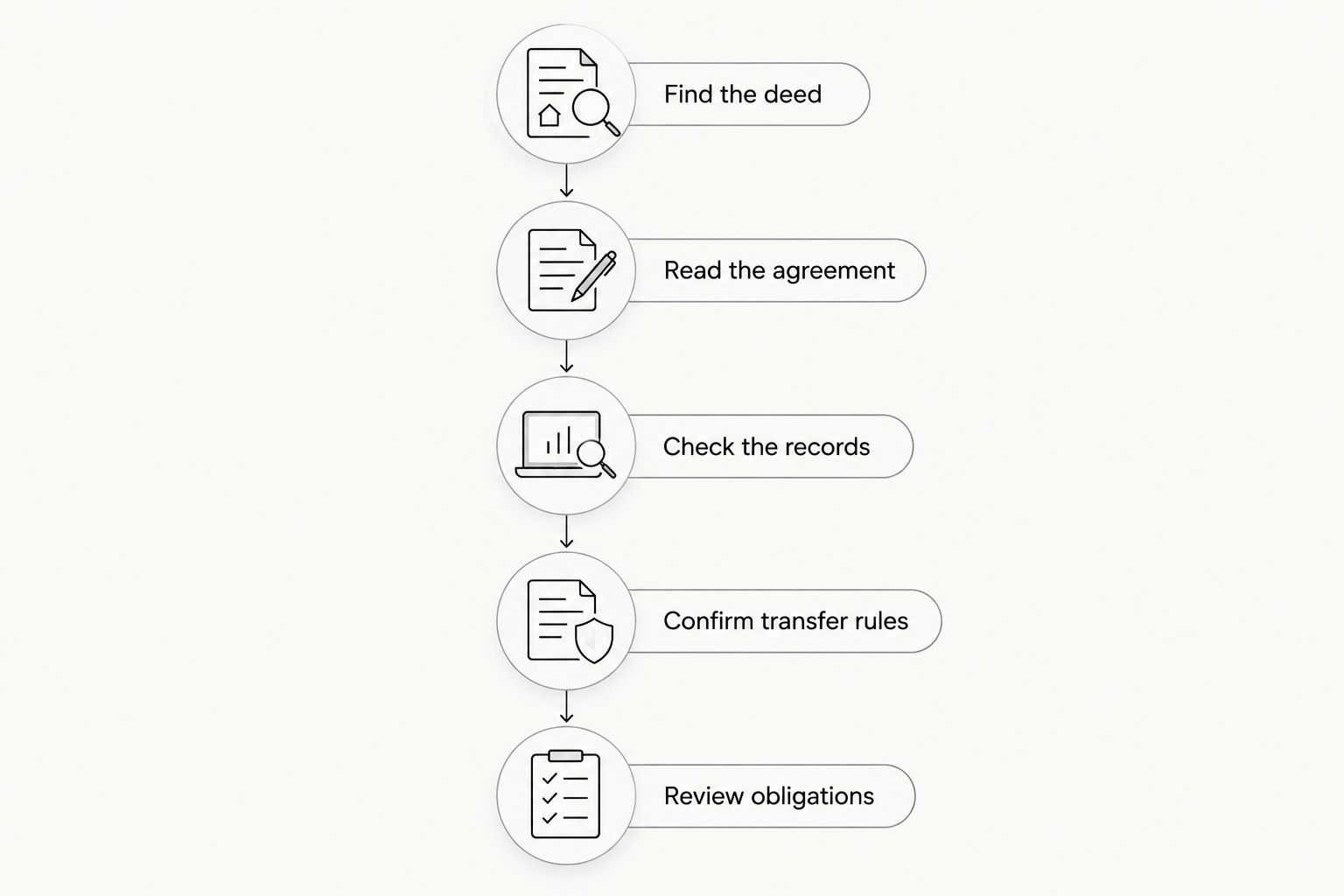
Use this document sequence before requesting a transfer or signing an exit agreement. Keep the ownership question separate from the payment question: knowing what you own does not establish what you still owe.
- Find the deed. Locate any deed delivered at purchase or after a later transfer. Identify the owners and the interest conveyed; a missing copy is a reason to check the appropriate records, not proof that no deed exists.
- Read the agreement. Find the clauses describing ownership, usage rights, duration, assignment, and termination. Note references to separate governing documents.
- Check the records. Compare the deed or agreement with current ownership records. For deeded property, check the relevant public recording office; also request the resort's ownership information.
- Confirm transfer rules. Ask which documents, approvals, and account changes apply. Resolve discrepancies between the legal owners and the resort's account before proceeding.
- Review obligations. Identify any loan, maintenance-fee obligation, lien, or other issue affecting the proposed transaction. Obtain qualified legal advice when documents conflict or the interest remains unclear.
The sequence matters because a resort account and a recorded deed serve different purposes. Neither an account-name change nor a signed transfer form, standing alone, proves every required step is complete.
Does property classification change how I sell or exit?
Property classification changes the paperwork and legal process, not whether a buyer or receiving party exists. A deeded interest needs an appropriate property transfer; a contractual interest needs an assignment or termination permitted by its documents and governing law.
Before accepting an offer, establish who must sign, what the receiving party accepts, and what confirms completion. If the resort has approval rights or a right of first refusal, account for those provisions before treating the transaction as final.
The timeshare deed transfer to closed sale workflow addresses the transfer stage. A signed document is a step in that process, not a substitute for confirming the transaction has been completed correctly.
Sold My Timeshare provides free, no-obligation timeshare valuations and resale or exit assistance. A valuation addresses the resale question; it does not replace a legal determination of ownership or guarantee a completed transfer.
Request a timeshare valuation
Start with a free, no-obligation valuation while reviewing your resale or exit options.
Does owning real property mean my timeshare has resale value?
Real property classification does not establish resale value. A deed describes an ownership interest, not a promise that another buyer will want it or that a sale will recover your purchase expenditure.
Keep the questions separate during a 2026 resale review: what you own, whether it can be transferred, and what a willing buyer will accept. Restrictions and continuing obligations belong in that review alongside the usage rights.
The same distinction applies to personal-property or contractual interests. Their classification alone does not determine demand or make an assignment possible.
Can I walk away if my timeshare is personal property?
Personal property classification does not cancel a timeshare contract. A contractual usage right can still carry payment duties and restrictions on termination or assignment.
Read the termination provisions and seek written confirmation of any agreed release. Do not treat an unanswered cancellation request, an unused membership, or a decision to stop booking vacations as proof that ownership has ended.
If someone proposes a transfer, identify exactly what ends your obligations and what evidence you will receive. The answer belongs in the transaction documents, not just a verbal assurance.
Is a deeded timeshare handled differently after an owner dies?
A deeded timeshare is an estate-planning issue involving real property. The deed's ownership language, any estate-planning documents, and applicable law determine how the interest is handled after death.
Contractual and trust-based interests also require review; personal property is not automatically excluded from an estate. An executor or family member should establish who has authority to act before signing transfer or surrender documents.
For a 2026 estate review, gather current ownership records rather than relying only on the deceased owner's reservation account. Ask an estate attorney about the interest and the jurisdiction involved.
FAQ
Is a timeshare always considered real estate?
No. A deeded timeshare conveys a real estate interest, while a nondeeded contractual right to use accommodations generally does not convey ownership of the resort. Leasehold and trust arrangements require review of their specific legal structure.
Are timeshare points real property or personal property?
Timeshare points alone do not establish property classification. Review the deed, membership agreement, or trust documents that create the rights behind the points.
How do I know whether my timeshare has a deed?
Check your purchase and transfer documents, then verify the relevant property records. A missing copy in your files does not prove that no deed exists.
Does paying off my timeshare loan end my ownership?
Paying off a timeshare loan does not by itself end ownership. Ownership and continuing contractual obligations require a separate review, even after the debt has been satisfied.
Can I transfer a deeded timeshare with just a membership form?
A membership form does not substitute for the legal transfer of a deeded real estate interest. Confirm the deed, recording, resort, and other requirements applicable to your transaction.
Does personal property status mean I can cancel whenever I want?
Personal property status does not give you an automatic right to cancel a timeshare agreement. Termination depends on the contract, applicable law, and any valid release or other permitted exit.
Can Sold My Timeshare help me understand my resale options?
Sold My Timeshare offers free, no-obligation timeshare valuations and resale or exit assistance. Legal questions about ownership classification require review of your documents and the applicable law.
One last thing
The document used to book your vacation is not necessarily the document that proves what you own. Before signing anything, ask: What legal interest is being transferred, and what confirms that my obligations have ended? Those questions are more useful than relying on the word points, membership, or owner.