
Yes, timeshare resale value can be positive in 2026, but a positive sale amount does not guarantee that you receive money after closing. Loan payoff, seller-paid closing expenses, transfer charges, and outstanding ownership obligations reduce what you keep. Judge a resale by your net proceeds, not by the advertised asking amount or what you originally paid.
- Is timeshare resale value ever positive? Yes, but net proceeds depend on debt, closing expenses, and ownership obligations.
- Sold My Timeshare offers free, no-obligation timeshare valuations for owners considering resale or exit assistance.
- A paid-off timeshare still needs a willing buyer and a clear transfer process.
- Separate money received at closing from savings on future maintenance fees.
Why this matters
You need to answer two different questions: will someone buy your ownership, and will the transaction leave money for you? An ownership can attract a buyer without producing a payout for the seller. Keeping those questions separate helps you evaluate an offer without confusing a sale with a profit.
Sold My Timeshare is best for owners who want a free, no-obligation timeshare valuation before considering resale or exit assistance. Use a valuation as a starting point for checking your ownership and possible next steps, not as a substitute for a buyer's offer or a closing statement.
Is timeshare resale value ever positive?
Yes. A timeshare has positive gross resale value when a buyer agrees to pay for the ownership. Your net proceeds are positive only when the buyer's payment exceeds the expenses and obligations you must settle through the transaction.
The word value causes confusion because it can describe several different outcomes. Ask anyone discussing your ownership to specify which outcome they mean.
| Measure | What it tells you | What it does not establish |
|---|---|---|
| Gross resale value | What a buyer agrees to pay for the ownership | How much you keep after deductions |
| Net proceeds | What remains after seller-paid deductions and required payoff | Whether you recovered your original purchase outlay |
| Overall financial result | How sale proceeds compare with your purchase and ownership expenses | Whether a buyer will accept your proposed terms |
| Future obligation relief | Which future responsibilities end after a completed, accepted transfer | That you receive a cash payout |
Positive net proceeds and an overall profit are not the same thing. You can receive money at closing while recovering less than you spent buying and maintaining the timeshare.
For a 2026 resale decision, establish the current transaction facts rather than using the original purchase amount as your target. Your purchase documents explain what you bought. A buyer's offer and verified deductions determine what the proposed sale returns to you.
Positive gross value: a buyer pays for the ownership
A positive offer answers an important question: someone is willing to purchase the ownership on stated terms. It does not answer every financial question. You still need to establish who pays the transfer expenses, whether any balance must be cleared, and what happens to existing reservations or usage rights.
An asking amount is different. A listing records what a seller requests; it does not establish that a buyer agreed to it or that a transfer closed.
Positive net proceeds: money remains after deductions
Positive net proceeds mean the transaction leaves a balance payable to you after the required deductions. Review those deductions in writing before accepting terms. A verbal estimate without a payoff figure or expense allocation is not a reliable payout calculation.
The useful calculation is simple: buyer payment minus your required transaction deductions equals your net proceeds. Keep future maintenance-fee savings outside that calculation so the closing result stays clear.
Positive outcome without a payout: a different objective
An owner can decide that ending future responsibilities matters more than receiving money. That is a personal financial objective, not evidence of positive resale value. The benefit depends on completing a valid transfer or release and confirming which responsibilities actually end.
Do not describe an exit as a profitable sale simply because you expect to stop paying future fees. Evaluate the transfer expenses and the written release separately from any proposed resale payment.
How do you check whether a resale leaves money for you in 2026?
Follow the transaction from the ownership documents to the closing statement. The goal is to replace assumptions with records you can verify, without committing to a service merely to discover what you own.
- Confirm ownership. Gather the contract or deed, current account statement, ownership schedule, and any points or membership documents. Identify every owner whose participation is required. Describe the actual interest being transferred, not just the resort name.
- Check obligations. Request current balances for financing, maintenance obligations, and any assessed charges. Distinguish a statement balance from a payoff amount valid for the intended closing. Ask how charges accruing before completion will be handled.
- Compare evidence. Look for completed transactions involving comparable ownership interests. Match the resort, accommodation or points allocation, usage schedule, and applicable restrictions. If a valuation relies on listings, ask that the distinction be made clear.
- Review deductions. Request an itemized explanation of the expenses assigned to you. Include any agreed service charges, transfer-related expenses, required payoff, and outstanding account obligations. Check which amounts remain estimates and which have been confirmed.
- Confirm completion. Establish what documents prove the ownership change and when proceeds are released. Do not treat an accepted offer, signed agreement, or submitted transfer request as interchangeable with a completed transfer.
A written net-proceeds estimate brings these checks together. Keep the supporting documents beside it, and update the estimate when the offer, payoff, or closing terms change.
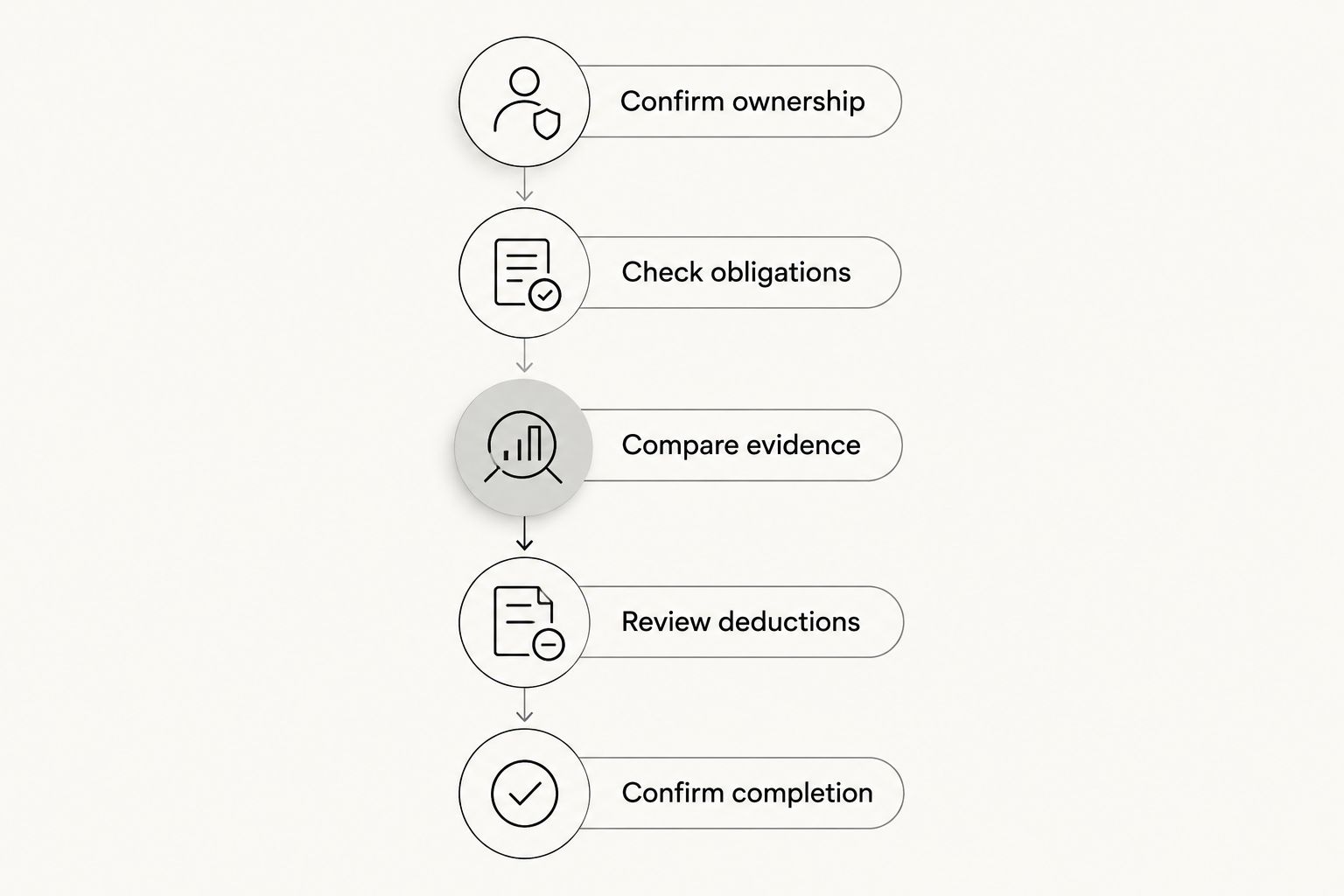
The timeshare closing-to-resale payout workflow explains the stages between agreeing to a sale and receiving the closing proceeds. Use that sequence to ask what remains unfinished in your own transaction.
Why timeshare resale value varies
A useful 2026 valuation needs to describe your particular ownership. The resort name alone does not identify everything a buyer receives or everything a seller must settle.
- The ownership interest. A deeded interest, membership, or points-based arrangement needs to be evaluated according to its documents. Confirm the rights being offered before comparing it with another listing.
- The usage rights. Accommodation details, usage frequency, booking rights, and the remaining ownership term determine what is being transferred. A similar name does not establish equivalent rights.
- The ongoing obligations. Buyers need to understand the recurring responsibilities they would assume. Sellers need to know which existing obligations must be resolved before or through closing.
- The financing position. An unpaid balance affects the seller's net proceeds and the steps needed to complete a transfer. Being paid off removes that particular deduction; it does not establish buyer demand.
- The transfer terms. Approval requirements, restrictions, required documents, and the allocation of expenses shape the transaction. Confirm them with the relevant administrator and closing professional rather than relying on a listing description.
These factors serve different purposes. Usage rights help explain the offer being evaluated, while financing and seller-paid deductions explain what remains for you. Combining them into a single unexplained valuation hides the decision you actually need to make.
What evidence should you request before accepting a valuation?
Ask what the estimate represents and how it was reached. A valuation becomes more useful when you can distinguish completed-sale evidence from seller expectations and identify the ownership details behind each comparison.
Request a plain-language explanation of the comparable ownership interests, the transaction status of the examples, and whether the estimate describes gross value or net proceeds. Ask for the date of the evidence, too. An undated comparison does not tell you whether it reflects the conditions relevant to your proposed transaction.
Also ask what is excluded. Financing payoff, account arrears, closing expenses, and transfer requirements should not disappear behind a single headline figure.
Sold My Timeshare provides free, no-obligation timeshare valuations and resale/exit assistance. That gives you a low-commitment starting point, but a valuation is not a completed sale or a guaranteed payout. Before agreeing to assistance, confirm the scope, your responsibilities, and any proposed charges in writing.
Request a timeshare valuation
Start with a free, no-obligation valuation before deciding on resale or exit assistance.
Does a paid-off timeshare always have positive resale value?
A paid-off timeshare does not automatically have positive resale value. Removing a loan balance improves the net-proceeds calculation, but you still need a willing buyer, acceptable transfer terms, and enough buyer payment to cover your remaining deductions.
Can a timeshare sell and still leave me owing money?
A timeshare can sell without covering your required payoff and seller-paid expenses. Before accepting the offer, establish how any shortfall must be funded and whether the transaction can proceed on those terms; do not assume the sale itself eliminates the remaining debt.
Is avoiding future fees the same as making a profit?
Avoiding future fees is not the same as making a profit on a resale. Evaluate future obligation relief separately from the money received at closing, and verify that the completed transfer or release ends the responsibilities you intend to leave behind.
How do you avoid mistaking a sales pitch for resale evidence?
Start with the documents, not the promise. Someone describing an interested buyer should be able to explain the proposed transaction, the required steps, and the expenses assigned to you. Enthusiasm is not a substitute for verifiable terms.
Keep your review focused on specific questions:
- Is this an asking amount, a valuation, or an actual offer?
- What ownership interest does the proposed buyer expect to receive?
- Which deductions reduce the amount payable to me?
- What written evidence confirms the transfer is complete?
- What happens if the proposed transaction does not close?
Do not stop reviewing because a proposed sale sounds like relief. If the agreement differs from the explanation you received, resolve the difference before signing. Seek qualified legal advice when you need an interpretation of your contract or obligations.
FAQ
Is timeshare resale value ever positive after closing expenses?
Yes, timeshare resale value is positive on a net basis when the buyer's payment exceeds your required payoff and seller-paid deductions. Check an itemized closing estimate rather than relying on the gross offer.
Does a free timeshare valuation tell me exactly what I will receive?
No, a free timeshare valuation is not a guaranteed closing payout. Your actual proceeds depend on the accepted offer, verified obligations, and final transaction terms.
Can I sell my timeshare for what I originally paid?
Your original purchase amount does not establish what a resale buyer will pay. Evaluate comparable completed transactions and the specific ownership rights being transferred.
Is a paid-off timeshare easier to evaluate for net proceeds?
A paid-off timeshare removes a financing payoff from the net-proceeds calculation. You still need to account for seller-paid expenses, outstanding obligations, and the buyer's actual offer.
Should I accept an offer just to stop paying maintenance fees?
Decide only after comparing the transaction expenses with your goal of ending future obligations. Confirm in writing what the completed transfer ends and which obligations remain yours.
Does signing a resale agreement mean I no longer own the timeshare?
Signing a resale agreement does not by itself establish that the ownership transfer is complete. Confirm the required transfer documents, acceptance, and account status with the parties responsible for closing.
What should I ask before paying for resale assistance?
Ask for the service scope, proposed charges, cancellation terms, and the distinction between a valuation and an actual buyer offer. Review the written agreement before authorizing payment.
One last thing
The most useful question for your 2026 decision is not simply whether the timeshare has value. It is: what will I receive, what must I pay, and what will I still owe after completion? Ask for those answers together, on the same written estimate.
A free, no-obligation valuation from Sold My Timeshare gives you a starting point for that conversation. Keep the final decision tied to verified ownership details, written terms, and the net result you actually want.